Looking for the highest BTU pellet stove to heat large living areas efficiently? This guide highlights top options with strong heat output, clear efficiency features, and practical considerations for big rooms, cabins, workshops, and homes needing sustained warmth. The selections emphasize models with large hoppers, robust blowers, and smart controls to help you pick the right heater for your space and fuel needs. Each product is described with who it’s best for and why it stands out, plus a quick comparison to aid decision-making.
| Product | Best For | Notable Benefit |
|---|---|---|
| PelPro PP150 Pellet Stove | Large spaces up to 2,500 sq ft | Very high BTU with large hopper |
| US Stove 3,000 Sq. Ft. Pellet Stove | Homes up to 3,000 sq ft | Long runtime with 170 lb hopper |
| Comfortbilt HP22-N | Mid-to-large living areas | Smart controller and decent hopper |
| Cleveland Iron Works Medium Pellet Stove | Smart-home capable heating | WiFi and mid-range BTU |
| Castle Serenity Series | Customizable scheduling and eco modes | Eco/off cycling for efficiency |
PelPro PP150 Pellet Stove for Home Heating

The PelPro PP150 delivers high heat output for larger spaces. It’s designed to heat up to 2,500 sq ft and approaches 49,200 BTU, making it suitable for older homes, small shops, cabins, or garages that need steady warmth. The unit emphasizes fuel economy and features EPA-certified efficiency around 87.5%, helping maximize heat from each bag of pellets. A large 150-lb hopper minimizes refill frequency, and an auto-ignition system with temperature control provides reliable comfort. Best for buyers who want strong heating performance with straightforward control in sizable spaces.
Who it’s best for: homeowners needing robust heat, long burn times, and a large fuel store without frequent refills. Why selected: top-end BTU and large hopper meet high heating demand in a single unit; the efficiency and automatic features support cost savings and ease of use. Caution: high heat output may require careful placement and room sizing to avoid overheating smaller rooms.
US Stove 3,000 Sq. Ft. Pellet Stove

This model targets large living areas with a strong heating capability and long runtime. It heats up to 3,000 square feet and features a sizeable 170 lb hopper that can sustain operation for up to about 80 hours depending on settings. With up to 33,000 BTUs, it balances heat output with fuel efficiency for extended cold-season comfort. Best for: larger homes that want a reliable, lower-maintenance pellet stove with WiFi-enabled control options in some configurations. Caution: check for room ventilation and clearance requirements to ensure safe installation.
Comfortbilt HP22-N Pellet Stove

The HP22-N combines solid heat capability with a moderate hopper size and a smart controller. It heats up to about 2,800 sq ft and offers a dependable 80 lb hopper. This makes it well-suited for medium-to-large living spaces where a balance of heat output, control features, and fuel management is important. Best for buyers who want smart features and consistent heat without the largest hopper. Limitation: smaller hopper than some high-BTU competitors means more frequent refills in very cold climates.
Cleveland Iron Works Medium Pellet Stove

The Cleveland Iron Works model focuses on smart-home compatibility and mid-range heating. It heats roughly 1,500 to 2,200 sq ft, with a 60 lb hopper capacity. This makes it a solid choice for modern homes seeking WiFi-enabled control and reliable warmth in medium-sized spaces. Best for buyers who want smart features without the highest BTU demands. Caution: not ideal for very large spaces where maximum BTU is essential.
Castle Serenity Pellet Stove
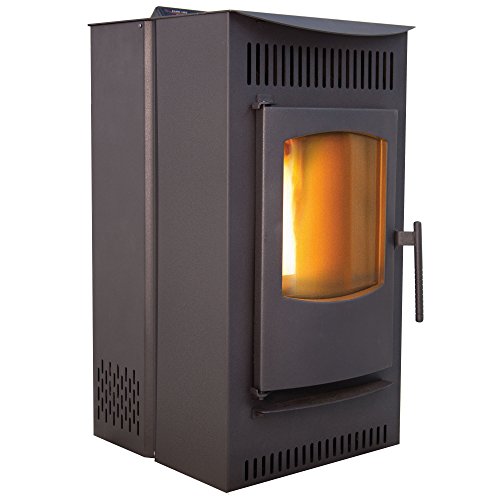
The Castle Serenity series offers flexible control modes including Manual, Thermostat, Weekly, and Eco operating modes. With a 40 lb hopper, it’s designed for steady scheduling and efficient operation in moderate spaces. Best for buyers who want programmable heat management and a compact footprint. Caution: smaller hopper may require more frequent refueling in extended cold spells.
Buying Guide
Key considerations when selecting a high-BTU pellet stove include space size, heater efficiency, hopper capacity, and control features. Use these questions to compare options:
- What square footage needs heating, and is BTU output well-matched to that space?
- How often will you need to refill the hopper, and is the capacity sufficient for your routine?
- Do you prefer smart controls, WiFi connectivity, or manual operation?
- Is venting, installation clearance, and ventilation requirement compatible with your room?
- What ancillary features matter most—auto-ignition, thermostat control, or eco modes?
Heat Management And Fuel Efficiency
High-BTU models can deliver significant warmth, but efficiency matters for ongoing costs. Units with EPA-certified efficiency ratings and larger hoppers typically provide better heat retention per bag of pellets and longer burn times, reducing operational frequency and fuel waste.
Installation And Space Fit
Check room dimensions and clearance guidance from each model. A stove with too much BTU for a small room can lead to uncomfortable overheating, while too little BTU leaves a space cool. Consider how the stove will vent, whether a fresh-air kit is needed, and if a modern thermostat or WiFi control fits your lifestyle.
Maintenance And Durability
Look for models with easier cleaning, fewer crevices, and accessible exhaust paths. Hoppers (size in pounds) influence how often you refill. A larger hopper reduces maintenance frequency but may increase upfront cost and space needs.
FAQ
- What size of space should I heat with a high-BTU pellet stove?
Answer: For spaces up to 2,500–3,000 sq ft, select models with BTU ranges and verified coverage matching that area. - Are pellet stoves energy-efficient?
Answer: Yes, many models meet EPA efficiency standards, maximizing heat from each bag of pellets. - Is a larger hopper always better?
Answer: Not always; larger hoppers reduce refills but require more storage space and can cost more upfront. - Do all pellet stoves require professional installation?
Answer: Venting and clearances often require proper installation; check local codes and manufacturer guidelines. - Can WiFi-enabled stoves be controlled remotely?
Answer: Some models offer smart controllers or WiFi capabilities for easier scheduling and monitoring. - What maintenance is typical for pellet stoves?
Answer: Regular cleaning of burn pot, ash collection, and periodic vent inspection help maintain performance.