When you need hot water instantly without a bulky storage tank, on-demand (tankless) electric heaters are the answer. This guide highlights five reliable options that fit apartments, small homes, and multi-use setups. Each model is explained with who it’s best for, why it was selected, and a practical caution. Buyers will find clear, comparison-friendly language to help decide which unit matches their space, electrical capacity, and warm-water needs.
Summary table of selected products
| Product | Best For | Why It Stands Out |
|---|---|---|
| 110V Tankless Water Heater Electric, 3000W | Small spaces, under-sink use | Compact, simple control, high efficiency, ETL standard |
| 14kW ORBEK On-Demand Heater | 2-3 point-of-use needs | High flow (3.38 GPM), strong efficiency, safety features |
| 14kW ThermoMate 240V | Shower plus sink | Self-modulating, robust construction |
| Westinghouse 14kW 240V | Smart-home setups | WiFi, Alexa/Google Home control, compact |
| 18kW WINTEMP 240V | Medium homes, multi-fixture use | High output, self-modulating, energy savings |
110V 3000W Tankless Electric Water Heater
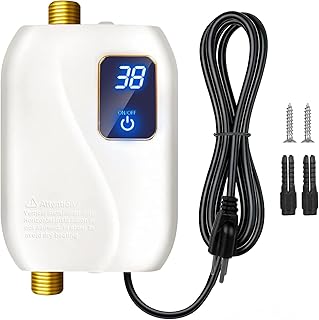
This compact 110-volt tankless unit uses stainless steel and ABS materials and features an LED display. It can raise water temperature quickly—by up to 82°F at 0.3 GPM and up to 131°F at 0.5 GPM—making it suitable for under-sink or small bathroom and kitchen use. It offers Fahrenheit or Celsius display, an ETL standard, and a high thermal efficiency rating for energy savings. Best for: apartments, RVs, or occasional hot water in a compact space where a full-size heater isn’t feasible. Caution: keep in mind it has lower flow at higher temperatures, so plan for small-demand scenarios.
14kW ORBEK On-Demand Tankless Heater

Orbek’s 14kW 240V model delivers up to 3.38 GPM of hot water and is designed for 2-3 outlets (bathroom and kitchen). It emphasizes energy savings with on-demand operation and a technology separation between water and electricity to reduce scale and corrosion. Best for: homes that require reliable, instant hot water at multiple fixtures with a robust electrical capacity. Caution: electrical setup must meet a 150-amp service and require a 240V two-pole breaker with appropriate wiring.
14kW ThermoMate 240V Instant Heater

ThermoMate’s 14kW unit provides up to 3.4 GPM of continuous hot water with a self-modulating control that adjusts power to maintain temperature. It needs a dedicated 60-amp double-pole circuit and 6 AWG wires, and uses 1/2″ NPT connections. Best for: homes needing steady, continuous hot water for 1-2 fixtures while preserving energy. Caution: installation requires a strong electrical panel and professional wiring assessment.
Westinghouse 14kW 240V Tankless Heater

This model offers 3.4 GPM at typical inlet/outlet temps and includes smart WiFi controls compatible with Alexa and Google Home. It supports two points of use and features temperature memory, so presets persist after outages. Best for: tech-savvy homes seeking remote control and smart-home integration. Caution: ensure a dedicated 60A double-pole circuit with proper wiring to avoid overload.
18kW WINTEMP Electric Tankless

WINTEMP’s 18kW model supports up to 4.3 GPM with self-modulating temperature control, designed for whole-house hot water supply. It emphasizes energy savings by reducing power when flow is low and ensures a stable temperature for continuous showers. Best for: mid-sized homes that need consistent hot water across multiple fixtures. Caution: high electrical demand means professional electrical assessments are essential before installation.
Buying Guide: Practical Considerations For On-Demand Hot Water
- Electrical service and wiring: Most 14kW and 18kW units require a dedicated 60A or higher circuit and 6 AWG copper wires. Verify your main electrical panel can handle added load (often 150 amps total is recommended).
- Flow rate needs: GPM (gallons per minute) is the key metric. Consider how many fixtures you want to run at once and your inlet water temperature to estimate usable GPM.
- Temperature rise and climate: Colder inlet water reduces available GPM. In cooler climates, plan for a higher-capacity unit if you expect simultaneous use at multiple fixtures.
- Installation space and mounting: Wall-mounted, compact designs save space in kitchens, bathrooms, or closets. Ensure proper clearance for maintenance and venting if applicable.
- Smart features and compatibility: Some models offer WiFi, app control, or voice integration. Consider whether you want remote monitoring or integration with a smart-home system.
- Durability and materials: Look for units with corrosion-resistant heating elements and reliable thermal protection. Self-modulating technology generally improves energy efficiency.
- Safety features: IPX waterproof ratings, dry-boil protection, and automatic shutoff under overheating help prevent hazards in damp environments.
- Installation costs and professional help: On-demand heaters often require professional electrical and plumbing work. Budget for both installation and potential panel upgrades.
Myth vs. Reality: Quick Answers For Buyers
- Can I install an on-demand heater myself? Installation typically requires a licensed electrician and plumber for safety and code compliance.
- Will these units really save energy? On-demand heaters use energy only when hot water is needed, reducing standby losses associated with tanks.
- What size should I choose for a two-bath home? Look for units rated around 3-4 GPM to support multiple fixtures, depending on inlet water temperature.
- Is WiFi control worth it? It adds convenience and remote monitoring, but non-smart units often provide identical performance at a lower price.
- Do I need a tankless heater at all? If you have space constraints or want endless hot water without a storage tank, tankless is a strong choice.
Frequently Asked Questions
- What is the typical life span of an on-demand water heater? Most units are designed for long-term operation, but actual life depends on installation quality, water quality, and maintenance.
- Do I need a water-softening system with a tankless heater? In hard water areas, water-conditioning can extend heater life by reducing scale buildup.
- Can any home supply instant hot water? Realistically, the maximum GPM you can get depends on inlet water temperature and pipe sizing. Plan for the lowest common temperature across fixtures.
- Are all on-demand heaters the same size? Sizes vary by wattage (14kW, 18kW) and flow capacity; choose based on desired GPM and electrical readiness.
- Is professional installation required for all units? Yes, due to electrical and plumbing safety, professional installation is strongly recommended.
- Do these heaters require venting like gas models? No, electric tankless heaters do not require venting, which simplifies installation in many spaces.