Answering the need for reliable carbon monoxide monitoring in HVAC settings, these detectors range from personal CO meters to portable, plug-free alarms suitable for travel or job sites. This guide highlights five top options, clarifying who each device is best for and why. It also provides buying considerations to help you compare performance, alarms, and battery life at a glance.
| Product | Best For | Key Benefit |
|---|---|---|
| Klein Tools ET110 CO Meter | Tradespeople and DIYers | Accurate CO measurement with STEL alarm |
| TOPTES CT-580 | Homeowners and small offices | Rechargeable with visual, audible, and vibration alarms |
| Forensics CO Meter (FD) | Professional inspections | NIST-calibrated, high-ppm range, USB recharge |
| Kidde CO Detector (AA Battery) | Travelers and renters | Battery-powered, portable, 85 dB alarm |
| TOPTES CT-913 | Field inspectors and contractors | Ultra-long battery life and upgraded DDS sensor |
Below are five selected products with practical insights to help you choose the right device for your HVAC-related detection needs. Each section explains who the product is best for, why it was chosen, and a clear limitation to consider.
Klein Tools Et110 CO Meter

The Klein Tools ET110 CO Meter provides precise carbon monoxide measurement in a compact form. It includes a short-term exposure limit (STEL) alarm to flag dangerous spikes, making it suitable for technicians performing quick environmental checks in HVAC installations. Best for tradespeople who need portable, immediate readings on-site and during service calls.
Why selected: The combination of accurate CO measurement and a dual alarm system (low and high CO thresholds) supports proactive safety decisions during installations and inspections. Caution: This device is a meter, not a fixed-home detector, so it won’t alert occupants continuously when unattended.
TOPTES Ct-580 Portable Carbon Monoxide Detector

The TOPTES CT-580 is a rechargeable CO detector with a TFT color display and multiple alarm modes. It features fast response times (0.3 seconds) and a wide 0-1000 PPM detection range, along with three alarm modes (indicator, audible, vibration). Best for home users, small offices, or field workers who need an easy-to-read display and multiple alert methods.
Why selected: Its out-of-the-box usability and visual display help non-experts interpret readings quickly. Caution: Advanced calibration options may be more than some casual users require.
Carbon Monoxide CO Meter by Forensics | USA NIST Calibration

This Forensics CO meter offers NIST-calibrated accuracy with 0-1000 PPM range and USB recharge. It uses an electrochemical sensor with tight calibration options and adjustable alarms—ideal for professional inspections and environments requiring traceable accuracy. Best for technicians who need documented calibration data and robust alarms.
Why selected: The device’s NIST calibration and adjustable alarms support compliance and precise monitoring in HVAC service contexts. Caution: Certification and maintenance may require periodic recalibration to maintain traceability.
Kidde Carbon Monoxide Detector, AA Battery Powered
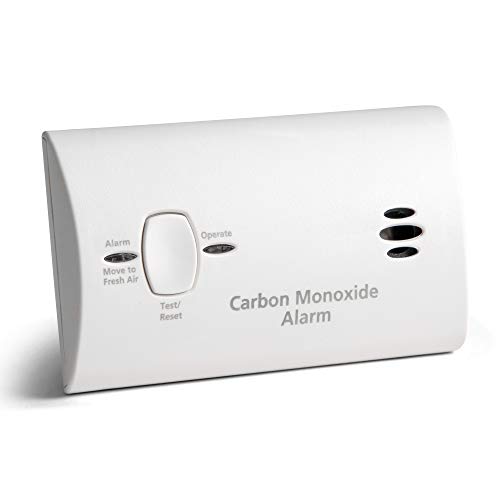
The Kidde model is a portable, battery-powered CO detector with an 85 dB alarm and LED status indicators. It’s designed for travel or temporary setups where no wiring is available. Best for renters, travelers, or households needing a quick, portable CO warning device without installation.
Why selected: Its independence from power outlets makes it reliable during outages or in transit. Caution: Battery replacements are required; long-term continuous monitoring is not its primary use.
TOPTES Ct-913 Portable Carbon Monoxide Detector

The TOPTES CT-913 offers an upgraded UK DDS sensor with a 0-1000 PPM range and a long battery life—over 60 hours on a 4000 mAh cell. It includes a real-time reading display, trend graphs, and USB-C charging, making it suited for field inspectors, contractors, and professionals who need dependable performance on long jobs. Best for continuous monitoring in mobile workplaces.
Why selected: The long battery life and advanced sensor translate into fewer interruptions during inspections. Caution: Higher feature set means more configuration; may be unnecessary for casual home use.
Buying Guide
What should I consider when choosing an HVAC carbon monoxide detector?
- Detection range and accuracy: Look for devices with 0-1000 PPM ranges and clearly stated resolution and response times.
- Alarm types: Prefer models offering audible alarms, visual indicators, and optional vibration, especially for noisy environments or quiet spaces.
- Power source and portability: Battery-powered units are travel-friendly; rechargeable models are convenient for regular use at job sites or in homes without reliable outlets.
- Calibration and reliability: For pros, NIST-calibrated devices and factory calibration options add credibility and traceability.
- Data and history features: Some meters provide trend graphs and alarm histories—useful for inspections and documentation.
- Durability: In HVAC contexts, consider rugged models with protective housings and extended battery life to withstand field conditions.
How do I use a CO detector in an HVAC setting?
- Place the detector at breathing height in occupied spaces or near suspected CO sources for accurate readings.
- Regularly check alarms and test functions according to the manufacturer’s instructions.
- Record readings for safety audits and compliance, especially when performing inspections on commercial equipment or in workplaces.
What are common limitations to be aware of?
- Not all devices provide continuous occupant alerts in fixed installations; meters may require manual readings.
- Calibration drift can affect accuracy over time; verify whether factory calibration or periodic recalibration is needed.
- Battery life and charging needs vary; plan for replacements or charging cycles to avoid gaps in monitoring.
What’s the best approach to combining products for coverage?
For broad coverage, pair a portable meter like the Klein ET110 or Forensics FD with a reliable portable detector such as the TOPTES CT-913 for field inspections. Add a travel-friendly option like the Kidde CO detector for temporary locations or during travel. This combination provides on-site readings, professional-grade calibration data, and portable alerts for varied HVAC scenarios.
FAQ
- Q: What is the typical CO detection range I should expect from a good HVAC detector? A: Most reliable devices cover 0-1000 PPM to detect hazardous spikes effectively.
- Q: Are NIST-calibrated detectors necessary for home use? A: They are more critical for professionals needing traceable accuracy and documentation.
- Q: Can a CO detector be used as a primary alarm in an HVAC system? A: Some models are meters or portable units; fixed installations should use dedicated, building-wide CO alarms.
- Q: How often should I test CO detectors? A: Follow the manufacturer’s guidance; many recommend monthly tests and regular calibration checks for professional devices.
- Q: Do these detectors require maintenance beyond battery changes? A: Some models require periodic calibration or sensor replacement as specified by the manufacturer.