For homeowners dealing with buried or concealed pipes, inside-pipe heating cables offer reliable freeze protection without external exposure. This guide highlights five CSA/NSF61-certified options that work inside the pipe, ideal for underground, wall-embedded, or concealed plumbing. They’re designed to prevent freezing, regulate heat automatically, and keep drinking water safe. The top picks target different buyers: homeowners with hidden pipes, those seeking robust safety certifications, and users needing compact installations in short runs. A quick buyer’s table follows to compare core specs at a glance.
| Product | Best For | Key Benefit |
|---|---|---|
| YeloDeer Upgrade With Y-Fitting | Hidden pipes under concrete or walls | Direct internal heat with easy installation |
| YeloDeer In-Pipe 6ft Cable | Non-exposed buried pipes | Self-regulating inside-pipe protection |
| HEATIT Sewage/Drain Cable | Buried wastewater/Drain systems | Fluoropolymer jacket, robust safety |
| MAXKOSKO Self-Regulating Cable | Water supply lines in buried/walled pipes | CSA NSF61 certified, inside-pipe design |
| TOPDURE In-Pipe Cable | Underground or enclosed pipes | Smart self-regulating, certified |
YeloDeer Upgrade In-Pipe Heating Cable with Y-Fitting

Best for: Hidden, buried, or wall-encased pipes where external heat tapes fail. This CSA-certified cable runs inside the pipe, delivering direct freeze protection from within. The Y-fitting simplifies routing and installation in tight spaces. Self-regulating technology minimizes overheating risk, matching heat output to pipe temperature along the length.
- Certification: CSA under 2026 standards for electrical safety and water compatibility.
- Installation: Internal pipe heat trace designed for concealed piping systems.
- Technology: Self-regulating, adjusts power to prevent freezing while avoiding overheating.
Caution: Ensure the internal route avoids sharp bends to prevent cable damage during installation. This model is rated for 120V, and compatibility with pipe materials should be confirmed prior to purchase.
YeloDeer In-Pipe Heating Cable (6 ft) for Safe Drinking Water

Best for: Short, internal runs where pipes are buried or encased. This self-regulating inside-pipe heat trace protects drinking water lines, with CSA certification ensuring electrical safety and water integrity. It’s a compact option for smaller diameter pipes or limited installation space.
- Certification: CSA 2026 standards for safety; designed for drinking water systems.
- Installation: Internal and non-exposed pipe protection.
- Technology: Self-regulating for consistent performance across varying temperatures.
Caution: Not ideal for extended exterior exposure; verify pipe diameter and length to ensure full coverage.
HEATIT Sewage Pipe Heating Cable for Buried Pipes

Best for: Non-exposed sewer, wastewater, or sump-pump lines where external tapes are less practical. The fluoropolymer jacket and ETL certification provide strong safety and durability for challenging environments. Use for continuous freeze protection in drainage systems and related piping.
- Certification: ETL certified and UL-verified plug, with robust overall safety compliance.
- Installation: Self-regulating inside-pipe design suitable for plastic and metal pipes.
- Technology: Automatic power adjustment along the cable’s length to prevent overheating.
Caution: The outer jacket is fluoropolymer and highly durable; ensure waterproof connections remain above water and follow IP66/68 guidelines for outdoor installations.
MAXKOSKO Self Regulating Inside-Pipe Heating Cable

Best for: Water supply pipes in buried or wall-embedded configurations. This CSA NSF61-certified cable is designed to heat from inside the pipe, maintaining flow during freezing conditions and protecting drinking water. It’s suitable for jet pump and submersible pump setups where internal heating is advantageous.
- Certification: CSA NSF61, ensuring safety for drinking water applications.
- Installation: In-pipe installation, designed for non-exposed pipelines.
- Technology: Self-regulating heat output tailored to pipe temperature, reducing energy use.
Caution: Confirm pipe materials and diameter to ensure full coverage along the requested run length.
TOPDURE In-Pipe Heating Cable
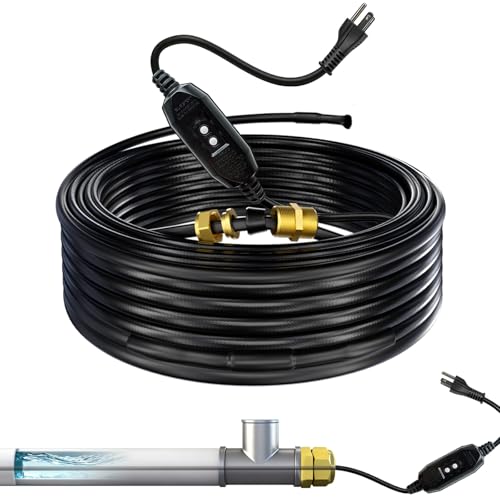
Best for: Hidden or underground pipes where internal heating offers the most protection. TOPDURE is certified and uses smart self-regulating technology to adapt heat output as temperatures change. It supports long-term freeze protection for drinking water lines and is designed for safe interior installation.
- Certification: CSA NSF61 certification, aligned with high North American safety standards.
- Installation: In-pipe installation suitable for concealed or underground piping.
- Technology: Self-regulating heat trace with automatic adjustment to ambient conditions.
Caution: Ensure proper routing to avoid sharp bends that could kink the cable and limit heat distribution.
Buying Guide: Key Considerations for Inside-Pipe Heating Cables
- Certification and Safety: Look for full-cable certifications (CSA, NSF61, UL) rather than plug-only certifications to ensure safe drinking water handling and electrical integrity.
- Inside-Pipe Installation: Confirm the cable is designed for in-pipe use, compatible with the pipe material, and suitable for buried or wall-encased applications.
- Self-Regulating Technology: Favor cables with self-regulating insulation that adjusts heat output to avoid overheating and save energy.
- Length and Diameter: Match run length and pipe diameter to the product’s specifications. Short runs may require multiple segments or different models.
- Water Safety: For drinking-water lines, prioritize NSF61/NSF/ANSI certifications to ensure water safety is maintained while protecting against freezing.
- Environmental and Chemical Resistance: For sewer or wastewater lines, choose fluoropolymer jackets or corrosion-resistant materials to withstand harsh conditions.
- Installation Accessibility: Consider fittings, such as Y-fittings, and installation practicality when routing inside concealed pipes.
FAQ
- Q: Do these cables work for all pipe materials? A: Most are designed to work with common plastic and metal pipes, but verify compatibility with your exact pipe type and diameter.
- Q: Are inside-pipe cables safer than external heat tapes? A: Inside-pipe designs reduce external exposure and may offer more uniform protection, especially for buried pipes, but follow manufacturer guidelines for safety.
- Q: Do I need professional installation? A: For critical drinking-water applications or complex pipe layouts, professional installation is advisable to ensure proper routing and certification compliance.
- Q: Can these cables be used for drain or sewer lines? A: Some models are suitable for wastewater systems; check product specs for compatibility and outdoor IP ratings.
- Q: What maintenance is required? A: Regular inspections for leaks, corrosion, and insulation integrity are recommended; self-regulating cables typically require minimal ongoing maintenance.
- Q: Do these cables require a dedicated power outlet? A: Most systems operate at 120V and may need a dedicated circuit depending on total load and local electrical codes.