Best infrared gas wall heaters deliver strong warmth without electricity, ideal for spaces where gas heat is preferred. This guide highlights five top options, showing who each unit is best for, and why they stand out. Perfect for small offices, living rooms, basements, or emergency heat, these models use natural gas to generate radiant warmth. Read on to compare BTU outputs, size coverage, control options, and installation style to choose the right heater for your space.
| Product | BTU (Gas) | Coverage | Controls | Best For |
|---|---|---|---|---|
| MN300HPA-B (30,000 BTU) | 30,000 | Up to 1200 sq. ft. | Manual 3 heat settings | Large living areas or open floor plans |
| MN100TPA-B (10,000 BTU) | 10,000 | Up to 500 sq. ft. | T-Stat / Thermostat | Small rooms, offices, or bedrooms |
| MN300TPA-B (30,000 BTU, T-Stat) | 30,000 | Up to 1400 sq. ft. | Thermostat control | Medium to large living spaces needing reliable heat |
| Rinnai FC824N | Natural Gas, ventless | Depends on installation | Programmable thermostat | Energy-efficient, wall-mounted comfort |
| GiveBest Smart Wall Heater | Not specified (electric model) | Indoor spaces | Remote, app, Alexa | Smart control for versatile spaces |
MN300HPA-B 30,000 BTU Gas Infrared Heater
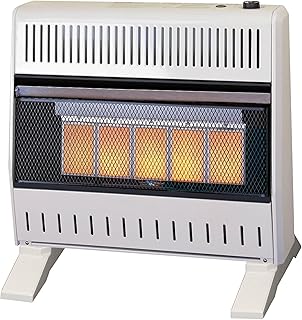
Overview: This ventless infrared heater delivers 30,000 BTU for natural gas operation and can warm up to 1200 sq. ft. It uses push-button Piezo ignition and provides manual control with Low, Medium, and High heat settings. An Oxygen Depletion Sensor (ODS) offers automatic shut-off for safety. Best for: larger living areas or open floor plans where electric heating isn’t practical. Limitation: relies solely on natural gas and does not require electricity, which means no power backup for the thermostat in an outage.
MN100TPA-B 10,000 BTU Gas Infrared Heater
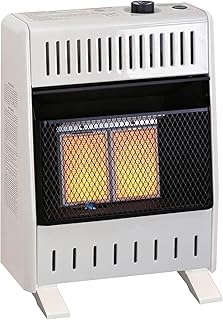
Overview: A compact natural gas heater producing up to 10,000 BTU, suitable for heating up to 500 sq. ft. It features thermostat control with High/Medium/Low settings and supports both wall mounting (hardware included) and base feet for floor placement. Best for: small offices, bedrooms, or living spaces where space is limited. Limitation: lower BTU coverage may not meet the needs of larger rooms.
MN300TPA-B 30,000 BTU Gas Infrared Heater, T-Stat

Overview: This 30,000 BTU unit heats up to 1400 sq. ft., designed for residential spaces with a slim, modern profile. It uses thermostat control with High/Medium/Low settings and can be wall-mounted or placed on the floor with included base feet. Best for: mid-to-large rooms where stable, gas-fueled heat is desired. Limitation: similar to other gas heaters, it requires proper venting and gas supply for safe operation.
Rinnai FC824N Ventless Gas Heater

Overview: Rinnai FC824N is a ventless natural gas heater with a programmable thermostat for energy-efficient, steady comfort. Best for: households seeking consistent, programmable heat with minimal electricity use. Limitation: installation requires proper venting and gas line access; exact room coverage depends on installation layout.
GiveBest Smart Wall Infrared Heater

Overview: This standalone, app-enabled wall heater provides smart control for indoor spaces, with remote control and voice assistant compatibility. Best for: tech-enabled spaces such as home offices or living areas where precise ambient control matters. Limitation: data indicates electric heating design, which may differ from true gas infrared options in BTU output and fuel type.
Buying Guide: Key Considerations For Infrared Gas Wall Heaters
- Fuel source: Decide between natural gas-only units and ventless options that may require gas lines or venting considerations.
- BTU and space coverage: Match BTU to room size. Higher BTU suits larger rooms; smaller rooms may need lower BTU to avoid overheating.
- Controls: Choose manual, thermostat, or programmable options based on how you want to regulate heat and energy use.
- Installation style: Wall-mounted versus floor-based with base feet affects room layout and clearance requirements.
- Safety features: Look for oxygen depletion sensors and automatic shut-off for safe operation in occupied spaces.
- Ventilation and emissions: Ventless designs simplify installation but ensure adequate ventilation where required by local codes.
FAQ
- What does BTU indicate in infrared gas heaters? – BTU measures heat output; higher BTU means more heating capacity for larger spaces.
- Can these heaters operate without electricity? – Some models operate on natural gas with no electrical need, but thermostat features may require power.
- Is venting required for ventless infrared heaters? – Ventless designs are built for indoor use but follow local codes; installation guidance is essential.
- Which heater is best for a large living room? – A 30,000 BTU unit with wide coverage (up to 1400 sq. ft.) is typically suitable, depending on room layout.
- Are programmable thermostats worth it? – Yes, they optimize comfort and energy use by maintaining target temperatures automatically.
- What should I consider for safety? – Look for oxygen depletion sensors and automatic shut-off features to prevent unsafe operation.