For instantaneous electric hot water at one sink, choose a point-of-use heater sized to the outlet temperature and flow you need; a small tankless unit will not necessarily serve a whole home. The APUS 4500W is best for a low-flow sink where 240V power is available, while the Rheem 3.5kW model is a 120V option for very low flow. The InSinkErator is for near-boiling kitchen water, and the EHERDM is a faucet-style alternative. Check your electrical supply and installation requirements before choosing.
| Product | Best suited for | Power information listed |
|---|---|---|
| APUS 4500W Tankless | Single sink needing adjustable warm water | 220–240V, 4500W |
| Rheem 3.5kW Tankless | Very low-flow, single-fixture use | 120V, 3.5kW |
| InSinkErator HOT250 | Near-boiling water at a kitchen sink | 750W tank dispenser |
| sanheshun 3000W Tankless | Compact sink or bathroom installation | 110V, 3000W |
| EHERDM Heating Faucet | Sink use with an integrated heating faucet | 110V |
APUS 4500W Electric Tankless Water Heater
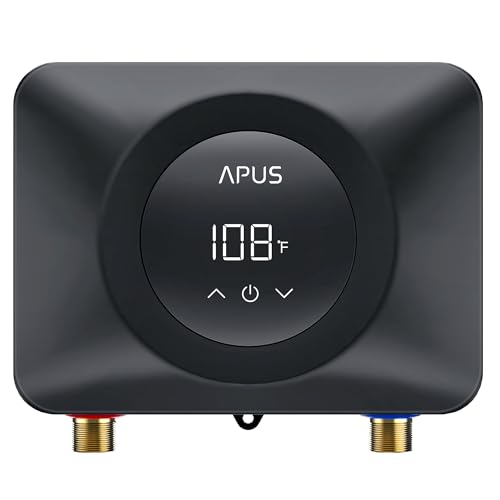
The APUS is a compact, under-sink point-of-use heater listed at 4500W and 220–240V. It heats water as it flows rather than storing it in a tank. Its adjustable outlet range is 85–131°F, and the product description says it is intended for a single sink or similar low-flow application—not whole-house service.
Best for: A buyer who needs adjustable warm water at one sink and has an electrical setup suitable for the listed voltage and load. The LED touch control and compact dimensions—approximately 8.7 × 6.5 × 2.6 inches—are useful where under-sink space is limited.
Why it was selected: Its point-of-use design, specified voltage, wattage, temperature range, and single-outlet limitation make it directly relevant to a single-phase installation decision. The listing describes self-modulation and operation only while water flows.
Limitation: It is not intended for multiple bathrooms or whole-house use. Confirm circuit capacity and installation requirements with a qualified electrician; the product information does not establish that every home circuit can support it.
Rheem 3.5kW Point-of-Use Tankless Heater

This Rheem point-of-use model is listed as a 3.5kW, 120V electric tankless heater. The supplied product details state output of up to 0.5 gallons per minute. It is described for one fixture, such as a basement sink, garage workshop sink, or outdoor kitchen.
Best for: Buyers seeking a small 120V heater for a low-flow fixture. It may suit a handwashing or utility sink better than a shower or a high-demand kitchen faucet, because the listed maximum flow is only up to 0.5 GPM.
Why it was selected: Its 120V specification and stated flow rate make it easier to compare with other small point-of-use options. Rheem also advises choosing the correct size and verifying electrical requirements before installation.
Limitation: The stated flow is modest, and actual hot-water performance depends on inlet-water temperature and other installation conditions. Do not assume it will provide the flow or temperature rise required by every fixture.
InSinkErator HOT250 Instant Hot Water Dispenser

The HOT250 is a kitchen dispenser system rather than a conventional whole-home tankless heater. It uses a 750W, 2/3-gallon stainless steel tank with adjustable temperature controls and provides near-boiling water described as approximately 200°F. Its satin nickel faucet has a 360-degree swivel spout and a single handle.
Best for: A household that wants near-boiling water at the kitchen sink for cooking, cleaning, or drinks. Choose it if the priority is a dedicated hot-water tap, not supplying ordinary hot water to several fixtures.
Why it was selected: It is an electric, compact under-sink hot-water option with a clearly stated wattage and a kitchen-focused use. Its small storage tank provides a different approach from flow-through instantaneous heaters.
Limitation: This is a dedicated near-boiling dispenser, not a substitute for a standard water heater serving showers or multiple taps. The product details do not specify a complete electrical installation requirement, so verify that before purchase.
sanheshun 3000W 110V Tankless Heater

This compact unit is listed as a 3000W, 110V tankless heater for bathroom or kitchen sink use. Its features include an LED display with temperature shown in Celsius and temperature adjustment through water flow. The listing also describes leakage protection, an IPX4 water-resistant design, dry-heat protection, water-and-electricity isolation, and automatic shutoff when inactive or overheated.
Best for: Buyers considering a compact, low-voltage point-of-use heater for washing at a sink, provided its output and electrical requirements match the installation. The digital display may help users monitor the displayed water temperature.
Why it was selected: It is explicitly described for sink installation and has a listed 110V supply, making it relevant to buyers comparing smaller single-phase-compatible appliances. Its stated safety features are useful details to review, but do not replace correct installation.
Limitation: The supplied information does not give a flow rate or a detailed temperature-rise chart. That makes it difficult to predict performance for a particular inlet-water temperature or fixture; verify specifications with the seller before relying on it for a specific task.
EHERDM 110V Instant Heating Faucet

The EHERDM combines a faucet and flow-through heating element for a kitchen, bathroom, or utility sink. The product details list a 110V supply, an LED temperature display, and a 360-degree rotating spout. The seller states that winter water temperature is in the range of 86–104°F, depending on conditions.
Best for: Buyers looking for an integrated heating faucet for everyday sink washing and rinsing. It may be a practical format when a separate under-sink heater and conventional faucet are not the preferred arrangement.
Why it was selected: It is explicitly described as a 110V instant-heating faucet and presents a different installation format from the separate tankless heater models. The display and rotating spout are features relevant to sink use.
Limitation: The stated winter temperature range is moderate rather than near-boiling, and the supplied details do not provide a flow rate or full installation requirements. Check the faucet dimensions and sink layout before selecting this model.
Buying Guide: Choosing a Single-Phase Instant Water Heater
What does “single phase” mean for this purchase?
In a typical American home, single-phase service can include both 120V and 240V circuits. A product listing that says 110V or 120V is not interchangeable with one that specifies 220–240V. Match the heater to the voltage and circuit available at the installation location, and confirm the required wiring and overcurrent protection with a qualified electrician.
Wattage matters as well as voltage. Higher-wattage heaters can require a dedicated circuit or electrical work. Do not choose based on voltage alone, and do not assume an existing outlet or circuit is suitable because its voltage appears to match.
Do you need a tankless heater or a hot-water dispenser?
A flow-through tankless heater warms water as it passes through the unit and is usually intended for a particular fixture or limited application. Output depends on inlet-water temperature, flow rate, and the temperature increase needed. The Rheem, APUS, sanheshun, and EHERDM products are described for point-of-use or sink applications.
A dispenser such as the InSinkErator HOT250 stores a small amount of water and supplies near-boiling water from a dedicated faucet. It serves a different purpose from a heater intended to provide ordinary sink or shower water. Choose according to the water temperature and use you actually need.
How much flow does the fixture need?
Check the product’s stated gallons per minute and compare it with the fixture’s demand. The Rheem listing specifies up to 0.5 GPM, so it is best considered for very low-flow use. The APUS is described for one sink or a similar low-flow application. For the other listed models, the supplied product details do not provide enough flow information to make a reliable capacity comparison.
Do not infer that a compact heater can serve a shower, multiple sinks, or a whole home. If you need simultaneous hot water at more than one fixture, look for a system specifically sized for that demand and verify its electrical requirements.
What temperature should you expect?
Compare the target outlet temperature with the product’s stated range, and consider the cold-water temperature entering the heater. A heater may deliver a lower temperature at a higher flow rate or when the inlet water is colder. The APUS lists an 85–131°F adjustable range, while the HOT250 is designed for near-boiling water. The EHERDM listing states a winter range of 86–104°F.
What installation details should you verify?
- Confirm voltage, wattage, circuit capacity, and whether a dedicated circuit is required.
- Check water connections, mounting clearance, and access for maintenance.
- Determine whether the product is a complete faucet system, an under-sink heater, or a dedicated dispenser.
- Review the manufacturer’s installation instructions and local plumbing and electrical requirements.
- Ask a qualified professional to assess wiring or plumbing changes when needed.
Frequently Asked Questions
Can a 120V tankless heater provide hot water for a whole house?
Do not assume so. The 120V Rheem model is specified for one point of use and up to 0.5 GPM. Whole-house needs require a heater specifically sized for the home’s fixtures, climate, and electrical supply.
Is a 220–240V heater compatible with every single-phase home?
No. Single-phase service does not guarantee that a suitable circuit is available at the installation site. Confirm voltage, circuit capacity, wiring, and local requirements before purchase.
Which option is intended for near-boiling water?
The InSinkErator HOT250 is the near-boiling dispenser in this selection. Its listed temperature is approximately 200°F, and it uses a small storage tank and a separate faucet.
Can these products supply hot water to several fixtures at once?
The selected tankless models are described for point-of-use or single-fixture applications, and the APUS listing specifically excludes whole-house or multiple-bathroom use. Check a product’s rated capacity before planning multi-fixture service.
Why does tankless output vary?
Tankless heaters warm water as it flows, so the result depends on factors such as inlet-water temperature, flow rate, and the desired outlet temperature. Review the manufacturer’s performance information for the conditions at your home.