Instant, powerful heating for large, open spaces calls for a reliable multi fuel torpedo heater. This guide highlights five top options optimized for farmers, workshop crews, and construction teams who need quick warmth, fuel flexibility, and practical safety features. Each product is evaluated for best-use scenarios, fuel compatibility, and ease of operation to help you choose the right model for your space. The included buying guide covers key considerations, so you can compare strengths and limiters side by side.
Overview of chosen products (quick reference):
- VEVOR Kerosene Forced Air Heater, 215,000 BTU — Best for very large workshops and industrial spaces needing rapid, expansive heat.
- Reddy Heater 80,000 BTU Forced Air Kerosene Heater — Best for mid-to-large spaces with reliable multi-fuel capability.
- Anrain 150,000 BTU Forced Air Propane Heater — Best for job sites needing portable, continuous warmth with long hose reach.
- Dyna-Glo Portable Oil and Kerosene Torpedo Heater 135,000 BTU — Best for versatile fuel use in smaller teams and garages.
- Mr. Heater 220K BTU Forced Air Kerosene Heater — Best for very large spaces with extended runtime and multi-fuel basics.
VEVOR Kerosene Forced Air Heater, 215,000 BTU

This large, diesel-style torpedo heater is designed for wide spaces. With 215,000 BTUs and a 13.2-gallon tank, it targets workshops, barns, and industrial interiors up to 1,260 m³ (44,496.6 cu ft). This model includes a thermostat and temperature display for energy control, plus protections against overheating. Best for buyers who operate heavy equipment in big rooms and need stable, high-output heat.
Best for: large, well-ventilated spaces where rapid, uniform warmth is required. Choose this if you need sustained heat for long shifts and can manage a heavier unit.
Limitation: heavier unit with a dual-fuel design; ensure proper fueling discipline and ventilation when operating indoors.
Reddy Heater 80,000 BTU Forced Air Kerosene Heater

This 80,000 BTU model delivers robust heating for large spaces like workshops and outdoor job sites. It supports multiple fuels (K-1 kerosene, various fuel oils, diesel, JP8, jet fuel) for flexibility. A strong motor and wide heating area provide quick, even warmth. Best for users who value fuel flexibility and faster heat onset in moderately sized rooms.
Best for: users who need multi-fuel options and reliable performance in sizable spaces.
Limitation: fuel type must be selected and kept consistent to avoid mixture-related issues; verify fuel availability on site.
Anrain 150,000 BTU Forced Air Propane Heater

This propane-focused torpedo heater offers up to 150,000 BTU for spaces around 4,305 ft², with a long 11-foot hose and regulator for easy propane tank connections. It features automatic overheat protection and a triple safety system for flame monitoring and tilt safety. Best for job sites where a single, reliable fuel source and longer hose reach are valuable.
Best for: professionals needing a portable propane solution with extended runtime and added safety features.
Limitation: propane fuel system requires proper tank handling and hose management; not ideal if pure electric safety constraints are strict on site.
Dyna-Glo Portable Oil and Kerosene Torpedo Heater
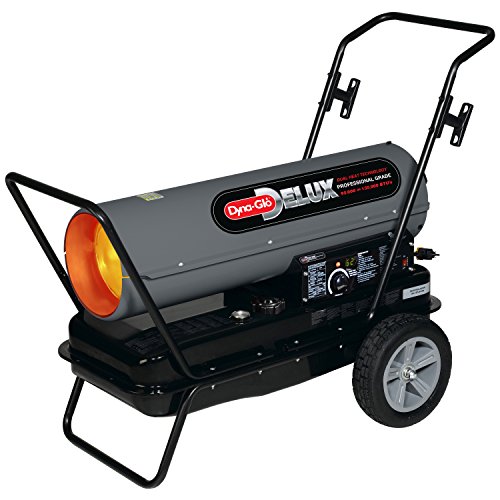
The Dyna-Glo model blends oil and kerosene options, offering 135,000 BTU of heat for smaller teams, garages, or workshops. This unit is noted for flexibility in fuel use and portability, with a design aimed at spaces that require dependable warmth without excessive footprint. Best for users who want solid heat with flexible fuel choices in lighter-duty environments.
Best for: smaller teams or spaces where fuel options and portability are valued.
Limitation: performance may be lower than higher-BTU models; ensure space size aligns with 135,000 BTU capabilities.
Mr. Heater 220K BTU Forced Air Kerosene Heater

This high-output unit delivers up to 220,000 BTU for expansive areas, with multi-fuel capabilities and extended run times for demanding job sites. It is designed for heavy-duty use where large spaces demand robust heat. Best for: industrial settings, large farms, or facilities needing consistent warmth over extended periods.
Limitation: larger footprint and fuel consumption require careful space planning and venting considerations to maintain safety and efficiency.
Buying Guide: Key Considerations For Choosing A Multi Fuel Torpedo Heater
- Space size and BTU needs: Match BTU output to the volume you need to heat. Larger spaces demand higher BTU ratings and often more durable construction.
- Fuel type and flexibility: Decide whether you need kerosene, diesel, propane, or multi-fuel capability. Some units support multiple fuels but require commitment to one type at a time.
- Ventilation and safety: Consider indoor use requirements, exhaust management, and features like overheat protection and tip-over shutoff for safety-critical environments.
- Fuel availability and runtime: Evaluate tank capacity and run-time estimates to plan for long shifts without frequent refueling.
- Portability and setup: Weigh unit weight, handle design, wheels, and hose length for on-site mobility and ease of setup.
- Maintenance and filters: Check for dual fuel filters, pressure gauges, and simple maintenance routines to minimize downtime.
- Cost of operation: Beyond upfront price, compute expected fuel consumption and practical efficiency for your space.
Quick Reference Comparison
| Model | Best For | Fuel Flexibility | Approx. BTU | Notes |
|---|---|---|---|---|
| VEVOR 215k | Very large spaces | Kerosene & Diesel | 215,000 | Thermostat & display; high output |
| Reddy 80k | Mid-to-large spaces | Multi-fuel options | 80,000 | Good balance of power and flexibility |
| Anrain 150k | Job sites with propane | Propane | 150,000 | Long hose; CSA-like features |
| Dyna-Glo 135k | Smaller teams, garages | Oil/kerosene | 135,000 | Portable and versatile |
| Mr. Heater 220k | Industrial-scale spaces | Multi-fuel | 220,000 | High heat, robust for large areas |
Frequently Asked Questions
- What is a torpedo heater? A torpedo heater is a compact, directional heater that uses kerosene, diesel, or propane to produce high BTU heating for large spaces.
- Can these heaters be used indoors? Many models are designed for well-ventilated spaces or specific indoor-use guidelines. Always follow manufacturer instructions and local codes.
- Do multi-fuel units require different fuels for different jobs? Yes. A unit typically selects one fuel type at a time. Do not mix fuels in a single operation.
- What safety features should I look for? Overheat protection, tip-over shutoff, fuel gauges, and proper vents significantly improve on-site safety and reliability.
- How do I estimate BTU needs for a space? Consider space volume, ceiling height, insulation, and ventilation. For rough planning, higher BTU isn’t always better if heat disperses poorly.
- How long do these heaters run between refuels? Runtime varies by fuel type and tank size; check each model’s fuel capacity and consumption rating to plan maintenance.