If you are searching for a natural gas hot water furnace, you may mean a natural gas water heater: a furnace heats air, while a water heater supplies hot water. The five tankless models below offer different capacities and features, from compact 4.3-GPM options to a 7.9-GPM whole-home unit. The ThermoMate is best for a smaller household seeking listed safety features, while the Westinghouse is best for buyers who want higher stated flow and Wi-Fi controls. Compare the units against your household’s simultaneous hot-water needs before choosing.
| Product | Stated flow | Best suited for |
|---|---|---|
| ThermoMate CZ422NG | Up to 5 GPM | Smaller homes prioritizing listed safety protections |
| APUS Natural Gas Tankless | Up to 6.8 GPM | Homes needing greater stated flow and a booster pump |
| NOVIEEX Natural Gas Tankless | Up to 4.3 GPM | Lower-demand households with a defined connection specification |
| Westinghouse Tankless | Up to 7.9 GPM | Higher-demand homes seeking app and voice controls |
| Rinnai V53DeN | 5.3 GPM | Homes seeking a mid-range stated flow rate |
ThermoMate CZ422NG Tankless Water Heater

Best for: Smaller households that want a natural gas tankless water heater with a published list of safety protections. The ThermoMate is rated up to 5 GPM and 113,000 BTU. The product information says it can supply two showers at once under its stated test conditions: a 65°F inlet temperature and 105°F output.
Its listed features include an oxygen-free copper heat exchanger, up to 98% thermal efficiency, a UEF of 0.81, and temperature consistency of ±1°F. The model is described as CSA certified and includes protections for issues such as flame-out, overheating, freeze conditions, and blocked pipes. Freeze protection is stated to activate at 41°F.
Why it was selected: Its stated capacity, efficiency details, and specific safety-feature list make it easier to compare with other options. Limitation: Its 5-GPM maximum is lower than the APUS and Westinghouse figures, so it may be less suitable for homes with many simultaneous hot-water demands.
APUS 6.8-GPM Natural Gas Tankless Heater

Best for: Households looking for a higher stated flow rate and a built-in booster pump. The APUS has a 140,000-BTU burner and lists maximum flow of 6.8 GPM. Its product description says the pump can increase water flow by up to 130% and describes support for two showers and two sinks running at the same time.
The unit uses an oxygen-free copper heat exchanger and includes an ECO smart cycle. The product listing states a UEF of 0.81 and claims the cycle saves 40% more energy than conventional models. It requires a standard 120V AC connection, so buyers should account for the electrical supply as well as the natural gas connection.
Why it was selected: Its listed capacity is higher than the ThermoMate, NOVIEEX, and Rinnai figures, and the built-in pump is a differentiating feature. Limitation: The energy-savings figure is a product claim, not a guarantee of a particular household’s results. Confirm that the unit’s installation requirements suit the home.
NOVIEEX 4.3-GPM Indoor Tankless Heater

Best for: Lower-demand households that want a clearly specified natural gas model. The NOVIEEX is rated at 100,000 BTU and up to 4.3 GPM. Its listing describes hot water for a shower, kitchen faucet, and bathroom sink at the same time, though actual performance depends on conditions such as inlet-water temperature and flow demand.
The model has an adjustable temperature range of 95°F to 149°F and claims ±1°F temperature control. The product information specifies a 110–120V AC, 60Hz power supply; 1/2-inch NPT gas and water connections; and a water-pressure range of 1.5–116 psi. These specifications are useful when checking whether the unit aligns with a planned installation.
Why it was selected: It is the lowest-flow option in this comparison and provides detailed connection and operating specifications. Limitation: Its 4.3-GPM maximum is the smallest stated capacity here. Buyers with multiple showers or other heavy concurrent uses should compare their expected demand carefully before selecting it.
Westinghouse 7.9-GPM Smart Tankless Heater

Best for: Higher-demand households that want remote controls and a larger stated maximum flow. The Westinghouse is listed at 180,000 BTU and up to 7.9 GPM. Its description says it can supply three showers at once and serve everyday needs such as laundry and dishwashing. The listing also identifies it as a whole-home indoor natural gas tankless heater.
Built-in Wi-Fi supports app or voice control, temperature adjustment, operating-status monitoring, and fault alerts, according to the product details. The unit uses self-modulating technology and is described as maintaining temperature within ±1°F. The listing identifies the model as CSA certified and gives a temperature range of 95°F to 149°F.
Why it was selected: It has the highest stated flow and BTU figures among these five products, plus connected controls. Limitation: Its larger capacity does not by itself confirm that it fits a particular home’s gas supply, venting, or installation setup. Verify those requirements before purchase.
Rinnai V53DeN Natural Gas Tankless Heater
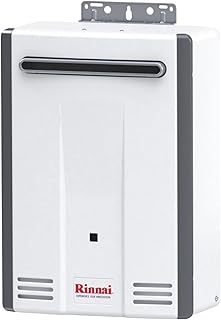
Best for: Buyers comparing a mid-range 5.3-GPM option from Rinnai. The product information says the unit can serve up to four appliances and provides hot water on demand. As with any stated flow rate, the number of fixtures that can operate comfortably at once depends on their actual flow requirements and the incoming water temperature.
The listing describes the compact gas tankless heater as heating water only when needed. It also states a 10-year warranty on the heat exchanger. This warranty detail is specific to the heat exchanger; buyers should check the product documentation for other warranty terms and installation conditions.
Why it was selected: Its listed 5.3-GPM capacity sits between the lower-flow NOVIEEX and the higher-flow APUS and Westinghouse. The heat-exchanger warranty is another stated comparison point. Limitation: The supplied product details do not specify temperature-control accuracy, electrical requirements, or installation location, so confirm those details before deciding.
Buying Guide: How to Choose a Natural Gas Water Heater
Do you mean a furnace or a water heater?
A furnace heats air for a home’s heating system. A water heater heats water for showers, sinks, laundry, and other household uses. The products in this comparison are natural gas tankless water heaters, not furnaces. If your search is for home heating, look for a gas furnace rather than a hot-water appliance.
How much flow capacity does your household need?
Start by identifying which hot-water fixtures might operate at the same time. A household that typically uses one shower and a sink has different needs from one that runs several showers, a dishwasher, or laundry concurrently. Compare that demand with the product’s stated maximum GPM, but do not treat a maximum flow figure as a universal guarantee: delivered hot-water flow can depend on incoming-water temperature and operating conditions.
Among these five models, the NOVIEEX lists up to 4.3 GPM, the ThermoMate up to 5 GPM, the Rinnai 5.3 GPM, the APUS up to 6.8 GPM, and the Westinghouse up to 7.9 GPM. Those figures help rank stated capacity, but a qualified installer can assess whether a unit will meet the home’s real demand.
Which specifications should you verify before installation?
Check the exact natural gas requirement, gas pressure, electrical supply, water connections, water-pressure range, venting, and installation location in the manufacturer’s documentation. The NOVIEEX listing, for example, specifies 110–120V AC power, 1/2-inch NPT connections, and a stated pressure range. The APUS listing calls for a standard 120V AC connection. Do not assume that specifications from one model apply to another.
Natural gas appliances involve fuel, combustion, and venting. Confirm local code requirements and use a qualified professional to determine whether the product is appropriate for the home and how it should be installed. Product descriptions alone do not establish that an appliance is a fit for a particular property.
Should you prioritize efficiency, controls, or safety features?
Compare efficiency information only when the products provide comparable figures. ThermoMate and APUS both list a UEF of 0.81, but their additional efficiency claims use different wording and should not be treated as directly equivalent. Actual operating costs vary with household usage, local utility rates, incoming-water temperature, and installation.
If remote operation matters, the Westinghouse listing specifies Wi-Fi app and voice controls. If temperature stability is a priority, several listings state a control or stability figure, but confirm what that number means in the product documentation. ThermoMate lists numerous safety protections and CSA certification; Westinghouse also identifies CSA certification. Do not assume other models have certifications or protections that are not specified in their supplied product details.
Is a tankless heater right for your home?
Tankless models heat water on demand rather than storing a tank of heated water. That operating approach may suit buyers who want an on-demand system, but choosing one still requires matching capacity and installation needs to the home. Consider how many people live there, when hot-water use overlaps, the available gas supply, and whether the unit’s electrical and venting requirements can be met.
Frequently Asked Questions
Are natural gas hot water furnaces the same as water heaters?
No. A furnace heats air for home heating. A natural gas water heater heats water for plumbing fixtures and appliances. The products listed in this article are tankless water heaters.
What does GPM mean on a tankless water heater?
GPM means gallons per minute. It describes a water-flow rate. A higher stated GPM can indicate greater potential capacity, but actual usable hot-water flow depends on incoming-water temperature, the selected temperature rise, and household demand.
Which product has the highest stated flow rate?
The Westinghouse model lists up to 7.9 GPM, the highest stated maximum among the five products compared here. Confirm that its installation requirements and capacity are suitable for the home before choosing it.
Can a tankless gas water heater serve more than one fixture?
Yes, the product descriptions for these models state capacities for multiple simultaneous fixtures. The number that can run comfortably depends on the combined flow demand and operating conditions, so compare household usage with the unit’s specifications.
Does a natural gas tankless water heater need electricity?
Some models require an electrical connection for controls or other functions. The APUS listing specifies a standard 120V AC connection, and the NOVIEEX specifies 110–120V AC at 60Hz. Check the documentation for the exact model you are considering.
Should a gas tankless water heater be professionally installed?
Have a qualified professional assess gas supply, venting, electrical connections, water connections, and local code requirements. The product listing alone cannot determine whether a unit is suitable for a specific home or installation.