Whether you need reliable heat in a basement, living area, or office, ventless natural gas space heaters offer quick warmth without electrical supply. This guide selects five top options, explaining who each is best for, how they operate, and what to watch out for. The focus is on ease of use, heating capacity, and safety features so you can choose with confidence. Ideal buyers include small-to-mid sized spaces, off-grid areas, and users who want fast heat with minimal setup.
| Product | Best For | Approx. BTU | Fuel |
|---|---|---|---|
| MN300HPA-B | Large living spaces | 30,000 | Natural Gas |
| MN100TPA-B | Small rooms and offices | 10,000 | Natural Gas |
| Mr. Heater 30,000 BTU | Open floor plans | 30,000 | Natural Gas |
| ProCom MN300TBA-B | Medium to large rooms | 30,000 | Natural Gas |
| Electrical Kickspace (ALORAIR) | Bathroom/kitchen toe-kick areas | 1,350 (electric) | Electric |
ProCom MN300HPA-B Ventless Infrared Plaque Heater
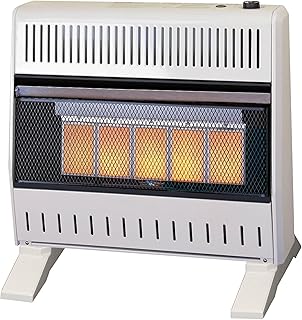
This ventless infrared plaque heater delivers up to 30,000 BTU using natural gas and heats areas up to 1,200 square feet. It requires no electricity, relying on a push-button Piezo ignition for quick starts. Manual control provides Low, Medium, and High heat settings, making it suitable for medium-to-large spaces. An Oxygen Depletion Sensor with automatic shut-off adds a basic safety layer for indoor use. Best for rooms where gas is available and electrical power is limited.
Who it’s best for: buyers needing a powerful, gas-only heater for larger rooms without wiring or electrical dependence. Why chosen: high output and simple manual controls simplify operation in spaces with natural gas supply. Limitation: no thermostat automation beyond three fixed heat levels; control is manual.
ProCom MN100TPA-B Ventless Infrared Plaque Heater
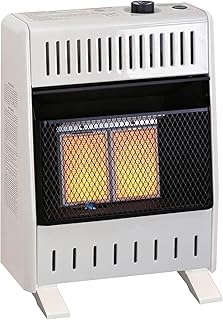
This compact 10,000 BTU natural gas heater is designed for smaller rooms up to about 500 square feet. It offers High/Medium/Low thermostat control for adjustable warmth and a slim, modern profile that fits easily in living rooms, bedrooms, or offices. It can be mounted on the wall or placed on the floor with base feet included. Best for: compact spaces where a discrete, gas-powered heat source is desired. Better for: areas with limited electrical access. Limitation: lower heat output compared to higher BTU models.
Mr. Heater 30,000 BTU Vent Free Radiant Natural Gas Heater

This vent-free radiant heater provides 30,000 BTU per hour and can heat up to about 1,000 square feet. It uses a battery-operated electronic ignition and reliable heat output ideal for open-plan living spaces. It’s a solid option when you want strong, steady warmth without a vent. Best for: larger rooms or open floor plans where gas heat is preferred. Caution: battery-powered ignition requires battery maintenance, and use in well-ventilated spaces is essential.
ALORAIR WarmHub 15 Electric Kickspace Heater

This electric kickspace heater is not gas-powered but serves as a compact alternative for toe-kick or under-cabinet heating. It uses 1350W to deliver about 4,520 BTU/h and features a 200mm blower for enhanced airflow. Remote and control panel give convenient operation, while a built-in timer and thermostat help manage energy use. Best for: bathrooms, kitchens, and small nooks where electric heat is available and venting is impractical. Better for: spaces requiring quick, localized warmth with low profile installation. Limitation: electric heat may be less effective in very large or drafty rooms.
ProCom MN300TBA-B Ventless Natural Gas Blue Flame Heater
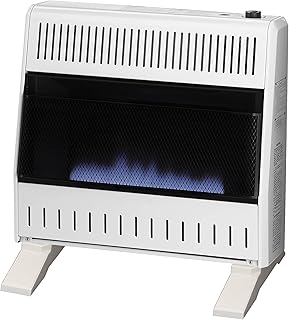
This 30,000 BTU blue flame ventless heater heats up to 1,400 square feet and uses natural gas with thermostat control offering High/Medium/Low settings. Its slim, modern profile fits various rooms, and it can be mounted on a wall or placed on base feet. Best for: larger rooms requiring robust heat output with flexible installation. Limitation: higher heat output may require careful ventilation and space planning to avoid overheating smaller spaces.
Buying Guide: Ventless Natural Gas Heaters
- Heat output vs. space: Larger BTU units cover more area but may be unnecessary in small rooms. Match BTU to square footage and ceiling height.
- Ventless safety features: Oxygen Depletion Sensor (ODS), automatic shut-off, and flame type (blue vs infrared) influence safety and comfort.
- Fuel source and electricity: Gas-based units require a natural gas line; electric kickspace heaters rely on household electricity. Consider where power is available.
- Installation flexibility: Wall-mount capability, base feet, or compact footprints affect placement in living rooms, offices, or bedrooms.
- Thermostat versus manual control: Thermostatic control helps maintain consistent temps; manual settings are simpler but less precise.
- Maintenance and replacement parts: Look for ease of ignition maintenance and availability of replacement components.
Common Scenarios And Recommendations
- Open living spaces with gas supply: Choose a 30,000 BTU model for faster, even heating.
- Small bedrooms or offices: A 10,000 BTU unit provides sufficient warmth with energy efficiency.
- Rooms requiring minimal electric use: Ventless gas options are advantageous in off-grid or power-sensitive environments.
- Bathrooms or kitchens where space is tight: Electric kickspace heaters can complement gas heat for targeted comfort.
Frequently Asked Questions
- Do ventless gas heaters require ventilation? Yes, ensure proper space ventilation and follow manufacturer guidelines for safe operation.
- Can I install these heaters myself? Follow the product manual and local code requirements; some models may require professional installation.
- Are oxygen depletion sensors common on ventless heaters? Many models include ODS for safety, but confirm with the specific unit.
- Can ventless heaters be used in all rooms? They are suitable for many spaces, but keep in mind room size and ventilation needs.
- Is it safe to run gas heaters overnight? Use models with automatic shut-off and follow safety recommendations to minimize risks.
- What are the benefits of infrared vs blue flame gas heaters? Infrared tends to provide quick warmth with a radiant heat feel, while blue flame focuses heat output efficiently; both require adequate ventilation.