If you want dependable warmth with precise control, a natural gas wall heater with a thermostat is a strong option for mid-size rooms and living spaces. These units balance energy efficiency with steady heat, suitable for bedrooms, living rooms, and small apartments. The following five models stand out for different needs—compact spaces, higher BTU output, direct-vent options, and dual-fuel flexibility. This guide helps you choose the best fit based on space, heat area, and control features.
| Product | BTU | Coverage | Thermostat Control |
|---|---|---|---|
| Mr. Heater 30,000 BTU Vent Free Blue Flame Natural Gas Heater | 30,000 | Up to 1,000 sq ft | Yes |
| ProCom MN100TPA-B Ventless Infrared Plaque Heater | 10,000 | Up to 500 sq ft | Thermostat control |
| Mr. Heater 20,000 BTU Vent Free Radiant Natural Gas Heater | 20,000 | Up to 700 sq ft | Electronic ignition |
| Comfort Glow 17,000 BTU Direct Vent Natural Gas Wall Heater | 17,000 | Up to 500 sq ft | Thermostat control |
| JEWUNO 30,000 BTU Natural Gas/Propane Dual Fuel Wall Heater | 30,000 | Up to 1,000 sq ft | Thermostat control |
Mr. Heater 30,000 BTU Vent Free Blue Flame Natural Gas Heater

This vent-free unit delivers up to 30,000 BTU per hour and heats spaces up to 1,000 square feet. It uses a battery-operated electronic ignition for reliable starts and maintains a steady warm environment. Best for larger living areas or open plans where direct venting is not feasible. Caution: Ensure proper room venting and carbon monoxide considerations when using vent-free models.
ProCom MN100TPA-B Ventless Infrared Plaque Heater

This compact infrared heater provides up to 10,000 BTU and can heat up to about 500 square feet. It includes thermostat control and a slim, modern profile suitable for offices or bedrooms. Best for small spaces where a discrete heater is preferred. Limitation: Smaller BTU output means it may take longer to reach or maintain heat in larger rooms.
Mr. Heater 20,000 BTU Vent Free Radiant Natural Gas Heater

This model offers 20,000 BTU and heats up to 700 square feet. It provides electronic ignition for quick starts and is well-suited for medium-sized living areas needing steady, radiant heat. Best for balanced heat output with reliable ignition. Caution: Vent-free operation requires proper room air exchange to maintain indoor air quality.
Comfort Glow 17,000 BTU Direct Vent Natural Gas Wall Heater

This direct-vent heater delivers 17,000 BTU, suitable for up to 500 square feet. It includes a thermostatic control and safety features like an electronic ignition and a built-in regulator. Best for rooms where venting through an exterior wall is preferred for air exhaust. Limitation: Slightly lower BTU than high-output models, so ideal for smaller to mid-sized spaces.
JEWUNO 30,000 BTU Dual Fuel Wall Heater
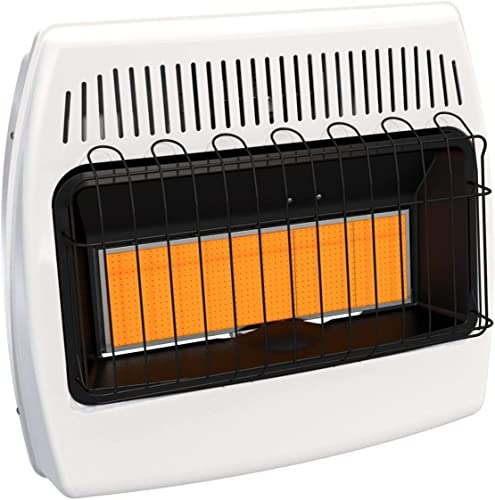
This dual-fuel model supports natural gas or propane with 30,000 BTU output and heats up to 1,000 square feet. Thermostatic control helps maintain a chosen temperature. Best for homes needing flexible fuel options or regions with propane availability. Caution: Dual-fuel capability adds complexity; ensure proper fuel type is selected before operation.
Buying Guide
What size space will you heat? Choose BTU accordingly: larger rooms generally require 20,000–30,000 BTU, while smaller bedrooms may be well-served by 10,000–17,000 BTU units. Consider venting: direct-vent models exhaust outdoors, while vent-free options rely on room air exchange. Do you want dual-fuel capability? If propane access is important, a dual-fuel unit offers future flexibility. How important is throttling control? Thermostats provide steady, programmable warmth, ideal for maintaining comfort and efficiency. Check ignition type: electronic ignition is common, often battery-powered for reliability. Safety features like oxygen depletion sensors and automatic shut-off are valuable in enclosed spaces.
FAQ
- What heat coverage should I expect from a 30,000 BTU heater? Expect up to about 1,000 square feet under typical conditions, though effectiveness depends on insulation and ceiling height.
- Do vent-free heaters require venting? Vent-free models do not vent outdoors but need adequate room ventilation to ensure air quality.
- Is dual-fuel a better option than natural gas alone? Dual-fuel gives flexibility if propane is more available than natural gas in your area.
- Will a thermostat save energy? Yes, thermostatic control helps maintain a consistent temperature and can reduce unnecessary fuel use.
- What safety features matter most? An oxygen depletion sensor, automatic shut-off, and a reliable ignition system are key safety considerations.