The best on-demand electric hot water heater depends on your available electrical service, water demand, and installation space. The 14kW models are intended for select sink-and-shower needs, the 18kW model offers higher listed flow, and the 110V unit is a lower-power option for a single nearby fixture. The propane model below is included only as a fuel-type comparison; it is not an electric heater.
| Product | Best For | Key Requirement or Detail |
|---|---|---|
| 14kW Tankless Water Heater, Gray | One or two points of use | 240V; one 60-amp circuit |
| Orbek 14kW Tankless Heater | Kitchen and bathroom use | 240V; 60-amp two-pole breaker |
| Jflapil 110V 3000W Heater | Low-flow, local hot water | 110V; listed range of 0.3–0.5 GPM |
| WINTEMP 18kW Electric Heater | Higher-flow shower use | 240V; maximum listed output of 4.3 GPM |
| APUS Propane Tankless Heater | Whole-home propane comparison | Propane, not electric |
14kW Tankless Water Heater, Gray
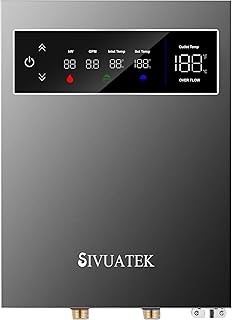
This 240V electric model is best for buyers who need on-demand hot water for one or two nearby uses, such as a sink and a shower. Its 14kW rating and compact dimensions—15.87 by 11.14 by 2.87 inches—make it a space-conscious alternative to a storage tank.
The product listing specifies a 60-amp circuit breaker and standard 1/2-inch NPT water connections. It also says the housing does not need to be disassembled for wiring. The manufacturer describes the heater as suitable for under-sink or wall installation and claims up to 99.8% thermal efficiency.
- Best for: Households with modest, localized hot-water needs and the electrical capacity for the stated circuit.
- Why it was selected: It combines a clearly stated 14kW output, compact measurements, and a defined one-to-two-point use case.
- Limitation: The listing requires a substantial 60-amp circuit, and the product is not presented as a whole-home solution for many simultaneous fixtures.
Choose this model if its circuit and connection requirements match the installation. Confirm the expected flow and incoming-water temperature for your location before treating its stated use range as suitable for your household.
Orbek 14kW Tankless Electric Heater

The Orbek 14kW unit is best for buyers considering a 240V heater for several points of use, such as a bathroom and kitchen. The listing states a maximum output of 3.38 gallons per minute and describes the unit as suitable for two to three points of use. Actual usable flow depends on the required temperature rise and household conditions.
Installation requirements are specific: the manufacturer calls for a 240V, 60-amp, two-pole breaker, one set of 6 AWG wires, and 1/2-inch NPT water connections. It also advises that the household breaker panel have at least 150 amps of total current capacity. The listing claims hot water in three seconds and describes technology intended to limit scale and corrosion.
- Best for: Buyers who want a 14kW option with a stated flow figure and have the required electrical service.
- Why it was selected: Its listed flow and point-of-use description make it directly comparable with the other 14kW electric option.
- Limitation: It has demanding electrical requirements; the stated 3.38 GPM maximum should not be assumed under every temperature or flow condition.
Choose this model if the installation requirements and expected hot-water demand align. Have an electrician assess the panel and circuit before purchase rather than relying on the heater’s wattage alone.
Jflapil 110V 3000W Under-Sink Heater

This 110V, 3000W heater is best for low-flow, localized hot-water needs rather than multiple high-demand fixtures. The listing gives an adjustable temperature range of 82°F at 0.3 GPM to 131°F at 0.5 GPM. That makes the stated output more appropriate for a small sink application than for assuming a full-flow shower supply.
The unit has an LED display with Fahrenheit and Celsius settings, a compact wall-mounted design, and listed protections including dry-burn and overheating protection, leakage protection, and IPX4 water resistance. The product listing also claims 98% thermal efficiency and says it is ETL certified; buyers should verify documentation and suitability for their specific installation.
- Best for: Buyers who need a compact heater near a low-flow sink and prefer a 110V appliance.
- Why it was selected: Its voltage, small form, display, and explicit low-flow temperature information make it distinct from the higher-power 240V models.
- Limitation: The listed flow range is low, so it is not the better choice for simultaneous fixtures or high-flow shower use.
Choose this if the fixture’s flow requirement falls within the listed range. Avoid assuming that a standard 110V connection means the unit can be plugged in or installed without checking the product’s instructions and local electrical requirements.
WINTEMP 18kW Electric Tankless Heater

The WINTEMP 18kW model is best for buyers who need more listed flow than a 14kW unit may provide and have the electrical service to support it. The manufacturer lists a maximum output of 4.3 GPM and describes the heater as suitable for residential shower use and two-to-three-bathroom homes in mild to moderate climates.
The unit operates at 240V and has a maximum amperage of 75A. The listing calls for two 40-amp double-pole breakers and two 8/2 AWG wires, recommends 150-amp household service, and specifies 3/4-inch NPT water connections. It measures 11.1 by 19.2 by 4 inches. Self-modulating operation is described as adjusting power with water flow and incoming temperature.
- Best for: Buyers seeking a higher-output electric option for shower and everyday household use.
- Why it was selected: Its 18kW rating and stated 4.3 GPM maximum distinguish it from the 14kW models.
- Limitation: Its electrical requirements are significant, and the maximum flow is not a guarantee of that flow at every temperature rise.
Choose this model only after confirming the required breaker, wiring, service capacity, and water connections. The listing recommends consulting a qualified electrician, which is especially important for this higher-load appliance.
APUS Propane Tankless Heater

This APUS model is not an electric water heater. It is included as a fuel-type comparison for shoppers whose main priority is higher whole-home flow and who are open to propane. The listing describes a 140,000 BTU indoor unit with up to 6.8 GPM and claims it can support two showers and two sinks at once when conditions allow.
Features described in the listing include a built-in booster pump, Wi-Fi app control, a 95–140°F control range, anti-freeze protection, and a 120V AC connection for the unit’s electrical needs. Its primary heating fuel is propane, so the 120V connection does not make it an electric tankless heater.
- Best for: Buyers comparing propane whole-home systems with electric point-of-use or household units.
- Why it was selected: It provides a useful contrast in fuel type and listed flow for people searching broadly for on-demand hot water.
- Limitation: It does not meet a requirement for an electric water heater; propane supply and installation needs must be considered.
If you specifically need electric heat, choose one of the electric products above instead. Consider this model only if propane is an acceptable fuel and the installation is appropriate for an indoor propane appliance.
Buying Guide: Choosing an On-Demand Electric Water Heater
How much hot water do you need at once?
Start by listing the fixtures that may run simultaneously. A single sink generally needs less flow than a shower, and running a shower and kitchen tap together increases the demand. The product listings provide different reference points: the Jflapil lists 0.3–0.5 GPM, the Orbek lists a maximum of 3.38 GPM, and the WINTEMP lists a maximum of 4.3 GPM. These are not directly comparable guarantees because temperature rise and conditions affect delivered flow.
Estimate the combined flow of the fixtures you expect to use. Then compare that demand with the manufacturer’s performance information at your expected incoming-water temperature and desired output temperature. A unit can deliver less flow when it needs to raise colder water by more degrees.
What electrical service does the heater require?
Voltage, amperage, breaker configuration, wire size, and the capacity of the household electrical panel all matter. A 240V unit may need dedicated circuits and heavy-gauge wiring. For example, the listings specify a 60-amp circuit for the gray 14kW model, a 60-amp two-pole breaker and 6 AWG wire for the Orbek, and two 40-amp double-pole breakers for the WINTEMP.
Do not treat the unit’s voltage as the only installation check. Have a qualified electrician verify the panel’s capacity, circuit requirements, wiring, and local code considerations before buying. If the necessary service is not available, installation may require electrical work or a different heater choice.
Should you choose 110V or 240V?
A 110V model can be convenient for localized, low-flow needs, but its heating capacity may not suit a shower or several fixtures. The Jflapil’s listed 0.3–0.5 GPM range illustrates the importance of checking flow rather than choosing by voltage alone. Higher-power 240V models are designed for greater demand, but they also place more requirements on the electrical system.
Choose based on the fixture’s actual flow and temperature needs. A low-power unit may work well at a nearby sink but disappoint if expected to serve a high-flow fixture. A larger model may provide more capacity but is not automatically suitable for every home’s electrical panel.
How do you compare tankless flow ratings?
Look for performance data that states flow at a particular temperature rise, not just a maximum GPM figure. The colder the incoming water and the hotter the target output, the more heating work is required. A maximum flow number without those conditions can overstate what a household experiences during winter or at a distant fixture.
Also consider how many fixtures the product is intended to serve. “Two to three points of use” is a manufacturer description, not a universal promise that any combination of fixtures will receive adequate hot water. Confirm performance with the manufacturer’s technical information for your region and use case.
Where will the heater be installed?
Measure the installation area and check clearance, water connections, electrical access, and the manufacturer’s installation directions. The gray 14kW listing describes under-sink or wall placement, while the Jflapil and WINTEMP are described as wall-mounted. Their dimensions and connection sizes differ, so check the exact product specifications rather than assuming similar-looking units install the same way.
Point-of-use placement can reduce the distance between the heater and a faucet, but the installation must still comply with electrical and plumbing requirements. Confirm that the chosen location is appropriate for the product and accessible for service.
Is an electric tankless unit always more efficient?
Tankless electric heaters avoid keeping a stored volume of water hot, so they do not have the same standby storage losses described for conventional tanks. However, energy use depends on how much hot water a household consumes and the temperature increase required. Product efficiency claims such as 98% or 99.8% are manufacturer statements and should not be treated as a guarantee of a particular utility-bill reduction.
Compare the total installation needs as well as operating expectations. A unit that requires major electrical upgrades may not be the simplest choice even if its compact design suits the space.
Frequently Asked Questions
Can an electric tankless heater provide hot water continuously?
It can heat water while it flows, but the usable flow is limited by its heating capacity and the temperature rise required. “Continuous” does not mean unlimited flow or unlimited simultaneous fixtures.
Can a 14kW heater serve a whole house?
It depends on household demand, incoming-water temperature, and the unit’s actual flow at the required temperature rise. The 14kW listings describe limited points of use, so verify performance before selecting one for whole-house service.
Is the APUS product an electric tankless water heater?
No. It is a propane tankless water heater. Its listed 120V AC connection does not change its primary heating fuel.
Can a 110V tankless heater run a shower?
The Jflapil listing specifies 0.3–0.5 GPM, so buyers should not assume it can provide a typical shower’s desired flow. Check the fixture’s required flow and the heater’s temperature-rise specifications.
What should I verify before purchasing?
Confirm the electrical service, breaker and wire requirements, water connection size, installation location, expected simultaneous flow, and output temperature under local incoming-water conditions. Use a qualified electrician for electrical assessment and follow the manufacturer’s installation instructions.