Direct answer: On demand (tankless) water heaters vary by fuel type, power, and flow rate. The best choice depends on your home size, climate, and hot-water needs. Electric options suit smaller homes or apartments with ample electrical capacity; gas models work well for busier households and higher hot-water demands; portable under-sink units fit tight spaces or point-of-use needs. This guide reviews five representative models to help you decide which is best for you.
Buyer profile summary:
– For small apartments or single-point needs: 14kW electric and under-sink electric units.
– For modest to mid-sized homes with 2–3 bathrooms: 18kW electric or 14kW ThermoMate electric.
– For larger households with simultaneous hot-water use: gas-fired models like MIZUDO, which deliver higher flow.
– Important: Verify electrical service or gas availability, installation clearances, and venting requirements before purchase. The table below highlights each product’s core strengths for quick comparison.
| Product | Best For | Max Flow | Power/Gas | |
|---|---|---|---|---|
| WINTEMP 18kW Electric | 2–3 bathroom homes (milder climates) | 4.3 GPM | 18 kW / 240V | Self-modulating; high energy savings |
| 14kW Electric, Sink & Shower | Small homes or apartments | Up to 3.0–3.5 GPM | 14 kW / 240V | Compact; easy under-sink install |
| DOYXC 110V Under-Sink | Point-of-use needs | Varies by install | 110V | Portable, space-saving |
| MIZUDO Gas Tankless | Busy households; multi-point whole home | Up to 10.3 GPM | Gas | WiFi/app control |
| ThermoMate 14kW Electric | Mid-sized homes with 150A panel | Up to 3.4 GPM | 14 kW / 240V | Durable cast-aluminum heating element |
WINTEMP Store 18kW Electric Tankless Water Heater

Best for: Residential showers in mild climates, with a need for continuous hot water at 4.3 GPM. This unit uses self-modulating technology to adjust power based on flow and inlet temperature, delivering stable water temperature and energy savings up to 99% versus traditional tanks. Suitable for homes with 2–3 bathrooms and sufficient electrical service.
Why selected: High flow capability and robust self-regulation help maintain comfort without preheating. The compact 11.1″ x 19.2″ footprint fits many utility spaces. Note the installation requires 2 x 40 Amp DP breakers and 8 AWG wiring, so professional electrical work is essential.
Caution: Requires a qualified electrician and adequate electrical service (150 Amp recommended). Improper installation can affect performance and safety.
14kW Tankless Electric for Sink & Shower
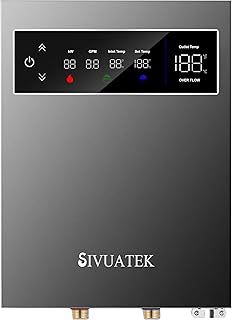
Best for: Small homes, kitchens or compact bathrooms with 1–2 fixtures. Delivers instant hot water with up to 99.8% efficiency and a compact footprint, making it ideal for under-sink or wall-mounted installations where space is limited.
Why selected: No preheating and no idle energy use help cut consumption. The unit’s 1/2″ NPT connections simplify installation, and LED readouts show inlet/outlet temperatures and status.
Caution: Requires a dedicated 60-amp circuit and careful sizing to avoid shortfalls when multiple fixtures operate simultaneously.
DOYXC 110V Under-Sink Tankless (Portable)

Best for: Point-of-use hot water at sinks in apartments, RVs, or remote areas where space is at a premium and utility connections are limited. Delivers hot water within 3–5 seconds, with a compact, portable design.
Why selected: Instant hot water at the tap, with safety features such as IPX4 waterproofing, leak protection, and dry-burning protection. The LCD display helps monitor performance and status.
Caution: Output temperature depends on incoming cold-water temperature and the installation setup; not suitable for whole-house heating.
MIZUDO Gas Tankless Water Heater

Best for: Busy households needing high hot-water flow across multiple fixtures. With up to 10.3 GPM, this gas model is suited for 2–3 bathrooms with simultaneous demands, plus kitchen and laundry use.
Why selected: High heating input (199,000 BTU) enables quick delivery of hot water and stable temperatures via advanced gas modulation. Features WiFi and app control for convenience.
Caution: Gas installation typically requires venting and professional setup; ensure local codes and venting requirements are met before purchase.
ThermoMate 14kW Electric Tankless

Best for: Mid-sized homes with a 150 Amp service where multiple fixtures may run simultaneously. The 14kW unit supports up to 3.4 GPM, balancing performance and electrical load.
Why selected: Durable heavy-duty cast aluminum heating element aims to reduce mineral buildup and extend lifespan. It uses a 60 Amp double-pole circuit and 6 AWG copper wires for installation, aligning with common residential panels.
Caution: Ensure your electrical panel and wiring are adequate to support continuous operation; improper sizing can limit performance or trip breakers.
Buying Guide: How to Choose the Right On-Demand Water Heater
- House size and hot-water demand: Larger homes with multiple showers and high simultaneous usage require higher GPM ratings and often gas models. Smaller homes or apartments may be well-served by 14kW or point-of-use units.
- Power availability: Electric models rely on 240V supply and ample amperage (often 150A service recommended). If electrical service is limited, a gas unit or a compact electric unit with careful load management may be necessary.
- Climate and incoming water temperature: Colder inlet water requires more heating power to achieve comfortable outlet temperatures. In colder climates, higher kW electric units or gas models with proper modulation are advantageous.
- Space and installation: Under-sink or wall-mount options save space but require proper clearances and connection types. Gas units require venting and professional installation.
- Operating cost and efficiency: Self-modulating electric heaters adjust power with demand, reducing standby losses. Gas models may offer high flow but require fuel availability and venting considerations.
- Future-proofing: If you anticipate expanding hot-water needs or adding bathrooms, consider a unit with higher flow rating and flexible installation options, even if current demand is modest.
FAQ
- What is on-demand water heater pros and cons? Pros include endless hot water, space savings, and energy efficiency. Cons can include higher upfront costs, electrical or gas installation requirements, and potential flow limitations at very high demands.
- Do I need a professional installation? Yes, especially for electrical (panel capacity, breakers, wire gauge) and gas units (venting, gas line sizing, permits).
- Can an electric model feed my whole house? Electric tankless can serve whole-house needs in smaller homes or apartments with proper electrical capacity; larger homes may require multiple units or a gas model for higher flow.
- Do tankless heaters save money? They can reduce standby energy loss and potentially lower operating costs, but installation costs and electrical/gas expenses must be considered.
- What about maintenance? Regular descaling and mineral management help extend life, particularly in hard-water areas.
- Which is best for a rainy climate? In milder climates, high-flow electric units and gas models can reliably provide hot water; the choice depends on electrical capacity and gas availability.