Answering the most common buyer question: which insulated PEX water line is best for outdoor wood boiler use? This guide compares five top options, focusing on durability, insulation, and suitability for open-loop or pressurized systems. The Heat Mizer 50ft minimum, plus several 40–60 ft variants, cover oxygen barrier and non-barrier configurations. This summary helps buyers decide who each product is best for, whether you need better freeze protection, a pressurized loop, or a simpler open-loop setup. The table below consolidates key specs for quick reference.
| Product | ||||
|---|---|---|---|---|
| Heat Mizer Insulated PEX Pipe | 50 ft minimum | Option: O2 or Non-O2 | 3-Wrap insulation | Pressurized or open-loop systems; cold-weather protection |
| 1″ 60 5 wrap Insulated Pex Tubing Outdoor Wood Stove | 60 ft | Non Barrier | 5-wrap insulation | Strongest insulation for freezing climates |
| 1″ 40′ 3 wrap Insulated Pex Tubing Outdoor Wood Stove | 40 ft | Non barrier | 3-wrap insulation | Value option with adequate protection |
Note: All products are designed for outdoor boiler connections, with varying insulation wraps and barrier configurations. Use this guide to match the right balance of length, barrier type, and insulation for your climate and system design.
Heat Mizer Insulated PEX Pipe: 1″ & 1.25″ Options
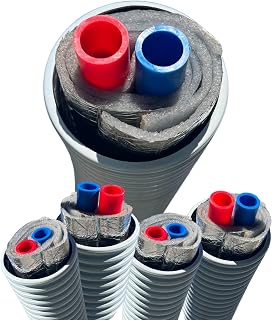
The Heat Mizer line offers 1″ or 1.25″ sizes with Oxygen Barrier (O2) for pressurized systems or Non-Oxygen Barrier (Non-O2) for open-loop setups. It features three layers of insulation and separated PEX pipes with insulation in the middle to reduce heat loss and prevent freezing. Best for: households with a pressurized loop or open-loop systems needing solid freeze protection. Limitation: availability of multiple versions may require careful selection to match your system type.
1″ 60 5 wrap Insulated Pex Tubing Outdoor Wood Stove

This option uses Non Barrier insulation and a heavier 5-wrap configuration for enhanced heat retention. Best for: colder climates where extra insulation reduces heat loss and protects against freezing. Better for: longer runs where minimizing heat loss matters most. Caution: Non barrier means this version is best for open-loop systems; it should not be used in pressurized closed-loop setups without confirmation from your installer.
1″ 40′ 3 wrap Insulated Pex Tubing Outdoor Wood Stove

With a 40 ft length and a 3-wrap insulation design, this option provides a balanced solution for moderate runs. Best for: homeowners with short to mid-length outdoor boiler connections seeking cost-effectiveness. Limitation: Non barrier configuration means suitability is typically open-loop rather than pressurized systems.
1″ 40′ 3 wrap Insulated Pex Tubing Outdoor Wood Stove with 12-2 Wire

This variant includes non barrier insulation and adds a 12-2 wire feature for potential auxiliary electrical needs near the line. Best for: setups requiring simple wiring alongside the piping. Limitation: Non barrier configuration indicates use in open-loop systems; verify compatibility with your boiler’s control strategy.
1″ 60′ 3 wrap Oxygen Barrier Pex Tubing Outdoor Wood Stove

This option provides an Oxygen Barrier (O2) design for pressurized hydronic systems, with a 3-wrap insulation to reduce heat loss. Best for: systems requiring strong barrier protection to minimize oxygen diffusion and protect boiler loops. Caution: Oxygen barrier adds system compatibility considerations; confirm your boiler and pump setup can accommodate O2-rated PEX tubing.
Buying Guide
How to choose the right outdoor wood boiler water line:
- System type: Choose Oxygen Barrier (O2) for pressurized loops or Non-O2 for open-loop systems. This choice affects durability, oxygen diffusion, and long-term boiler performance.
- Insulation: Higher-wrap insulation (e.g., 5-wrap) provides superior heat retention and freezing protection, especially in harsh climates. More wraps mean better performance but higher cost and stiffness.
- Length: Match run length to your boiler location relative to the water source. Longer runs increase potential heat loss, so insulation and barrier type become more critical.
- Wire integration: Some variants include 12-2 wire. Consider added wiring needs for sensors or controls along the line; not all boilers require it.
- Installation considerations: Ensure the PEX fits your pump spec and system pressure. Use proper burial protection and avoid sharp bends to prevent kinking and damage.
FAQs
- What is the difference between Oxygen Barrier and Non-Oxygen Barrier PEX tubing?
Oxygen Barrier tubing reduces oxygen diffusion into the boiler loop, which helps protect the boiler and components in pressurized systems. Non-Oxygen Barrier tubing is simpler and often used in open-loop configurations.
- Which insulation wrap is best for freezing climates?
More insulation wraps (like 5-wrap) generally provide better protection against freezing and heat loss, especially on longer runs.
- Can I use these lines for open-loop and pressurized systems interchangeably?
Not always. Oxygen Barrier variants are designed for pressurized systems, while Non-O2 versions suit open-loop setups. Always confirm compatibility with your boiler and local codes.
- Do these lines include electrical wiring?
One listed option includes 12-2 wire, suitable for integrated sensors or controls along the run. Verify wiring needs with your installation plan.
- What length should I choose for outdoor boiler lines?
Choose length based on the distance from the boiler to the water source, then select insulation and barrier type to minimize heat loss over that distance.