When winter temperatures threaten frozen pipes and blocked water flow, the right pipe heating cable can keep water moving. This guide highlights five top options designed for American homes, roof lines, and outdoor installations. Best for homeowners seeking easy installation, safety, and energy efficiency. Best for RVs and roofs, professionals installing in exposed areas, and those needing clear digital readouts. A summary table below helps compare key details at a glance.
| Product | ||
|---|---|---|
| 15 ft | Long reach for expansive runs and roof lines | |
| 12 ft | Real-time temperature display for precise control | |
| 6 ft | Compact, ETL/CSA safety certifications, versatile | |
| 12 ft | ETL listed with robust safety features | |
| 3–200 ft | Wide length range for varied installations |
Cupohus Heat Tape For Water Pipes With Thermostat 15FT

Best for long pipe runs and exterior setups. This 15-foot heating cable provides full-length coverage to keep water above freezing in extreme cold. It uses a thermostat to start at about 41°F (5°C) and stop at 59°F (15°C), reducing energy use while maintaining a steady flow. The design includes safety features with 120V operation and an external GFCI outlet, preventing overheating or short-circuit issues. It is ideal for long hoses, roof lines, and routes where a longer cable reduces the need for multiple segments. Caution: ensure the outlet is GFCI protected and the installation path avoids sharp bends that could stress the cable. Best for: outdoor hose bibs, long roof gutters, and RV water lines needing freeze protection.
- Length: 15 ft
- Voltage: 120V; Safety: GFCI-protected outlet
- Self-regulating heating to avoid constant high power
Cupohus Heat Tape For Water Pipes With Digital Display Thermostat 12FT

Choose this if you want a clear temperature readout while protecting pipes. The digital display shows real-time temperature, with a thermostat adjustable range to start at around 37.4°F and stop at 59°F. It’s suitable for metal or plastic pipes and includes a safety setup with a GFCI outlet. The installation is straightforward with a built-in thermostat and a protected internal wiring design to reduce seepage-related failures. Best for: exposed pipes on homes, garages, or RV hookups where monitoring actual temperature matters.
- Length: 12 ft
- Display: Real-time temperature readout
- Self-regulating heating with safety protections
HEATIT 6ft Self-Regulating Cable For Water Pipes
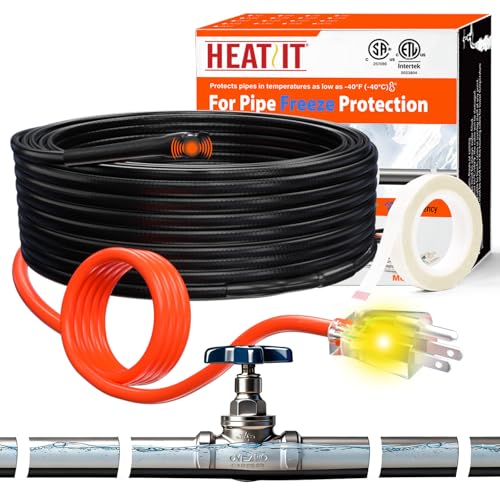
Best for compact setups where space is limited. This 6-foot option uses self-regulating technology to adjust heat output as temperatures change, maintaining water flow down to -40°F. It comes with ETL and CSA certifications for safety and reliability, and a UL-listed plug adds extra protection. It works well on shorter pipe runs, including under sinks, basements, and small utility closets. Limitation: suitable mainly for water-filled plastic or metal pipes; not intended for non-plumbing heat applications. Best for: short pipe segments in tight spaces.
- Length: 6 ft
- Certifications: CSA, ETL, UL listed plug
- Keeps water flowing to -40°F
HEATIT 12ft Self-Regulating Cable For Pipes

Better for longer pipe runs needing coordinated heating. This 12-foot HEATIT cable is ETL listed for safety and includes a 2-foot power cord plus options from 3 to 160 feet. It is designed to maintain water flow in very cold conditions and works with both metal and plastic pipes. The self-regulating construction reduces energy use by heating only where needed. Choose this if you have longer pipe runs or want a generous installation length. Caution: verify the length fits your installation path to avoid excess cable coiling. Best for: longer outdoor runs and roof gutters where extended coverage matters.
- Length: 12 ft
- Certification: ETL listed
- Wide compatibility with metal and plastic pipes
MAXKOSKO 6 Ft Heating Cable For Pipe Freeze Protection

Best for balanced length and budget-conscious setups. This 6-foot cable provides 5W/ft heating with self-regulating technology to prevent overheating while protecting pipes down to -40°F. It includes a 3-foot power cord and supports straight, spiral, or overlapped installations, offering flexibility for various pipe layouts. Limitation: ensure the power supply distance between thermostat and plug accommodates a 3 ft cord without creating excessive cable runs. Best for: mid-length residential runs, garages, and basements where moderate coverage is sufficient.
- Length: 6 ft
- Power: 5W/ft
- Flexible installation options
3FT~200FT SZFY Heat Tape For Water Pipes
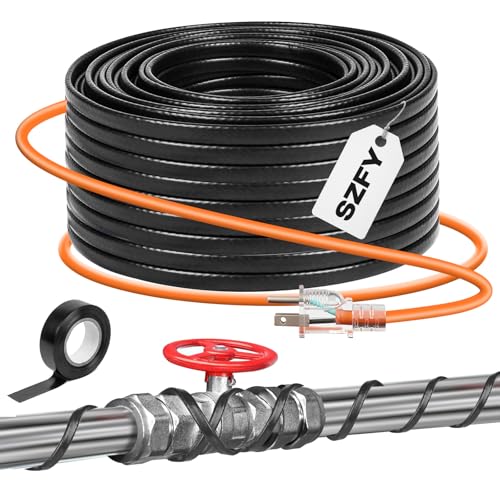
Best for highly versatile length options. SZFY offers a range from 3 to 200 feet, with a heat rating of 12W/ft and 120V operation. The copper core and multi-layer construction provide strong heating efficiency and durability in extreme winter conditions. The cable is designed for both metal and plastic pipes and includes an IP66/67-rated plug and protective outer layers. Caution: longer lengths require careful routing to avoid overheating bundles. Best for: large properties, roofs, gutters, and irrigation lines where a single length covers all needs.
- Length range: 3–200 ft
- Heating: 12W/ft
- Durable multi-layer build
Buying Guide: What To Consider When Choosing Pipe Heaters
What temperatures and environments require heating cables?
Pipe heaters are designed to prevent freezing and maintain water flow in temperatures well below freezing. Consider outdoor exposure, rooflines, gutters, uninsulated runs, and water lines that run through unheated spaces. For extreme cold, longer lengths and higher wattage per foot may be necessary.
Which certifications matter?
Look for ETL, CSA, and UL-listed components recognizing full-system safety. A fully certified heating cable (not just a certified plug) provides higher assurance against shock and overheating in wet or damp environments.
How important is length and installation flexibility?
Choose a length that matches the run you need. Self-regulating cables can be installed straight, spiraled, or overlapped, but ensure you don’t exceed safe maximum temperatures or violate building codes. A longer lead cord can improve convenience but may require more routing planning.
Is digital display or thermostat control worth it?
Digital thermostats and real-time temperature displays help you monitor and tune performance. They are especially useful for outdoor installations or complex plumbing layouts where precise control saves energy and protects sensitive fixtures.
What about safety and power sources?
A GFCI-protected outlet reduces the risk of electrical shock in damp outdoor spaces. Ensure outdoor outlets are weatherproof, and avoid extension cords that could introduce voltage drop or overheating risks.
How to plan installation sensibly?
- Plan routes with straight runs and minimal sharp bends
- Avoid placing cables near heat-sensitive materials or drapery
- Follow manufacturer installation instructions and avoid overlapping or crossing under insulation layers
Maintenance and durability considerations
Most pipe heating cables are designed for continuous operation during cold spells. Check for water seepage signs, insulation integrity, and ensure plug connections remain dry. Replacement parts should be readily available if a segment fails.
Frequently Asked Questions
- What pipe heater length should I choose for my home? — Measure the total length of the exposed pipe run and add a small margin for bends and fixtures. Longer runs reduce the need for multiple cables but require careful routing.
- Can I use a pipe heater on PVC pipes? — Yes, many models are designed for both metal and plastic pipes, but always verify the product’s compatibility in the listing.
- Do these cables consume a lot of electricity? — Self-regulating cables adjust heat output to save energy, but consumption increases with longer lengths and lower ambient temperatures. Use thermostat features to minimize usage.
- Is a digital temperature display necessary? — It helps monitor actual pipe temperature and optimize performance, especially for exposed outdoor installations.
- Do I need a professional to install these? — Many installations are DIY-friendly, but for rooflines or large outdoor runs, consult a professional to ensure safe routing and electrical compliance.
- What safety certifications should I look for? — Look for ETL, CSA, and UL listings. A fully certified system with a UL-listed plug alone is not enough; the entire heating cable should be certified.