If you need instant hot water at the kitchen sink without heating a full tank, a point-of-use (POU) water heater is the right choice. These compact, on-demand units install under the sink or near the faucet and heat water only when you need it. They’re best for small households, apartments, RVs, or spaces where space and energy efficiency matter. The top five options below are selected to help readers compare capacity, energy use, and installation needs at a glance. A quick summary table follows to aid quick shopping decisions.
| Product | Best For | Key Benefit |
|---|---|---|
| 110V Tankless Water Heater Electric — 3000W | Compact homes needing quick hot water | High 82°F rise at low flow; LED display |
| ThermoMate 4.5kW Tankless | Under-sink setups with standard 120V | Self-modulating power; good efficiency |
| CAMPLUX 4.5kW Tankless | Small spaces; easy wall mount | Space-saving; fast hot water within seconds |
| ThermoMate 6kW Tankless | Higher flow needs | 1.07GPM at 35°F rise; robust build |
| Electric Tankless 110V 3000W (OVAS HOO) | Portable or flexible installation | Compact, IPX4 protection |
110V Tankless Water Heater Electric — 3000W
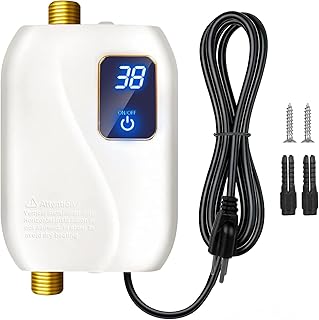
This 110V tankless unit heats water on demand with a 3000W element. It rises water temperature quickly (82°F at 0.3 GPM; 131°F at 0.5 GPM) and stores settings on an LCD display. It supports Fahrenheit or Celsius and requires no preheating, reducing wait times for hot water. It’s compact enough for under-sink installation and is ETL-listed for safety. Best for apartments, small kitchens, or RVs where space is limited and you want instant hot water at the sink. Caveat: higher flow will reduce the temperature rise; plan for lower faucet flow to maximize warmth.
ThermoMate 4.5kW Tankless Under Sink Water Heater

ThermoMate’s 4.5kW model provides on-demand hot water with a 0.26–1.0 GPM range and a temperature window of 85–131°F. It uses a self-modulating design to adjust energy use, delivering high efficiency (up to 99.8%). Best for under-sink use in 120V systems with a 40A circuit breaker. It employs a cast aluminum heating element and SUS 304 stainless steel water tubes to resist mineral buildup. Choose this if you want good efficiency and a moderate flow for kitchen tasks; avoid if your water demand is high at once.
CAMPLUX Tankless Water Heater Electric 4.5kW

CAMPLUX offers a 4.5kW under-sink tankless heater designed for point-of-use at the sink. It heats on demand and claims up to 50% energy savings with a self-modulating design that adjusts power in real time. Its compact dimensions make it suitable for tight spaces in kitchens, wet bars, or boats. Best for small kitchens that want a simple install and noticeable energy savings; note that real-world water pressure and flow can affect the exact temperature rise.
ThermoMate 6kW Tankless — 240V

This 6kW model operates on 240V hardwired supply and delivers up to 1.07GPM at a 35°F rise. It’s designed for point-of-use applications and supports a steady standby, with the self-modulating feature that conserves energy by adjusting heat output to demand. Best for households needing more hot water per minute; ideal for dual sinks or busy kitchens. Limitation: requires a dedicated 240V circuit and appropriate electrical work, which may constrain some installations.
Electric Tankless 110V 3000W — Portable Mini Heater

This portable 110V 3000W unit is designed for under-sink or small bathroom/kitchen use. It features a digital display and safety protections against dry heating and overheating, plus IPX4 water resistance. Best for renters, temporary setups, or spaces where a fixed installation isn’t feasible. Limitation: may require a stable 30A circuit and proper wiring; not ideal for high-flow needs.
Buying Guide
- Flow rate vs. temperature rise: Higher GPM requires more power. For typical kitchen use, plan for 0.3–1.0 GPM depending on simultaneous faucet usage.
- Electrical requirements: 110V units often need dedicated circuits (20–40A). 240V units require appropriate wiring and a junction box by a licensed electrician.
- Installation space: Choose a model with a compact footprint if under-sink space is tight. Wall-mounted designs optimize space usage.
- Temperature control: LCD or digital displays help you monitor and adjust settings precisely. Self-modulating units save energy by matching heat output to demand.
- Durability and materials: Look for stainless steel internals and corrosion-resistant tubing to minimize mineral buildup and extend life in hard water conditions.
- Safety features: Overheat protection, dry-boil protection, water-leak safeguards, and IP ratings improve reliability in wet environments.
- Maintenance considerations: Some units have easily accessible heat exchangers or filters; consider ease of cleaning and serviceability.
FAQ
- What is a point-of-use water heater?
It is a compact, in-sink or under-sink heater that provides hot water on demand without heating a full tank. - How much hot water do I need at the kitchen sink?
Most tasks require about 0.3–1.0 GPM. Choose a unit that matches your typical faucet usage to ensure adequate heat output. - Do I need professional installation?
Many units require electrical work and plumbing connections; professional installation is recommended for electrical compliance and safety. - Can these units save energy?
Yes. Self-modulating models adjust heat based on demand, reducing energy use compared with traditional tanks. - Are there safety concerns with under-sink heaters?
Modern units include features like dry-boil protection, overheat protection, and IP-rated housings to minimize risks. - What water temperature can I expect?
Temperature rise depends on incoming water temperature and flow; typical ranges reach around 85–131°F depending on model and flow rate.