Answer: Point of use water heaters deliver instant hot water right where you need it, making them ideal for under-sink setups, kitchens, and bathrooms. This guide compares five compact, easy-to-install options to help buyers choose the right fit for single-taucet or multi-point applications. Best for small spaces, energy efficiency, and quick hot-water access, these units vary in wattage, connection type, and safety features.
| Product | Best For | Key Benefit |
|---|---|---|
| Under-sink Tankless (xwdzswgs 3000W) | Small kitchenette or under-sink use | Fast on-demand hot water, compact design |
| BOSCH Tronic ES2.5 | Under-sink, independent install | High thermal efficiency, easy standalone operation |
| LECLOC Mini Under Sink | Low-flow tasks | LED display, strong safety protections |
| ThermoMate ES150 | Under-sink point of use | Very high thermal efficiency, compact |
| GE 2.5 Gallon Mini Tank | Versatile small-space boiler | Flexible installation and boosting options |
Under-Sink 3000W Point-Of-Use Electric Water Heater (xwdzswgs)

Best for immediate hot water at a single faucet. This 3000W tankless unit raises water temperature quickly and offers an LED display for easy monitoring. It supports Fahrenheit or Celsius and is designed for under-sink installation.
- Best for: small kitchens or bathrooms needing on-demand hot water at one outlet.
- Why selected: compact, fast heating, and adjustable units increase user control.
- Caution: Not suitable for showers due to flow rate limitations (0.3–0.5 GPM depending on temperature rise).
BOSCH Electric Mini-Tank Water Heater Tronic 3000 T (ES2.5)
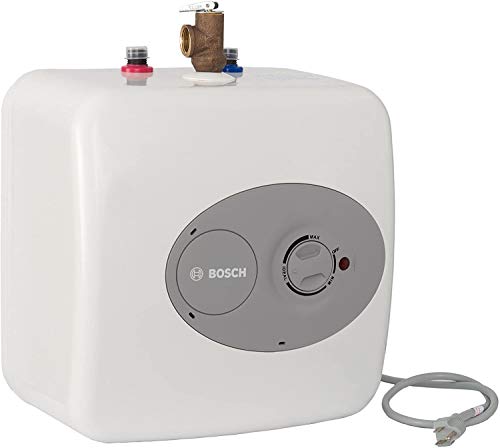
Best for standalone under-sink hot water with reliable durability. This 2.5-gallon mini-tank delivers 98% thermal efficiency and plugs into a 120V outlet for independent installation.
- Best for: single-taucet hot water at or near the point of use.
- Why selected: compact size with durable glass-lined tank and straightforward setup.
- Caution: Not ideal for multi-tap or shower use due to limited capacity.
LECLOC Mini Instant Under Sink Water Heater (120V, 3kW)
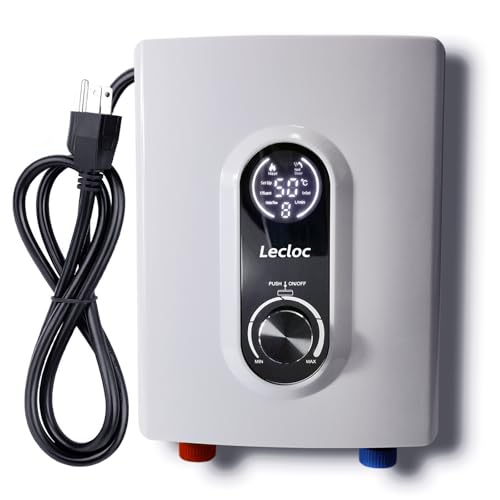
Best for compact spaces requiring precise temperature control. LED display, big knob control, and IPX4 protection provide user-friendly operation. Not designed for simultaneous multiple taps.
- Best for: one-tap under-sink use with easy temperature adjustment.
- Why selected: combines simple interface with robust safety protections.
- Caution: Low-flow limitation means not suitable for showers or multiple outlets at once.
ThermoMate Mini Tank Water Heater ES150

Best for small kitchens or bathrooms that need instant hot water with minimal standby loss. 1.3-gallon capacity and 99% thermal efficiency help curb energy waste while offering flexible mounting options.
- Best for: under-sink installations requiring quick recovery and compact form.
- Why selected: high efficiency and adjustable thermostat boost comfort and savings.
- Caution: Limited capacity may require staging if you demand hot water at multiple points simultaneously.
Buying Guide: How to Choose a Point Of Use Water Heater
When selecting a point-of-use water heater, consider function, space, and safety. The following questions help clarify needs:
- What is the required water flow rate at the outlet? For bathrooms, kitchens, or dishwashing, match the unit’s GPM rating to typical usage.
- What outlet temperature do you need? Some units offer adjustable thermostats with Celsius or Fahrenheit displays.
- Where will you install the unit? Under-sink models require space and accessible wiring, while wall-mounted units save cabinet depth.
- Is energy efficiency a priority? Tanks and tankless designs differ in standby loss and heating efficiency.
- What safety features matter? Look for IP ratings, dry-boil protection, overheating protection, and overflow safeguards.
Installation and Use Considerations
Most point-of-use heaters are designed for 110–120V operation, requiring a dedicated outlet and compliant wiring. Ensure compatible plumbing connections and check local electrical codes before installation.
must-know Pros and Cons
- Pros: Immediate hot water, space-saving, easy inline installation, reduced water waste.
- Cons: Capacity limits can restrict simultaneous multiple outlets; temperature consistency may vary with water flow and inlet temperature.
FAQ
- What is a point-of-use water heater? A compact unit installed near a faucet to provide immediate hot water without waiting for a central heater.
- Can these units supply hot water to more than one faucet? Most are best for single-tap use or low-flow needs; multi-tap operation may require a higher wattage model or a larger capacity tank.
- What mounting options are available? Many are designed for under-sink mounting, with either wall or floor installation depending on model.
- Are these energy efficient? Yes, most offer high thermal efficiency and quick recovery, reducing standby losses when used properly.
- Is professional installation required? Not always, but electrical and plumbing work should comply with local codes; a licensed technician is recommended for safety.
- What safety features should I look for? IPX waterproofing, overheating and dry-boil protection, leakage protection, and automatic shutoff.