The best match for a gas boiler that needs sidewall mechanical venting is a Tjernlund HS-series power venter, selected only after confirming the appliance and venting requirements. The HSJ, HS2, and HS1 models share the listed sidewall-venting benefits, but the supplied product information does not specify their capacity differences. A replacement venting kit is a narrower option for compatible A.O. Smith equipment, while the boiler air vent is for releasing air from heating water—not exhausting combustion gases.
| Product | Best suited for | Important distinction |
|---|---|---|
| Tjernlund HSJ | Heating appliances needing sidewall venting | Power venter with safety interlocks |
| Tjernlund HS2 | Sidewall venting projects | Capacity details are not provided |
| Tjernlund HS1 | Sidewall venting projects | Capacity details are not provided |
| SupplyMount 100140483 Kit | Compatible A.O. Smith systems | Replacement kit, not a universal venter |
| Eudaimonia 400-4 Air Vent | Removing air from hydronic heating pipes | Not a combustion-gas power vent |
Tjernlund HSJ Sidewall Power Venter

The Tjernlund HSJ is a sidewall power venter for heating-appliance venting. Its listed features describe sidewall venting as a practical alternative for renovations, new construction, converting from electric to gas or oil, and replacing deteriorated chimneys. The product information also highlights safety interlocks intended to help assure proper exhaust.
Best for: A project where a qualified installer has determined that a sidewall venting arrangement and this specific model are appropriate. Sidewall routing may help avoid the material and labor associated with long chimney runs in multi-story buildings.
Why it was selected: It is explicitly described as a gas sidewall power venter for heating appliances, making it more directly relevant to the query than a hydronic air vent or gas-container accessory.
Limitation: The supplied listing does not state appliance capacity, dimensions, or boiler compatibility. Confirm the boiler’s venting instructions and the venter’s requirements before purchase; do not assume that it fits every gas boiler.
Tjernlund HS2 Sidewall Power Venter
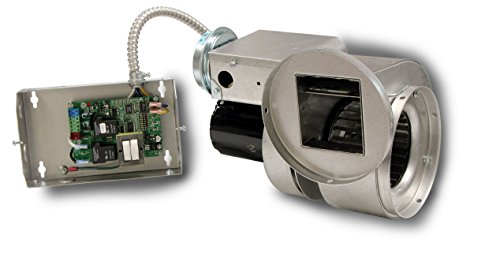
The HS2 is another Tjernlund gas sidewall power venter for heating-appliance exhaust. Its listed benefits include sidewall venting for renovation and new-construction projects, as well as potential savings in materials and labor when a conventional chimney would require a long run. The listing also identifies safety interlocks as a feature for assuring proper exhaust.
Best for: Buyers comparing sidewall power-vent options for a heating appliance whose installation requirements specifically call for an appropriate HS2 configuration. It is better suited to exhaust routing than products designed only to vent air from heating water.
Why it was selected: It is directly identified as a gas sidewall power venter and addresses the same installation situations described for the other HS-series products.
Limitation: The supplied features do not explain how HS2 differs in capacity or application from HS1 or HSJ. Compare the manufacturer’s current specifications with the boiler model and installer’s design rather than choosing by model name alone.
Tjernlund HS1 Sidewall Power Venter

The Tjernlund HS1 is listed as a sidewall power venter for heating-appliance venting. Its product information describes sidewall systems as useful for projects such as renovations, new construction, and replacing deteriorated chimneys. It also notes that sidewall routing can avoid costly materials and labor for long, multi-story vent runs.
Best for: A heating-system project where the appliance manufacturer’s instructions and a qualified professional confirm that this model is suitable for the proposed venting setup.
Why it was selected: Among the supplied products, it is one of the few explicitly identified as a power venter for heating-appliance exhaust. Its listed safety interlocks are also a relevant feature to evaluate when comparing mechanical venting equipment.
Limitation: The supplied information does not provide sizing, vent configuration, or specific boiler models. Do not treat the HS1 as interchangeable with the HS2 or HSJ without checking their technical documentation.
SupplyMount A.O. Smith Venting Kit
This SupplyMount product is described as an upgraded replacement venting kit that converts compatible equipment to power venting. The listing claims a direct fit for A.O. Smith water-heating, pumping, and control systems and describes durable construction intended to resist wear, corrosion, and thermal stress.
Best for: Owners or service professionals replacing a venting kit on an A.O. Smith system after verifying the exact equipment and part compatibility. Its stated direct-fit purpose makes it more appropriate as a model-specific replacement than as a general-purpose power venter.
Why it was selected: It explicitly references conversion to power venting and includes boiler applications in its feature description, although its primary stated compatibility is with A.O. Smith equipment.
Limitation: This is not described as a universal gas-boiler power venter. The product information does not identify supported boiler models, so confirm the equipment model and required part number before ordering.
Eudaimonia 400-4 Boiler Air Vent
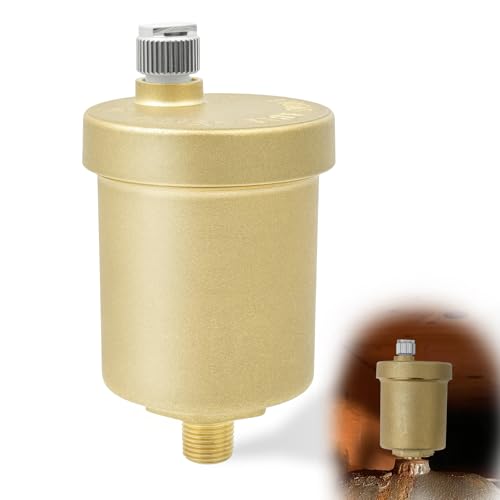
The Eudaimonia 400-4 is an automatic float air vent for heating systems, not a power venter for combustion exhaust. Its listed 1/8-inch NPT connection is intended for household or commercial heating systems, including radiators and underfloor heating. The brass unit is listed for working pressure up to 150 psi and a maximum working temperature of 240°F.
Best for: A hydronic-heating repair where trapped air in circulating pipes needs to be released and the connection and operating limits match the system.
Why it was selected: It is the supplied product most directly described as a boiler fitting. It may be relevant when a searcher means a boiler’s water-side air vent rather than a flue-gas power venter.
Limitation: It does not move or exhaust combustion gases and cannot replace a sidewall power venter. Check the system connection, pressure, and temperature requirements before installation.
Buying Guide: How to Choose a Power Vent for a Gas Boiler
Does the boiler need a power venter or an air vent?
First identify which kind of venting problem you are solving. A power venter mechanically assists the movement of combustion exhaust through an approved venting arrangement. An automatic boiler air vent releases trapped air from the hydronic water circuit. These components do different jobs and are not interchangeable. If the question concerns flue gases, a water-side air vent such as the Eudaimonia 400-4 is not the correct product category.
How do you confirm a power venter fits?
Start with the boiler’s make, model, fuel, and installation manual. Check whether the manufacturer permits sidewall or mechanical venting and whether it specifies particular vent equipment. Then compare the venter’s documented appliance range, capacity, vent layout, and installation requirements. The supplied HS-series descriptions do not provide enough sizing information to determine which model fits a specific boiler.
Have a qualified heating professional evaluate the complete system. Correct installation involves more than selecting a fan: vent routing, exhaust termination, appliance controls, and safety devices must follow the equipment instructions and applicable local requirements.
When is sidewall venting worth considering?
Sidewall venting may be worth evaluating in renovations, new construction, or projects replacing a deteriorated chimney. The Tjernlund listings identify avoiding long, multi-story chimney runs as a potential way to reduce materials and labor. Whether that benefit applies depends on the building, boiler, permitted vent route, and installation design.
Do not select a sidewall venter solely because it appears to simplify a chimney project. The boiler must be approved for the arrangement, and the exhaust termination and safety controls must be appropriate for the installation.
What should you compare among the Tjernlund models?
The supplied product information gives the HSJ, HS2, and HS1 similar stated benefits: sidewall venting for heating appliances, use in several construction or replacement scenarios, and safety interlocks. It does not identify their comparative capacities or explain which boiler models each serves. Use manufacturer documentation to compare model-specific limits instead of assuming that the model numbers indicate a particular fit.
- Confirm the exact venter model required for the boiler.
- Check the appliance and venting instructions for permitted configurations.
- Verify installation dimensions, vent layout, and control requirements in current technical documents.
- Ask the installer to confirm local code and equipment requirements.
When is a replacement kit the better choice?
A replacement kit can be a better choice when it is documented for the exact existing equipment and repair. The SupplyMount kit is described as an A.O. Smith-compatible replacement, but the supplied details do not list supported model numbers. Verify the part against the equipment nameplate and manufacturer documentation. Do not assume that a kit intended for a particular water-heating system will fit a different boiler.
What product details matter for a hydronic air vent?
If the issue is trapped air in heating pipes, check the vent’s thread size, system pressure, and maximum operating temperature. The Eudaimonia listing specifies a 1/8-inch NPT connection, a maximum working pressure of 150 psi, and a maximum temperature of 240°F. Those figures are product limits, not confirmation that the vent fits every boiler. Compare them with the heating system’s requirements and installation location.
Frequently Asked Questions
Is a boiler air vent the same as a power venter?
No. A boiler air vent releases trapped air from the heating-water circuit. A power venter assists with combustion exhaust through a venting system. They serve separate functions.
Can any Tjernlund HS-series model be used with any gas boiler?
The supplied product details do not establish universal compatibility. Check the specific boiler instructions and the current technical information for the exact HS model before purchase.
Why consider a sidewall power venter?
Sidewall venting may be useful in renovations, new construction, or chimney replacement projects. The listed potential benefit is avoiding some material and labor associated with long chimney runs, but suitability depends on the appliance and installation.
Does the SupplyMount kit fit every A.O. Smith boiler?
The listing describes compatibility with A.O. Smith equipment but does not provide a complete model list. Verify the exact equipment model and replacement-part requirements before ordering.
What is the Eudaimonia 400-4 used for?
It is an automatic air vent for hydronic heating systems. The listing specifies a 1/8-inch NPT connection and limits of 150 psi working pressure and 240°F maximum working temperature. It does not vent combustion exhaust.