If you’re searching for a propane radiant heater to heat a garage or workshop, these models deliver direct infrared warmth that’s ideal for single spaces with high ceilings or open layouts. This guide focuses on practical options for garage owners who need fast, cost-conscious heat without complicated setups. The top picks below are chosen for portability, reliability, and suitability for typical garage environments. The buyer’s intent is clear: find a propane radiant heater that delivers steady heat, safe operation, and clear installation guidance for a working space.
Summary table of selected products
| Product | Best For | Key Benefit | Limitations |
|---|---|---|---|
| Mr. Heater 40,000 BTU Garage/Workshop Radiant Propane Heater | Medium-to-large garages with 12–15 ft ceilings | Efficient infrared heat with clearances for safe setup | Higher BTU requires proper ventilation |
| Mr. Heater Original 45,000 BTU Tank Top Radiant Propane Heater | Portable heat on the go or in multiple spaces | Direct mounting to a 20 lb propane tank with adjustable BTUs | Requires tank and mounting considerations |
| SunStar Garage Tube Heater, 45,000 BTU | Textured installation where space is constrained | Compact overall length and high efficiency | Longer tube installation may need professional setup |
| ROVSUN 7500W Electric Heater | Electric option for mixed heat strategies | Fan-assisted heat with app and remote control | Not propane; stays within this guide for alternatives |
| Mr. Heater 30,000 BTU Vent Free Natural Gas Heater | Smaller spaces or backup heat | Vent-free operation heats up to 1,000 sq ft | Natural gas version; different fuel type |
Mr. Heater 40,000 BTU Garage/Workshop Radiant Propane Heater
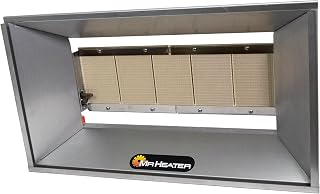
Best for larger garages that need a robust, steady infrared heat source. This model is designed for spaces with 12 to 15 ft ceilings and includes clearances for safe mounting and operation. It’s suitable for workshops where quick warmth is required and long-running heat may be necessary.
- BTU: 40,000
- Infrared radiant heat for immediate warmth
- Clearances: Top 36″, Sides & Back 30″, Below 68″
Who it’s best for: garages or workshops needing strong, direct warmth without a fan or blower. Why selected: high heat output paired with space-conscious clearance guidelines makes it a practical choice for dedicated work areas.
Caution: Ensure adequate ventilation and follow clearance requirements to reduce fire risk in enclosed spaces.
Mr. Heater Original 45,000 BTU Tank Top Radiant Propane Heater
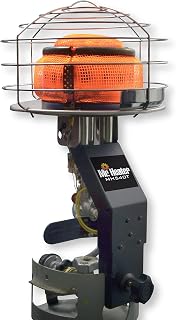
Best for portability and flexible heat coverage. This heater mounts directly to a 20 lb propane tank, offering adjustable BTU settings for 45,000–30,000 BTUs and a mid-range option for intermittent use. It’s favored where a portable heat source is required across multiple spots in a shop or barn.
- BTU range: 45,000–30,000 BTUs
- Mounts to standard 20 lb tank
- Tip-over safety shut-off
Who it’s best for: users who move heat between rooms or need a compact, portable solution. Why selected: versatility in BTU control and portability improve adaptability for varied garage tasks.
Caution: Ensure safe handling of propane tanks and avoid use in poorly ventilated areas.
SunStar Garage Tube Heater – 45,000 BTU

Best for compact installations where space constraints exist. The SunStar model emphasizes an overall length of 110 inches for easier integration into tight garages and workshops, with efficiencies up to 84.5%. It is suitable for fixed installations above or along walls with a low-profile footprint.
- BTU: 45,000
- Overall length: 110 inches
- Efficiency up to 84.5%
Who it’s best for: installers seeking a high-efficiency heat source with a long, narrow footprint. Why selected: the long tube design helps distribute heat across longer spaces while preserving ceiling clearance.
Caution: Longer installations may require careful duct routing and professional mounting guidance.
ROVSUN 7500W Electric Garage Heater

Best for spaces where electric heating is preferred or required by code. This ceiling-mount heater uses a rapid fan-driven system to deliver warmth quickly, with remote and app control for easy operation. It’s a practical alternative or supplement to propane in mixed-fuel garages.
- Heat output: 25,000 BTU equivalent (5500W–7500W range)
- Remote and app control; 12H timer
- Overheat protection; ETL certified
Who it’s best for: garages that permit electric heating or where propane is restricted. Why selected: smart controls and safety features add convenience and peace of mind.
Caution: Requires appropriate electrical supply and permanently mounted installation.
Mr. Heater 30,000 BTU Vent Free Natural Gas Heater

Best for smaller spaces or as a backup heat source. This vent-free gas heater provides up to 30,000 BTU and can heat up to 1,000 square feet. Battery-powered electronic ignition adds reliability where electrical power may be inconsistent.
- BTU: 30,000
- Heats up to 1,000 sq ft
- Battery-operated electronic ignition
Who it’s best for: smaller garages or as a supplementary heater in larger spaces. Why selected: vent-free operation simplifies installation where venting is impractical.
Caution: Ensure proper ventilation and never rely solely on this heater in poorly ventilated spaces.
Buying Guide: Key Considerations For Propane Radiant Heaters In Garages
- Space and ceiling height: Higher ceilings benefit from higher BTU outputs for effective radiant heat distribution. Measure the garage to match heater capacity with the area to be warmed.
- Ventilation and safety: Radiant heaters with high BTU require appropriate ventilation. Check clearances for top, sides, back, and below, and install carbon monoxide detectors where recommended.
- Portability vs. fixed installation: Tank-top models and portable units offer flexibility, while tube heaters and fixed installations provide steady warmth in a dedicated space.
- Fuel type and fuel availability: Propane is common for garages, but consider natural gas or electric options depending on existing lines and local codes.
- Controls and safety features: Look for tip-over switches, overheat protection, adjustable BTUs, and easy ignition methods to balance safety with convenience.
- Vent-free operation: If selecting a vent-free gas heater, verify local building codes and ensure adequate ventilation for safe, continuous use.
- Installation requirements: Some models require mounting, electrical connections, or gas lines. Consider future space use and whether a professional installation is recommended.
Frequently Asked Questions
- What size garage heater do I need? Consider the space area (square footage), ceiling height, and insulation. Larger garages typically benefit from higher BTU radiant heaters for quick and even warmth.
- Are propane radiants safe for enclosed garages? Yes, when installed with proper clearances, ventilation, and CO detectors. Do not block exhaust or vent pathways.
- Is electric heating a viable alternative? Electric units avoid combustion byproducts and can be easier to install, but may cost more to run in large spaces.
- Do propane heaters require professional installation? Some units are DIY-friendly, especially portable models. Fixed or vented installations often benefit from professional setup for safety.
- Can I use a propane heater year-round in a garage? Yes, as long as you follow manufacturer guidelines, ventilation requirements, and local codes. Use thermal curtains or insulation to improve efficiency.
- What maintenance is needed? Regularly inspect connections, hoses, tanks, and filters (if applicable). Replace any worn components and ensure safe operation before each season.