This guide targets buyers seeking radiant baseboard heater options that pair well with boiler-based or boiler-adjacent systems. The top picks below are suited for living spaces, bedrooms, and offices where even warmth and simple control matter. Each product is evaluated for efficiency, safety, and practicality to help you choose the right baseboard solution for your needs.
Summary of chosen products:
- Comfort Zone Electric Baseboard Space Heater (CZ600) – Best for medium rooms needing adjustable heat and quiet operation.
- Cadet F Series 24″ Electric Baseboard Heater (Model 2F350W) – Best for compact spaces with straightforward installation.
- COMFORT ZONE Convection Baseboard Space Heater – Best for even room warmth with simple manual control.
- 4FT Baseboard Heater Cover (DIY) – Best for upgrading existing radiators with a rust-resistant, easy-install cover.
- Cadet Convection Baseboard Heater 1000W – Best for reliable wall-mounted warmth in mid-size areas.
Comfort Zone 1500W Baseboard Heater, CZ600

Best for medium rooms needing strong, adjustable heat without loud operation. This 1,500W convection baseboard heater offers two heat settings and an adjustable thermostat for tailored comfort. It includes a tip-over switch, overheat protection, and a stay-cool body to enhance safety in bedrooms and home offices. Quiet performance makes it suitable for nighttime use or quiet work periods. A potential limitation is higher wattage for smaller rooms, which could lead to unnecessary energy use if the space doesn’t require full power.
Cadet F Series 24″ Electric Baseboard Heater

Best for compact spaces where a slim, easy-to-install unit is needed. This model provides a 350/262W rating at 240/208V, designed primarily for wall mounting to free floor space. Its white finish blends with most interiors, and its steel construction promises durability. Choose this if you’re upgrading a small room or replacing an older, space-constrained baseboard. A limitation is the lack of explicit safety features beyond standard construction, so ensure proper installation and ventilation in tight spaces.
COMFORT ZONE Convection Baseboard Space Heater
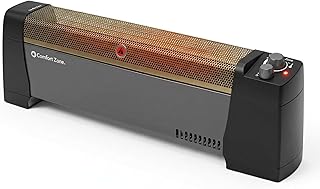
Best for steady, mixed-use rooms where manual thermostat control is preferred. The unit uses convection heating to circulate warm air along the baseboard, delivering even warmth. Its slim, low-profile design makes installation unobtrusive along walls. It offers two heat settings for simple adjustments. A possible drawback is that without an automatic thermostat, users must monitor temperature manually to maintain comfort levels.
4FT Baseboard Heater Cover with Endcaps

Best for upgrading existing hydronic or baseboard radiators with a modern, rust-proof cover. This DIY slip-on cover is adjustable from 1–4 feet, compatible with standard pipes, and features a powder-coated, rust-resistant finish. The tool-free installation makes it appealing for quick renovations. A limitation is that it does not perform heating; it only upgrades appearance and protection, so you still need an actual heat source behind it.
Cadet Convection Baseboard Heater 1000W

Best for reliable, all-around warmth in mid-sized rooms with wall-mount installation. It delivers 1,000W of radiant and convection heat across a 120V system, making it suitable for bedrooms and living rooms where wall space is available. The unit is straightforward to mount and use, but it focuses on conventional heating performance rather than advanced safety features beyond standard construction. Ideal if you prefer a simple, compact baseboard solution.
Buying Guide: What to Consider When Choosing Radiant Baseboard Heaters
- Room size and heat needs: Match wattage to space. Larger rooms benefit from higher wattage, while smaller areas can use lower outputs to save energy.
- Heating method: Convection vs radiant/conduction differences. Convection models circulate warm air for even heating; radiant-focused designs can heat objects and people directly nearby.
- Installation type: Wall-mounted versus freestanding. Consider space savings, aesthetics, and existing room layout.
- Safety features: Overheat protection, tip-over switches, and stay-cool exteriors reduce risk in homes with children or pets.
- Thermostat control: Manual versus programmable thermostats. Programmable controls help maintain comfort while saving energy.
- Durability and materials: Steel or metal enclosures offer durability; rust-resistant finishes extend longevity in humid spaces.
- Noise level: Most baseboard heaters operate quietly, but some may produce subtle sounds. Quiet operation is preferred for bedrooms and media rooms.
- Maintenance: Look for easy cleaning surfaces and accessible filters (if applicable) to simplify upkeep.
Frequently Asked Questions
- What is the difference between radiant baseboard heaters and convection baseboard heaters?
Radiant heaters primarily warm objects and people directly, while convection heaters warm the air that circulates to heat the space more evenly. - Can baseboard heaters replace a boiler for heating a whole house?
Baseboard heaters are typically supplemental or zoned heating, not standalone replacements for a boiler. They work best alongside existing boiler systems or as part of a targeted retrofit. - Are baseboard heaters safe for households with kids or pets?
Look for tip-over switches, overheat protection, and stay-cool surfaces to reduce burn risks during use around children and animals. - How do I determine the right wattage for my room?
Calculate room area, insulation, and climate. A common guideline is 10–15 watts per square foot for average rooms, adjusted for ceiling height and window exposure. - What maintenance does a baseboard heater require?
Regular dusting and cleaning to prevent airflow obstruction; ensure electrical connections are safe and that safety features remain functional.