Finding a reliable hot water heater that balances cost and performance is essential for any home. This guide highlights five top options, focusing on compact tankless and plug‑in electric models as well as a small tank option. It’s ideal for buyers seeking energy efficiency, space savings, or easy installation. The top picks below are best for apartments, small homes, kitchens, bathrooms, and cabins, with notes on best use cases and potential limitations. A quick comparison table follows to help you decide at a glance.
| Product | Best For | Key Benefit |
|---|---|---|
| Jflapil 110V Tankless Electric (3000W) | Under-sink or compact spaces | Fast heat with precise temp control |
| ORBEK 14kW Tankless (240V) | Small households with higher demand | Very high efficiency and quick 3s heating |
| Jflapil 110V 3000W (Second Model) | Kitchens and bathrooms with limited space | LED temp display and single-point use |
| 14kW 240V Gray Tankless | Under-sink or wall-mounted setups | High power with precise ±1°F control |
| GE 18 Gallon Plug‑In Electric | Small homes or apartments needing tank storage | Simple plug‑in setup with adjustable thermostat |
110V Tankless Electric Water Heater By Jflapil

Best for compact kitchens and small apartments, this 110V 3000W unit provides instant hot water with real-time temperature control. It uses stainless steel and ABS components and offers a temperature range from 82°F to 131°F with a clear LED display that can switch between Celsius and Fahrenheit. The unit emphasizes safety with IPX4 waterproofing, leakage protection, dry-burn prevention, and automatic power-off when idle. It’s a strong choice for users who want immediate heating at a single point of use and value energy efficiency, boasting a high 98% thermal efficiency. Consider this option if you need fast on-demand hot water in a tight space; however, it’s best for low to moderate flow rates (e.g., under 0.5 GPM at higher temps).
Who it’s best for: apartment dwellers, studio kitchens, and anyone prioritizing space saving with precise temperature readouts.
Limitations: Optimized for low-to-moderate flow; may not support simultaneous point-of-use demands in larger households.
ORBEK 14kW Tankless Electric On-Demand Heater

Best for small homes that demand higher flow, this 14kW, 240V unit delivers up to about 3.38 GPM with fast 3-second heating and 98% efficiency. It features LED temperature indicators, precise control, and ETL certification, indicating compliance with safety standards. Choose this if you need stronger performance for multiple outlets or higher water draw, like a kitchen and a bathroom simultaneously. A potential limitation is the electrical demand: it requires a dedicated 60-amp circuit, which can influence installation planning for older homes or limited panels.
Who it’s best for: households needing reliable, faster hot water at multiple points of use without a bulky tank.
Limitations: Requires a capable electrical panel and proper wiring; installation may be more involved than plug-and-play models.
Jflapil 110V 3000W Under-Sink Model (Same Brand, Alternative Listing)
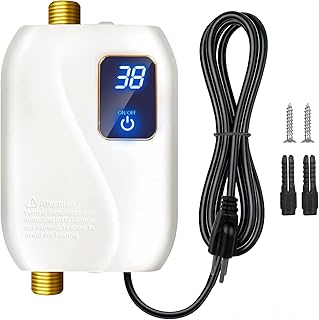
This variant mirrors the compact design suited for under-sink installation, delivering immediate hot water with a digital display and straightforward temperature adjustment. It’s best for single-point use in kitchens or bathrooms where space is constrained. The device emphasizes safety features and energy efficiency, making it a practical choice for renters or homeowners seeking a quick retrofit. Consider potential limitations in higher-demand settings where multiple fixtures are in use simultaneously.
Who it’s best for: users needing a discreet, space-saving solution for one hot-water outlet.
Limitations: May not supply enough hot water for simultaneous multiple points of use in busy households.
14kW Tankless Electric 240V (Gray) For Sink & Shower
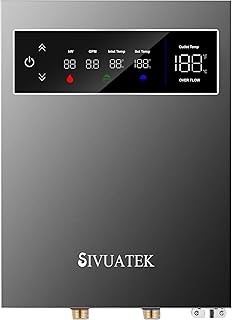
Best for compact mounting near point-of-use with higher hot-water needs, this unit packs 14kW of heating power and up to 99.8% thermal efficiency. It’s designed for 1–2 simultaneous usage points, such as a kitchen and a bathroom, and provides precise control with ±1°F accuracy. A note: installation requires careful electrical planning (60-amp circuit recommended) and proper clearances. If you want quick, continuous hot water without a tank, this model is a strong candidate.
Who it’s best for: small homes or condos needing reliable hot water at two points of use.
Limitations: Electrical requirements may need professional sizing and compliant wiring for safe operation.
GE Appliances 18 Gallon Plug‑In Electric Water Heater

Best for small homes that want a tank option with straightforward plug‑in operation, this GE model provides a practical balance of storage and ease of installation. It’s suited for setups where you want a dedicated hot-water reservoir without complex plumbing work. The unit’s adjustable thermostat helps tailor output to daily needs. It’s a solid choice for renters or homeowners who prefer a simple, traditional tank approach in limited spaces.
Who it’s best for: households needing a compact tank system with effortless installation.
Limitations: Larger tank means more space required than tankless models; may not deliver instantaneous hot water at multiple fixtures.
Buying Guide
What to consider when choosing a refurbished hot water heater alternative or upgrade:
- Space and installation: Tankless units save space but may require electrical upgrades and proper venting or water connections. Tanks need space but are straightforward to install with existing plumbing and standard outlets.
- Demand and flow rate: For single-point use, a 3,000W or 14kW tankless can suffice. For two simultaneous outlets, consider higher power or a small storage tank to avoid cold-water bursts.
- Electrical requirements: Many tankless options require dedicated circuits (often 60 amps or more). Confirm panel capacity before purchase or installation.
- Temperature control and efficiency: Look for units with digital displays, precise ±1°F control, and high thermal efficiency (close to 98–99%). This reduces energy waste and helps maintain comfort.
- Safety features: Features such as IPX4 waterproofing, dry-burn protection, leakage detection, and automatic shutoff contribute to safer operation, especially in tight spaces.
- Support and certifications: ETL or equivalent certification indicates adherence to safety standards. Verify warranty terms and service availability in your area.
- Usage scenario: Under-sink and point-of-use models are ideal for kitchens and bathrooms with limited demand. Small tanks suit apartments and cabins, while higher-capacity tankless units serve multi-point needs.
Frequently Asked Questions
- Are refurbished or used hot water heaters a good idea? Refurbished options can be cost-effective but require careful verification of safety, warranty, and replacement parts. For critical home use, prefer reputable brands and consumer-grade new units or certified refurbished listings from trusted sellers.
- Do tankless water heaters save energy? Yes, they heat water on demand, avoiding standby energy loss. Efficiency improves when sized correctly for the household’s actual hot-water demand.
- What size tankless unit do I need for a 1–2 person home? A 3,000W to 6,000W unit can meet low to moderate demands, especially when used at a single point of use. For higher simultaneous use, a larger unit or multiple units may be necessary.
- Can I install a tankless heater myself? Installation often requires electrical expertise and plumbing work. Some models are simpler to install than others, but consult local codes and a licensed professional if in doubt.
- What maintenance is required? Regular inspections of water connections, mineral buildup (descaling), and electrical safety checks help maintain performance and longevity.
- Is a larger tank better for family homes? A small tank can work for limited hot-water needs, but families with multiple simultaneous uses may benefit from tankless options or a larger capacity tank with a robust heating element.