When choosing a propane regulator for a residential setup, aim for stability, safety features, and compatibility with standard tank outlets. The top options below are selected for homeowners, small business installations, and outdoor enthusiasts who need dependable gas flow for heaters, generators, grills, and more. Each product is evaluated for ease of installation, suitability for standard residential systems, and practical limits to avoid over- or under-pressurization. The following table highlights key distinctions to help buyers compare at a glance.
| Product | Best For | Key Benefit | Limitations |
|---|---|---|---|
| Propane Regulator R622H 1st Stage | Large homes, multi-appliance setups | High inlet tolerance up to 250 PSI | First-stage only; requires second stage |
| R622L 2nd Stage Regulator | Residential systems with existing first stage | Second-stage stability for home use | Relies on prior first stage |
| Marshall Regulator Home Propane Supply Kit | All-in-one residential supply | Backmount convenience | Listed details limited |
| R632A-JFF Integral Two Stage | Compact installations needing two-stage | Integrated two-stage design | May be less flexible for custom layouts |
| R232A-BBF 2-Stage Regulator | Tight spaces, RVs, small homes | Compact footprint | Lower BTU capacity than larger setups |
Propane Regulator R622H 1st Stage Gas Regulator

The R622H is a high-capacity first-stage regulator designed for 4–12 PSI (0.28–0.83 bar) output. It uses a 3/4″ NPT inlet and outlet, with vent screening and a 7/32″ orifice, capable of handling up to 250 PSI inlet pressure and up to 2,500,000 BTU/hr. Best for commercial burners, residential heaters, propane generators, and large outdoor appliances. It feeds a second stage for stable pressure downstream. Not intended for indoor use or low-pressure systems; professional installation is advised for safety and compliance.
Who this is best for: homes or businesses with larger propane loads needing a robust first stage before a secondary regulator. This is ideal where high upstream pressure must be reduced reliably and consistently. Limitations: not suitable for indoor or low-pressure environments without proper installation.
R622L 2nd Stage Propane Regulator

This second-stage regulator maintains 9″–13″ W.C. (22–32 mbar) outlet pressure, with a 3/4″ NPT inlet and outlet and a vent with a built-in safety feature. It handles up to 1,600,000 BTU/hr, suitable for residential heaters, generators, and outdoor cooking equipment, acting to stabilize gas flow after the first stage. It includes a built-in safety relief valve and screened vent for added protection. Professional installation is recommended.
Who this is best for: households already using a first-stage regulator, needing a reliable second stage for precise, steady flow. Limitations: requires a correctly matched first stage for proper operation.
Marshall Regulator Home Propane Supply Kit

This home supply kit presents a backmount propane regulator setup intended for residential use. The included components support standard LP gas distribution within homes and small facilities. The device is positioned for straightforward installation in typical residential LP systems and aims to simplify regulator integration for everyday household gas needs.
Who this is best for: homeowners seeking a simple, compact backmount solution for standard residential propane service. Limitations: explicit specifications beyond the kit’s scope may require additional components for full-system compatibility.
R632A-JFF Integral Two Stage Regulator
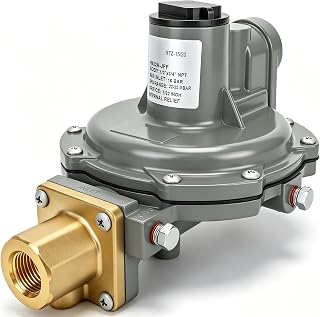
This compact, integrated two-stage regulator provides a stable 9″–13″ W.C. outlet pressure in one unit, with POL inlet and 3/4″ NPT outlet connections. It delivers up to 850,000 BTU/hr, making it suitable for furnaces, patio heaters, grills, generators, and fireplaces. Its all-in-one design reduces installation complexity and points of potential leaks compared to traditional two-regulator setups.
Who this is best for: modern homes needing a space-saving, integrated two-stage solution. Limitations: may be less flexible for custom piping layouts compared to separate stages.
R232A-BBF Propane 2-Stage Regulator

This integral two-stage regulator maintains a 10.2″–13″ WC outlet range with a 1/4″ x 1/2″ FNPT configuration. It handles up to 550,000 BTU/hr and a maximum 250 psig inlet, making it suitable for residential heating, grills, and small LP systems where space is at a premium. The compact body fits tight tank compartments or small enclosures in RVs or cabinets.
Who this is best for: buyers needing a compact, space-efficient two-stage regulator for limited spaces. Limitations: capacity is lower than larger residential setups; ensure BTU needs align with this unit.
Buying Guide
Key considerations help identify the right regulator setup for a residence or small business:
- System type: Do you need a single-stage, two-stage, or an integrated two-stage regulator? Integrated designs reduce fittings and potential leak points, but may limit layout flexibility.
- Inlet/outlet connections: Most residential regulators use 3/4″ NPT connections. Verify end fittings match your tank valve, piping, and appliances.
- Pressure range: First stages typically handle higher inlet pressures; second stages stabilize to standard outlet pressures. Match outlet pressure to appliance requirements (heaters, grills, generators).
- BTU capacity: Ensure the regulator’s maximum BTU/hr aligns with total load. Underestimating capacity can cause performance issues, especially in cold weather or with multiple appliances.
- Vent safety and relief: Look for regulators with screened vents and built-in relief features to reduce leak risk and improve safety.
- Installation: Many systems require professional installation to comply with local codes and ensure safe operation.
- Installation environment: Some units are not intended for indoor use or require outdoor-rated placement; verify usage guidelines.
Frequently Asked Questions
- What is the difference between a 1st stage and a 2nd stage regulator?
A first stage reduces high tank pressure to a manageable level; a second stage further reduces to a stable outlet pressure suitable for appliances. - Can I install a two-stage regulator indoors?
Indoors usage depends on local codes and the unit’s design. Many are intended for outdoor or semi-outdoor installation with proper ventilation and clearance. - Do residential propane systems require professional installation?
Yes. For safety, most jurisdictions require licensed installation, especially when handling high-pressure gas and multiple appliances. - What BTU capacity do I need for a typical home?
Common residential loads range from several hundred thousand to over a million BTU per hour depending on heating, hot water, cooking, and outdoor equipment; choose a regulator that accommodates peak demand. - Can I mix regulators from different brands?
Mixing components can create mismatched pressures and safety concerns. Use regulator sets designed to work together or consult a professional. - What signs indicate regulator trouble?
Inconsistent flame, reduced appliance performance, or hissing sounds may indicate improper pressure or leaks; stop use and seek professional service.