Answering the question most RV owners ask: which on‑demand water heater best fits an RV, camper, or travel trailer? This guide highlights five top options that deliver continuous hot water, are suitable for varied RV setups, and balance power, efficiency, and ease of installation. Each choice targets different needs—from high‑altitude reliability to compact RV fits and dual‑fuel flexibility. Use the quick reference table after the intro to compare standout specs at a glance.
| Product | ||||
|---|---|---|---|---|
| ORBEK RV Tankless Water Heater | 60,000 BTU | Propane, 12V | High demand showers & high altitude use | Confirm cutout size before purchase |
| APUS RV Tankless Water Heater | 68,000 BTU | Propane, 12V | Fast hot water, 9,800 ft altitude | Door panel kit sold separately |
| Xenjum RV Tankless Water Heater | 65,000 BTU | Propane, 12V | Dual outlets, exterior access | Remote control required for temp control |
| Ranein Gen II RV Tankless Water Heater | 65,000 BTU | Propane, 12V | Thermostatic mixing for family use | Exterior door not included |
| VEVOR RV Tankless Water Heater | 42,000 BTU | Propane | Compact, all‑season use | Lower max output than others |
ORBEK RV Tankless Water Heater Review
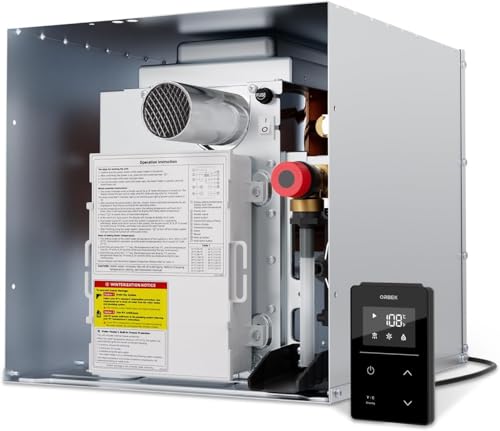
The ORBEK model uses a 60,000 BTU propane burner to deliver continuous hot water on demand. It heats only when water is drawn, helping minimize propane use. It is designed for standard RV openings (15″ × 15″, 15″ × 18″, and 18″ × 18″), with optional door panels available to match RV aesthetics. High‑altitude capability is supported via oxygen‑free copper heat exchangers and a brushless DC fan, which helps maintain stable temperatures in challenging environments. Suitable for daily RV activities like showers and dishes.
Best for: RV families or frequent travelers who need reliable hot water during long showers while conserving propane. Choose this if you value a robust mid‑range BTU output and altitude tolerance. Caution: verify your cutout size and panel color options before purchasing, as doors are sold separately.
APUS RV Tankless Water Heater, 68,000 BTU

APUS delivers 68,000 BTU and 3.9 GPM for rapid hot water on demand. It’s designed for RV use with a compact footprint (about 15 inches square footprint). The unit opens to standard 12.6″ × 12.6″ mounting space and requires only a 12V DC power connection along with NPT fittings. It’s calibrated for high altitude (up to 9,800 feet) and includes safety features to support reliable operation during adventures. It’s a strong choice for users who want quick installation and strong productivity in compact spaces.
Best for: RVers who want fast hot water without a large installation footprint and who may travel to higher elevations. Choose this if you prioritize quick warm‑up and simple wiring. Caution: high BTU units may demand careful electrical planning in rigs with limited DC capacity.
Xenjum RV Tankless Water Heater

The Xenjum unit provides a dual‑outlet design with a 65,000 BTU burner and 3.9 GPM. It supports exterior and interior water flow, with temperature control via a remote. This model emphasizes versatility for simultaneous use across multiple fixtures, such as the bathroom and kitchen, or outdoor rinsing. Thermostatic control helps maintain stable temperatures, reducing hot water fluctuations during peak demand. It is well suited for full‑time RV living or larger travel groups needing dependable hot water at multiple taps.
Best for: RVers who need flexible water delivery and remote tempering control. Choose this if you want both interior and exterior hot water access. Caution: ensure you have a compatible door kit if you plan to use the exterior outlet, as the door is not always included.
Gen II Ranein RV Tankless Water Heater
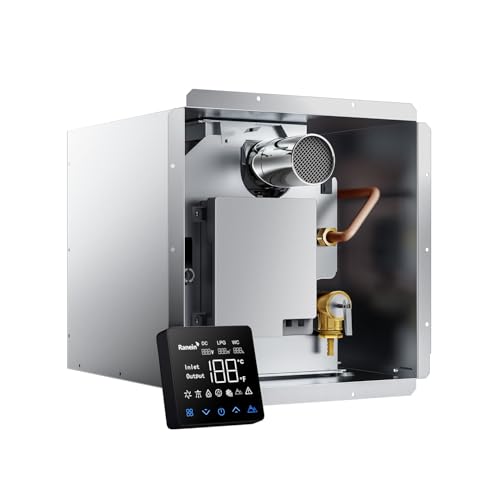
The Gen II Ranein model runs on 65,000 BTU with a thermostatic mixing chamber to balance temperatures and minimize swings. It supports up to 3.9 GPM and is designed to fit standard RV cutouts, enabling straightforward replacement of older tank units. Its cycling and control features aim to provide stable water temperature during simultaneous uses, which is ideal for families. An exterior door is not included, so plan for an accessory door kit if you want a matching exterior look.
Best for: Families seeking reliable, stable hot water for multiple users at once. Choose this if you want precise temperature control and compatibility with common RV layouts. Caution: order the exterior door kit if you want a cohesive appearance on an exterior installation.
VEVOR RV Tankless Water Heater

The VEVOR model delivers 42,000 BTU with an all‑season design and a compact 15″ × 15″ footprint. It uses a segmented combustion system to adjust heat output for seasonal changes, helping prevent overheating in summer while preserving efficiency. An LED smart display and touch controls simplify adjustments and monitoring. This option is attractive for RVers who want a dependable heater that fits tighter spaces and keeps energy use predictable.
Best for: RVers prioritizing compact size and year‑round efficiency with straightforward control. Choose this if you want a reliable, space‑saving option. Caution: it has a lower maximum BTU compared to some competitors, which may influence hot water recovery in high‑demand scenarios.
Buying Guide — Key Purchase Considerations
- Hot water demand: Estimate daily showers, dishwashing, and laundry. Higher GPM and BTU units support busier routines but may require more electrical or fuel capacity.
- Installation space: Check cutout dimensions, door requirements, and ventilation. Some models need exterior panels or kit additions.
- Altitude performance: If you frequently travel to high elevations, prioritize models with high‑altitude readiness and robust heat exchangers.
- Power source and wiring: Determine if your RV electrical system can support 12V DC startup, 120V AC when available, or propane only. Some units combine all three for flexibility.
- Fuel type and efficiency: Propane efficiency and combined burner technology impact propane usage. Consider models with staged combustion to reduce cold spots and energy waste.
- Installation compatibility: Look for standard RV cutouts (14–15 inch range) and compatibility with common replacement units from Suburban, Atwood, or Dometic families where applicable.
- Durability and maintenance: Porcelain or stainless tiers, anode rod accessibility, and ease of draining for longevity are practical considerations for RV living.
FAQ
- What is the typical GPM for most RV tankless heaters? Answer: Many models deliver between 3.0 and 3.9 GPM, suitable for single or multiple fixtures with careful water management.
- Do RV tankless water heaters work at high elevations? Answer: Yes, models with high‑altitude readiness and efficient heat exchange can operate reliably up to around 9,800 feet or more.
- Can I replace a tank heater with a tankless one in an RV? Answer: In many cases, yes, if the cutout and door panels align. Some units require door kits or panel updates for a finished install.
- Is 12V power always necessary? Answer: While some units require 12V for ignition or control, many operate with a combination of propane and 12V/120V connections, depending on the model.
- What maintenance is needed for RV tankless heaters? Answer: Regular inspection of connections, anode protection for tanks when applicable, and periodic flushing to remove mineral buildup help ensure longevity.