In the market for an RV hot water tank? This guide highlights five top options that balance durability, efficiency, and easy maintenance. It’s ideal for full-time RVers, weekend campers, and travelers who want dependable hot water without fuss. The following selections address a range of setups—from traditional tank heaters to modern tankless models—so you can choose based on fueling method, installation space, and power flexibility. A quick product summary table follows to help you compare at a glance.
| Product | Best For | Fuel/Power | Key Benefit |
|---|---|---|---|
| Suburban SW6D 6-Gallon | Road-trippers needing gas with optional electric | Gas, with optional electric | Durable porcelain-lined tank, replaceable anode for longevity |
| FOGATTI HybridShower 6 Ultra | RV families needing steady supply | Gas/Electric Hybrid | Built-in titanium anode, no frequent anode replacement |
| FOGATTI InstaShower 9 Pro | Busy RV households | Tankless (gas) | 66,000 BTU, up to 3.6 GPM, high-altitude ready |
| FOGATTI InstaShower 7 | Medium-size RVs seeking retrofit option | Tankless (gas) | Three door sizes, 2.5 GPM, high-altitude support |
| Suburban Advantage SW10DE | Spacious RVs needing larger capacity | Gas, with optional electric | 10-gallon porcelain-lined tank, corrosion protection |
Suburban SW6D 6-Gallon RV Water Heater

Best for travelers who want a reliable, durable gas-fired option with optional electric heat. The Suburban SW6D uses a porcelain-lined steel tank, offering long-lasting hot water similar to residential units. It includes a replaceable anode rod for corrosion protection, and the rod doubles as a drain for straightforward maintenance. The optional electric element adds flexibility for campsites with electricity or generator power, enabling heating even when gas isn’t available. Caution: If you primarily camp where gas isn’t allowed, ensure you have the electrical capacity to run the element efficiently.
Ideal buyers: RV owners who value durability and simple maintenance, especially those who mix gas heating with occasional electric boosts. This model is best for users who prefer a proven setup with straightforward service and a clear path to a drain-and-replace routine.
FOGATTI HybridShower 6 Ultra

Best for RVs that want a high-capacity gas/electric hybrid with reduced maintenance. The HybridShower 6 Ultra emphasizes longevity with a built-in titanium anode rod and porcelain-lined tank, which helps limit corrosion. It provides dual heat options, letting you choose gas or electric heating based on location and power availability. This model is well-suited for families that need a robust, steady supply of hot water across multiple users. Caution: If you rely heavily on electric power, confirm your coach’s electrical capacity to avoid overloads during simultaneous loads.
Best for: Families or frequent travelers who want consistent hot water with flexible power, even in areas with limited gas availability. Selected for its corrosion protection and low-maintenance design.
FOGATTI InstaShower 9 Pro RV Tankless Water Heater
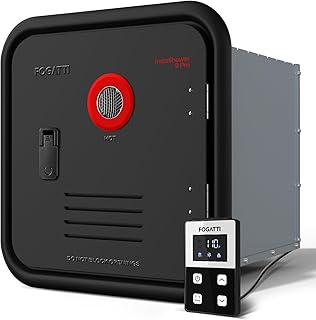
Best for RV families needing on-demand hot water with strong flow. The InstaShower 9 Pro is a tankless option that delivers up to 3.6 GPM with 66,000 BTU. It enables multiple uses, such as bathroom and kitchen simultaneously, without waiting for a tank to heat. The system is designed to operate at high altitude, maintaining performance even at challenging elevations. Caution: Tankless units can require precise installation space and venting; ensure compatibility with your RV’s layout and clearance.
Best for: RV households that prioritize endless hot water and rapid response, especially when showers or dishes require simultaneous use. The higher BTU rating supports robust performance in varied conditions.
FOGATTI InstaShower 7 RV Tankless Water Heater

Best for retrofit projects and mid-size RVs needing flexible door sizes. The InstaShower 7 offers three installation door options (15×15, 15×18, 18×18) to adapt to various RV layouts. It provides instant hot water at about 2.5 GPM and 48,000 BTU for efficient performance. It is designed for high-altitude operation and includes anti-scaling protection features. Caution: Retrofit installs require correct door sizing and potential venting adjustments to fit existing cabinets.
Best for: RV owners updating or replacing older tanks with a compact, retrofit-friendly tankless option. Chosen for its versatility in door sizes and reliable throughput for busy RV life.
Suburban Advantage RV Tank Water Heater SW10DE

Best for RVs needing larger storage with reliable heat. The SW10DE uses a porcelain-lined steel tank with direct spark ignition and an optional electric element, offering dual heating methods. It emphasizes corrosion protection via a replaceable anode rod, which also doubles as a drain for easier maintenance. The 10-gallon capacity helps support longer hot water usage between fills. Caution: Larger tank means more space required; verify available installation clearance before purchase.
Best for: RV owners who require a higher volume of hot water for extended trips or households with frequent showers and dishwashing tasks. Selected for durable construction and practical maintenance features.
Buying Guide: Key Purchase Considerations
What fuel options fit my RV lifestyle? Tank heaters typically run on propane gas with optional electric heating; tankless models often rely on propane and may require electrical support for certain features. Consider your typical camping setups and whether you travel to areas with limited gas or electricity access.
What tank size or flow matters? Tank heaters come in 6–10 gallons; tankless units specify GPM. If you have multiple users, a larger storage or higher GPM can minimize wait times and temperature fluctuations.
How important is maintenance? Heaters with replaceable anode rods or straightforward drain ports simplify long-term care and corrosion protection. Tankless units may require careful installation and venting; factor in space and professional installation needs.
Which installation considerations matter? Check cabinet dimensions, available door openings, and venting requirements for tank-style versus tankless designs. High-altitude operation is a plus for mountainous travel, as some models are optimized for low-temperature conditions.
Power availability and compatibility: Tank heaters with optional electric elements demand sufficient electrical supply. Tankless options may require dedicated circuits or remote controls. Confirm your coach’s power capacity before choosing a model that uses electric heat or remote control features.
FAQ
- What is the difference between tank and tankless RV water heaters?
Tank heaters store hot water in a tank for immediate use, while tankless units heat water on demand, saving space and reducing standby heat loss. - Can I mix gas and electric heating on an RV water heater?
Some models offer dual heating (gas with optional electric). This provides flexibility when one fuel source is unavailable. - What maintenance does an anode rod require?
An anode rod should be inspected and replaced if corroded to protect the tank from rust and extend lifespan. - Will a larger tank fit in my RV cabinet?
Check the interior cabinet dimensions and door openings. Some models require more space or a different installation approach. - Do high-altitude RV heaters work well in mountains?
Many models advertise high-altitude performance, but verify installation clearances and venting for your climate and elevation.