The best heater for a grow tent is one with controllable heat output and a temperature sensor suited to the space, but safe use also depends on correct placement, dry conditions, and following the manufacturer’s instructions. The AC Infinity THERMOFORGE T3 and Spider Farmer heater are best for growers who want multiple heat levels and temperature controls. VEVOR is a higher-output option with listed overheat protection, while VIVOSUN adds app and VPD controls. The Amazon Basics mini heater is a compact alternative, but it is not described as grow-tent-specific.
| Product | Best suited for | Notable listed feature |
|---|---|---|
| AC Infinity THERMOFORGE T3 | Precise climate adjustments | VPD and temperature triggers |
| Spider Farmer 530W Heater | Temperature-zone control | Built-in dead zone and 10 levels |
| VEVOR Greenhouse Heater | Higher-output heating needs | Overheat protection and three speeds |
| VIVOSUN AeroFlux 700W | App and VPD-focused control | Real-time temperature and VPD sensing |
| Amazon Basics 500W Mini Heater | Small indoor areas | Compact size and tip-over protection listed in product name |
AC Infinity THERMOFORGE T3

Best for: Growers who want adjustable heating alongside temperature and VPD triggers. This 530W heater has an onboard controller and a corded sensor probe, so its listed controls are designed around monitoring the grow environment rather than simply providing fixed heat.
The THERMOFORGE T3 uses PTC plate technology and PWM control, with 10 heat levels for more granular output settings. Its controller can set temperature and VPD triggers, timers, and cycles. These features make it a suitable choice for users who want to tailor operation to changing conditions or schedules.
Why it was selected: Its combination of a sensor probe, multiple heat levels, and VPD-related controls makes it one of the more climate-control-focused options in this list.
Limitation: The listed features do not specify a built-in overheat or tip-over safeguard. Check the manual for safety protections and installation requirements before use.
Spider Farmer 530W Heater
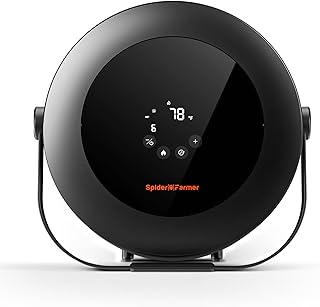
Best for: Growers who want temperature-zone regulation and a range of adjustable heat and fan settings. Its built-in dead zone is described as switching heating on 3°F below the set temperature and off 3°F above it, which is intended to reduce frequent on-and-off cycling.
The 530W unit uses PTC heating and PWM control. It offers 10 levels for both temperature and fan speed, and its built-in sensor monitors the grow space. Listed modes include normal open, all-day temperature, daytime temperature, and nighttime temperature operation.
Why it was selected: The defined temperature range and multiple operating modes give buyers a clear alternative to a simple fixed-output heater. It may be better for people who want scheduled temperature behavior as well as adjustable output.
Limitation: The supplied feature information does not mention overheat or tip-over protection. Confirm safety details and follow the product’s instructions when deciding where to place it.
VEVOR 1500W Greenhouse Heater

Best for: Buyers seeking a higher-output heater for a greenhouse or other plant area, provided the space and electrical setup suit the product. The listed specifications include 1500W power, PTC heating, and three speed settings.
VEVOR lists overheat protection and an IP20 protection design. Its description also states that it is ETL certified, but buyers should verify certification and installation details on the product documentation. The maker describes it as suitable for several settings, including plant tents and greenhouses.
Why it was selected: Its listed output is higher than the 530W and 500W choices here, and its stated overheat protection is a relevant feature for buyers comparing safety information.
Limitation: Higher wattage is not automatically a better fit for a small tent. The supplied features do not list a grow-space temperature probe or VPD controls, so it may offer less precise environmental regulation than the grow-specific options.
VIVOSUN AeroFlux 700W Heater
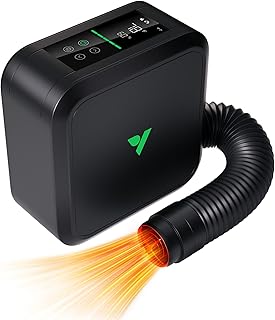
Best for: Growers who want app-based control and monitoring of both temperature and VPD. The listed sensor tracks these conditions in real time, and the product description says the heater can automatically adjust heat output.
The AeroFlux uses PTC heating and PWM control, with five adjustable heat levels. Its 700W output is described as intended to warm compact spaces, and its controls are designed to tailor settings to different plant growth stages.
Why it was selected: It combines more output than the 530W models in this list with app and VPD features. Choose it if those control features matter more than having the largest number of listed heat levels.
Limitation: The supplied details do not state whether it has overheat or tip-over protection. Review the manual for those safeguards, app requirements, and placement instructions before purchase.
Amazon Basics 500W Mini Heater

Best for: Buyers considering a compact heater for a small indoor area, rather than a dedicated grow-tent climate system. It measures 5.87 by 3.15 by 5.95 inches and weighs 1.4 pounds, according to the listing.
The product uses ceramic coils and provides 500W of heat. Its product name lists tip-over protection, and the features describe it as a portable indoor heater for desks and other small spaces. These characteristics make it compact, but the supplied information does not describe a grow-space sensor, thermostat modes, or VPD control.
Why it was selected: It provides a lower-output, small-footprint comparison for buyers evaluating basic indoor heating equipment.
Limitation: It is not presented as a grow-tent heater. Avoid using it in a tent unless the manufacturer’s instructions explicitly allow the environment and placement. Compact size does not remove fire or electrical risks.
Buying Guide: How to Choose a Safe Grow-Tent Heater
What safety features should I look for?
Start by checking the product manual and manufacturer’s safety instructions. Look for clearly documented protections such as overheat shutoff or tip-over protection, but do not assume a heater has a feature unless it is listed. Among the products here, VEVOR lists overheat protection, and the Amazon Basics product name lists tip-over protection. The other supplied feature descriptions do not specify those safeguards.
Safety also depends on how the heater is installed and operated. Keep the heater away from fabric, leaves, water, and other materials unless the instructions specifically permit the placement. Do not cover the heater or block its air openings. Use a stable surface, keep cords in good condition, and disconnect power before cleaning or moving the unit.
How much heater output does a grow tent need?
Match output to the grow space and the conditions you need to manage; wattage alone does not establish whether a heater is suitable. The products in this comparison range from 500W to 1500W. The 1500W VEVOR model has the highest listed output, while the 500W Amazon Basics unit has the lowest. The supplied information does not give tent-size recommendations for these products.
Consider the tent’s size, insulation, ambient room temperature, ventilation, and heat loss. If you are unsure, consult the manufacturer or an appropriately qualified professional rather than choosing the highest wattage by default. A heater that is too powerful for the space may make temperature control harder.
Is a grow-specific heater better than a portable space heater?
A grow-specific heater may offer controls designed for monitoring the environment. For example, the AC Infinity and VIVOSUN models list temperature and VPD features, while Spider Farmer lists temperature-zone regulation and operating modes. A basic portable heater may provide heat without the same grow-focused sensors or controls.
That difference does not automatically make a grow-specific unit safer. Compare documented safety protections, environmental suitability, controls, and manufacturer instructions. The Amazon Basics mini heater is described for indoor desk and small-space use, not specifically for grow tents, so verify suitability before considering it for a tent.
Should I choose temperature control, VPD control, or both?
Temperature control is useful when your main goal is to maintain a chosen heat range. VPD-related controls may matter to growers who monitor vapor pressure deficit as part of environmental management. The AC Infinity THERMOFORGE T3 lists VPD and temperature triggers, and VIVOSUN lists real-time temperature and VPD sensing. Spider Farmer describes a temperature-focused sensor and operating modes.
Choose controls that match how you manage the grow space. More settings can provide flexibility, but they also require you to understand the controls and set them correctly. Compare the sensor location, control method, available modes, and instructions before buying.
How do PTC heating and adjustable levels compare?
All five product descriptions refer to ceramic or PTC heating, but the listed control features differ. AC Infinity and Spider Farmer each list 10 heat levels and PWM control. VIVOSUN lists five heat levels and PWM control. VEVOR lists three speed settings, while the Amazon Basics description emphasizes 500W ceramic heating and does not list multiple heat levels.
More levels can give you more adjustment options, but they do not guarantee better temperature accuracy. Look for clear information about sensors, thermostat behavior, and the range of settings. Use the manufacturer’s directions to set the unit for the actual conditions in your space.
What should I consider about moisture and electricity?
Grow areas can involve watering, humid air, and condensation. Do not assume a heater is suitable for wet conditions because its description mentions greenhouse use or humidity. VEVOR lists IP20 protection; consult its documentation to understand the intended environment and limits. Keep electrical connections dry and do not place a heater where water can splash or drip onto it.
Use a properly maintained outlet and follow the heater’s electrical requirements. Avoid damaged cords and overloaded circuits. If your setup involves a damp location or you are unsure whether the electrical supply is appropriate, get qualified advice before operating a heater.
Frequently Asked Questions
Which listed heater has the most heat levels?
The AC Infinity THERMOFORGE T3 and Spider Farmer 530W heater each list 10 heat levels. Spider Farmer also lists 10 fan-speed levels.
Which product lists overheat protection?
The VEVOR Greenhouse Heater lists overheat protection. Check its product documentation for the details and operating limits of that protection.
Which heater includes VPD-related controls?
The AC Infinity THERMOFORGE T3 lists VPD and temperature triggers. The VIVOSUN AeroFlux description also lists real-time VPD sensing and app control.
Can I use a desk heater in a grow tent?
Do not assume a desk heater is suitable for a grow tent. The Amazon Basics model is described as an indoor desk and small-space heater, so check the manufacturer’s instructions for explicit permission and environmental limits.
Is a higher-wattage heater always the better choice?
No. Output should suit the space, heat loss, and controls needed. A 1500W unit may be excessive for a small tent, and the product information provided does not specify tent-size recommendations.