Looking for a reliable single stage propane regulator to stabilize your gas flow? This guide highlights five suitable options, explains who each is best for, and helps you compare features like outlet pressure, inlet connections, and compatibility with tanks and appliances. Use this to select a regulator that delivers steady pressure for grills, heaters, campers, and small to mid-size propane systems. The buyers listed here are ideal for homeowners, RV users, outdoor enthusiasts, and small commercial setups needing straightforward, single-stage regulation.
Summary of selected products
| Product | Best For | Key Feature | Inlet/Outlet |
|---|---|---|---|
| Marshall 1122H-AAJ First Stage | Small propane systems needing 10 PSI output | Adjustable 8–12 PSI, 250 PSI max input | Input: 1/4″ NPT, Output: 1/2″ NPT |
| Camco 59013 Single Stage | BBQ grills and low-pressure appliances | Maintains 11″ WC | 11″ WC, compatible with low-pressure devices |
| Emerson-Fisher R122H-AAJ | Compact LP systems | Non-adjustable 10 psi setting | 1/4″ x 1/2″ NPT |
| AP Products MEGR-230 | Green single-stage regulator for light usage | 0.059″ orifice, 140,000 BTU | Inlet 25 PSI, delivery 9 WC |
| FJXBYWM F276136 | Low-pressure propane setups | 11″ WC regulation, leak-free POL | POL to 3/8″ flare |
Marshall 1122H-AAJ First Stage Propane Regulator

Best for: Small propane setups needing a predictable 8–12 PSI output. The 1122H-AAJ model provides an adjustable outlet within 8 to 12 PSI and supports up to 250 PSI input. Ideal for compact grills, heaters, and single-stage systems where a stable flow is essential.
Why it’s selected: Its adjustable output helps tailor gas delivery to the appliance, reducing surge risk and delivering consistent performance in tight installations. Consider the 1/4″ input and 1/2″ output when coupling to standard lines.
Caution: The unit specifies an adjustable range; ensure your downstream equipment can tolerate 8–12 PSI, and verify compatibility with your hose fittings.
Camco 59013 Single Stage Propane Low Press Regulator
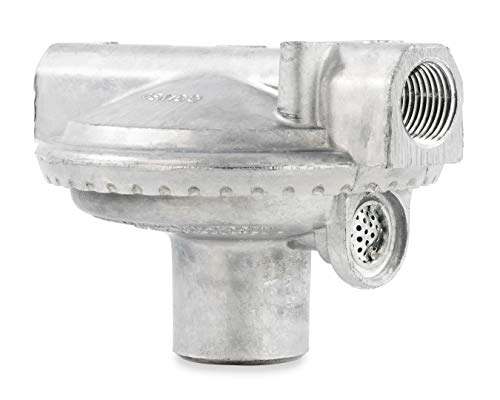
Best for: Connecting a standing gas bottle to low-pressure appliances such as grills and outdoor heaters. This regulator maintains a constant 11″ WC and handles up to 200,000 BTU/hour, making it a dependable choice for typical outdoor setups.
Why it’s selected: Its simplicity and constant 11″ WC output provide reliable performance without frequent adjustments. It’s a straightforward pick for basic outdoor gas appliances.
Caution: Not designed for high-demand commercial equipment; ensure your appliance BTU needs align with the 200,000 BTU/hour limit.
AP Products Marshall Excelsior MEGR-230 Low Pressure Regulator

Best for: Light-duty LP gas projects requiring a simple single-stage regulator. The MEGR-230 offers a compact design with a modest BTU capacity suitable for small grills, heaters, and compact LP systems.
Why it’s selected: Its single-stage design and 0.059″ orifice support moderate gas flow, making it a practical option for standard home setups. The 25 PSI inlet with 9 WC delivery aligns with common low-pressure appliances.
Caution: Check compatibility with your hose fittings; this model is oriented toward standard residential low-pressure applications.
Emerson-Fisher LP-Gas Equipment R122H-AAJ

Best for: Compact LP gas systems needing a non-adjustable 10 psi output. This regulator’s small footprint suits space-constrained installations such as RV compartments or portable setups.
Why it’s selected: The fixed 10 psi setting provides reliable, maintenance-free operation where constant pressure is preferred. It pairs well with appliances designed for a stable 10 psi feed.
Caution: It is non-adjustable; ensure 10 psi aligns with your appliance specifications to avoid under- or over-delivery.
R632A-JFF Integral Two Stage Regulator

Best for: Systems seeking two-stage regulation in a single unit for stability across residential and mobile applications. Not a traditional single-stage regulator, but included for context on what single-stage alternatives compete with in the field.
Why it’s selected: It reduces complex installation by consolidating stages, improving consistency across fluctuating demands. It’s ideal when space is limited but two-stage behavior is desired.
Caution: Because this is a two-stage regulator, it behaves differently from true single-stage units; ensure your needs align with two-stage performance before choosing.
Flame King 150,000 BTU Horizontal Two-Stage Regulator

Best for: RVs, campers, and generators needing consistent flow across changing demands. This is a two-stage regulator and thus not a single-stage model, but it’s included here to contrast with single-stage options and help buyers understand when two-stage is preferable.
Why it’s selected: The dual-stage design maintains steady gas pressure across loads, which minimizes surges and drops in propane appliances on mobile or variable-demand setups.
Caution: If you specifically need a single-stage regulator, this option should be avoided in favor of true single-stage units to maintain true one-step pressure control.
Buying Guide: Key Considerations for Single Stage Propane Regulators
- What is your outlet pressure requirement? Typical single-stage regulators deliver fixed or variable outputs in a narrow range. Match your appliance’s acceptable fuel pressure to the regulator’s output.
- What are your inlet and outlet connections? Ensure the regulator’s inlet and outlet sizes (for example, 1/4″ NPT or 3/4″ NPT) fit your hoses, tanks, and appliances.
- Is the regulator adjustable? Adjustable regulators let you tune pressure for different appliances; non-adjustable units are simpler but require matching to a fixed setting.
- What is the maximum inlet pressure? Materials must withstand the highest pressure your tank can provide; common ratings range up to 250 psi, but check your system specs.
- Where will it be used? Outdoor, indoor, or mobile environments affect corrosion resistance, mounting, and safety considerations.
- Safety and compatibility: Verify POL, flare, or NPT fittings and ensure the regulator is designed for propane and your specific use case (grill, heater, RV, generator, etc.).
Frequently Asked Questions
- What is a single-stage propane regulator?
A single-stage regulator reduces high tank pressure to a stable downstream pressure in one step, suitable for low-to-moderate demand appliances. - What is the typical outlet pressure for single-stage regulators?
Most are designed to provide around 11″ water column (WC) to 12–14″ WC, depending on model and intended use. - Can I use a single-stage regulator for an RV?
Yes, many RV setups use single-stage regulators, but some RV systems require two-stage regulators for highly variable loads. - Do I need an adjustable regulator?
If you have multiple appliances with different pressure needs, an adjustable model offers flexibility. Fixed-output units are simpler and more robust for a single appliance. - How do I know if a regulator is compatible with my hose or tank?
Check the inlet/outlet thread size, connection type (NPT, POL, flare), and ensure the regulator’s rating matches the tank’s standard and your hose fittings. - Is a two-stage regulator better than a single-stage?
Two-stage regulators provide steadier pressure under varying demand, which is beneficial for high-flow appliances or mobile setups; single-stage regulators are adequate for basic, steady-use applications.