If you need reliable warmth in a compact space, a small gas heater with thermostat can provide efficient, controllable heat without taking up much room. These models are ideal for offices, bedrooms, living rooms, or small cottages where zone heating matters. Below are five well-suited options, each with a thermostat to manage comfort and energy use. The buyer profiles differ by heat capacity, venting type, and installation style.
| Product | Heat Output (BTU) | Best For |
|---|---|---|
| ProCom MN100TPA-B | 10,000 | Small living areas, bedrooms, offices |
| ProCom MN100TBA-B | 10,000 | Slim spaces needing blue flame heat |
| ProCom MN300TPA-B | 30,000 | Medium rooms, larger living areas |
| Duluth Forge QSL250T | 25,000 | Ventless styling with realistic looks |
| Comfort Glow KWN523 | 30,000 | Natural gas, off-grid or outage scenarios |
ProCom MN100TPA-B Infrared Plaque Heater

This compact infrared heater delivers up to 10,000 BTU from natural gas and heats up to 500 square feet. The thermostat control offers High/Medium/Low settings for flexible warmth. The slim, modern profile fits small rooms, and you can wall-mount with included hardware or place it on the floor using base feet. Best for small living rooms, offices, or bedrooms where quiet, steady heat is desired. Caution: Ventless operation requires proper ventilation per local codes and product guidance.
ProCom MN100TBA-B Blue Flame Heater With Base Feet

This 10,000 BTU blue flame heater uses natural gas and provides thermostat-powered heat in a slim profile, ideal for office nooks or small living areas. Includes base feet or wall-mounting options. Best for rooms where a blue flame aesthetic is preferred or where compact installation is needed. Limitations: Similar 10k BTU output to other models means it’s best used in spaces up to about 500 sq. ft. in moderate climates.
ProCom MN300TPA-B Infrared Plaque Heater

This larger unit outputs 30,000 BTU and heats up to 1,400 square feet, making it suitable for bigger living spaces or open-plan areas. Thermostat control enables High/Medium/Low settings for adaptable warmth. It is wall-mountable or floor-standing with base feet. Best for open rooms or basements requiring stronger, zone-specific heating. Caution: Higher output requires careful placement and clearance per installation instructions.
Duluth Forge Ventless 25,000 BTU Stove
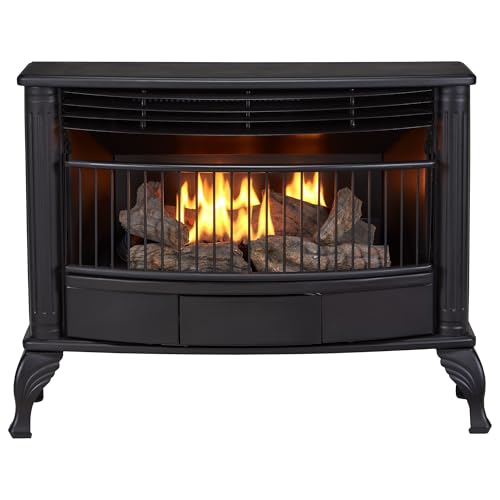
Ventless gas stove with a 25,000 BTU rating heats about 1,100 square feet and features hand-painted logs for a realistic look. The thermostat-operated control offers adjustable warmth. Best for a stylish, fireplace-like ambiance in living spaces. Limitation: Ventless operation requires proper venting and compliance with local codes; model design aims for realism, not a traditional fireplace experience.
Comfort Glow 30,000 BTU Wall Heater

Natural gas wall heater providing 30,000 BTU without electricity, suitable for spaces up to 1,000 square feet. This infrared option is designed for dependable heat during outages or off-grid scenarios. Best for larger rooms or garages where electricity is unreliable. Caution: Not suitable for propane use; ensure correct fuel type for installation.
Buying Guide
What size should you choose? If your space is under 500 sq. ft., a 10,000 BTU unit can be sufficient, but larger rooms or open layouts may require 25,000–30,000 BTU models. Consider whether you prefer infrared plaque heaters, blue flame, or radiant designs for aesthetics as well as heat delivery.
What fuel type fits your needs? Natural gas units require proper gas line access and venting decisions, while ventless options can simplify installation but require space for safe operation. For off-grid or outage scenarios, propane or natural gas models with no electricity dependence are advantageous.
Where will you install it? Wall-mountable models save floor space; freestanding with base feet is flexible for temporary placements. Ensure clearance around vents and exhausts per manufacturer instructions.
Thermostat control matters. A built-in thermostat helps regulate warmth and improves energy efficiency by maintaining a target temperature. Look for models offering multiple heat settings (High/Medium/Low) for fine-tuned comfort.
Ventless considerations. Ventless heaters are convenient, but they require adequate room ventilation and adherence to local codes. Open doors or windows can influence efficiency and safety. If you plan to use in bedrooms, verify occupancy guidelines and CO safety recommendations.
FAQ
- Do these units require electricity? Many are designed to operate without electricity, particularly natural gas ventless or radiant models. Some features may rely on electrical ignition, so check each model’s details.
- Can I install these myself? Installation varies by model and local codes. Wall-mount hardware is often included, but gas line connections and venting may require a licensed professional.
- Are ventless models safe for bedrooms? Ventless heaters can be used in bedrooms if space allows and local codes permit. Ensure proper clearance and ventilation as specified by the manufacturer.
- What maintenance is needed? Regular inspections of gas connections, venting (if applicable), and thermostat function help ensure safe operation. Follow the product manual for cleaning guidance.
- Which heater is best for large living areas? For larger spaces up to 1,400 sq. ft., higher BTU units such as 25,000–30,000 BTU models can provide more even warmth, especially in open floor plans.
- What should I avoid? Avoid placing heaters near flammable materials, in high-traffic paths, or in rooms with insufficient ventilation. Do not exceed the recommended square footage for a given BTU rating.