Answering the need for reliable, compact heat in grow spaces, these small grow tent heaters are ideal for keeping root zones warm and ensuring consistent vapor pressure deficit (VPD). The top picks below suit different grower profiles—from hobbyists with tight spaces to small commercial tents. This guide highlights who benefits most from each model, why it stands out, and any limitations to consider.
| Product | Best For | Key Benefit |
|---|---|---|
| VIVOSUN AeroFlux Smart Grow Tent Heater | Stakes in a smart setup with extension hose | Real-time VPD-aware temp control |
| Spider Farmer 530W Heaters | Balanced control with multiple heat levels | Ten adjustable levels for precision |
| AC Infinity THERMOFORGE T3 | Environmentally tuned tents and rooms | VPD-ready onboard controller |
| VEVOR 1500W Grow Tent Heater | Powerful support for larger tents | High-capacity heat with adjustable angle |
| Gaiatop Mini Space Heater | Compact desks or small rooms | Fast 2-second heat and safety features |
Overview: In this selection, each heater is evaluated for size, efficiency, control features, and how well it supports plant health—especially temperature stability and VPD. Buyers should consider tent size, external temperatures, and whether automation or manual control best fits their grow routine.
VIVOSUN AeroFlux Smart Grow Tent Heater
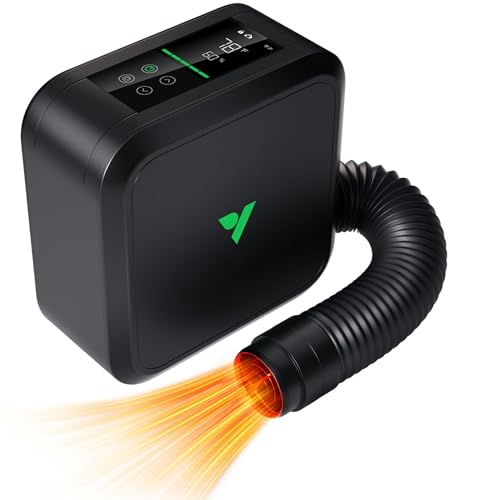
The VIVOSUN AeroFlux model uses 700W of heating power to warm a grow tent quickly, delivering stronger output than standard compact heaters. It features a smart temperature control system that tracks ambient temperature and VPD (vapor pressure deficit) in real time, auto-adjusting heat to support accurate transpiration rates. Five adjustable heat levels let growers tailor the output to distinct growth stages. Best for growers who want a high level of automation and a compact footprint in tent setups that require consistent climate management. Caution: rely on the included extension hose for tent spacing and ensure adequate clearance around the unit to avoid overheating nearby objects.
Who it’s best for: Growers who want smart, automated climate control with easy integration into a tent setup and worthwhile heat output for mid-sized tents.
Why selected: Strongest blend of real-time VPD-aware control and multiple heat levels in a single compact unit. The app control and automatic adjustments help maintain stable conditions across growth stages.
Limitations: Higher upfront complexity may require regular monitoring of app and sensor readings to maximize performance.
Spider Farmer Grow Tent Heater, 530W
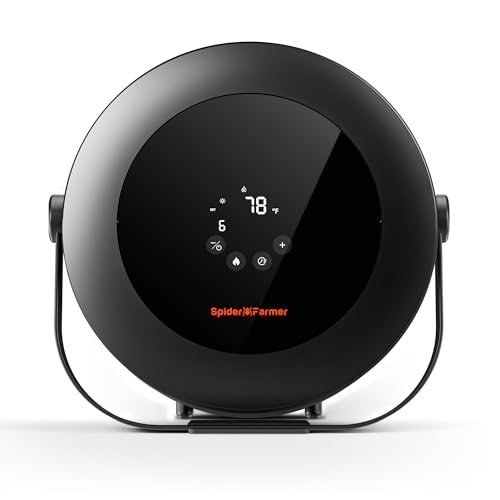
The Spider Farmer heater uses 530W with 10 adjustable levels for both temperature and fan speed, offering precise tuning for plant rooms and tents. It features a temperature zone regulation design with built-in dead zones to prevent frequent cycling, which helps maintain stable temperatures. Best for users who want fine-grained control without overshooting the target temperature. Caution: if you need very aggressive heating in very cold environments, you may require a higher-wattage unit or supplemental heating.
Who it’s best for: Growers seeking precise, multi-level control and a steady operation profile that avoids rapid temperature swings.
Why selected: The dead-zone design reduces on/off cycling, improving stability for delicate vegetative and flowering stages.
Limitations: The 530W output may be insufficient in very large tents or extreme cold without additional heating sources.
WINHL Small Portable Electric Heater

The WINHL heater delivers 1500W of PTC ceramic heating with a 70-degree oscillation and a 12-hour timer in a compact form. It’s suitable for small offices or rooms adjacent to a grow tent where supplemental warmth is needed. Best for users who require rapid heat distribution across a slightly larger personal space. Caution: not designed solely for tent environments; ensure it’s placed with adequate clearance and used in a manner consistent with your grow space’s ventilation plan.
Who it’s best for: Those needing rapid, broad warm airflow in nearby rooms or workspaces rather than inside a tent canopy.
Why selected: High wattage and wide oscillation provide quick, uniform warmth in small rooms adjacent to grow areas.
Limitations: Not a dedicated tent heater; best used as a supplementary heat source around the grow space.
Amazon Basics Ceramic Portable Mini Space Heater

Amazon Basics’ ceramic compact heater weighs about 1.4 pounds and measures around 5.9”D x 3.15”W x 5.95”H. It’s designed for small desks or tables, delivering quick heat at 500W with quiet operation (around 48dB). This makes it a practical desk-side warming option for growers who need targeted heat in a workstation or near a small tent corner. Best for budget-conscious setups requiring a simple, no-fruss heater in limited spaces. Caution: not a tent-specific heater; use within a controlled environment and away from humidity and tent fabrics.
Who it’s best for: Growers needing a compact desk or bedside heater for nearby workstations or small spaces.
Why selected: Lightweight, easy to move, and quiet—making it suitable as a supplementary heat source in a grow area or near a propagation bench.
Limitations: Limited tent applicability due to size and lack of tent-focused controls.
AC Infinity THERMOFORGE T3

The AC Infinity THERMOFORGE T3 is designed specifically for grow tents with VPD control in mind. It features an onboard controller and corded sensor probe that set VPD and temperature triggers, plus 10 heat levels using PWM control for finely tuned climate management. The included extension hose supports tent setups and provides flexible placement. Best for serious growers who want robust, tent-focused climate management with precise heat delivery. Caution: setup complexity may be higher due to the onboard controller system and sensor integration.
Who it’s best for: Growers aiming for professional-grade climate control with VPD-aware feedback and extended hose compatibility.
Why selected: Onboard controller with sensor probe enables smart, repeatable temperature and VPD management, key for consistent plant development.
Limitations: Higher learning curve and setup requirements compared with simpler plug-and-play heaters.
Buying Guide: Key Considerations
- Space and tent size: Choose wattage aligned with tent volume. Smaller tents benefit from 500–700W units, while larger personal tents may require 1000–1500W or additional heaters.
- Control style: Do you prefer manual adjustments or smart, adaptive control tied to VPD? Smart models reduce guesswork for plant transpiration.
- Safety features: Look for tip-over protection, overheat protection, and low-noise operation to minimize risk and disturbance.
- Installation and placement: Ensure adequate clearance and consider models with extension hoses or adjustable angles to direct heat exactly where plants sit.
- Power availability: Verify circuit capacity and avoid overloading outlets. Some models offer energy-saving features like PWM control to modulate heat output.
- Durability and materials: For humid grow spaces, choose heaters with corrosion-resistant housings and fire-safe materials.
Frequently Asked Questions
- What size heater should I use for a 4×4 grow tent? A heater in the 530–700W range is typically suitable for small to mid-sized tents, but always calculate room volume and target temperatures to ensure adequate heating.
- Is VPD control important in a small tent? Yes. VPD control helps regulate transpiration and health, reducing plant stress and improving growth consistency.
- Can I combine heaters for better coverage? Yes, but ensure safe placement and avoid creating hot spots. Use space heaters with compatible controls to avoid conflicting outputs.
- Are these heaters safe to run continuously? High-quality units with overheat and tip-over protection are designed for safe operation, but monitor power sources and maintain proper clearance.
- Should I choose a tent-specific heater? Yes, tent-specific models tend to offer better integration with ventilation, hoses, and VPD-aware controls for consistent outcomes.
- Do any of these include app control? The VIVOSUN AeroFlux model mentions app control as part of its smart features, enabling remote monitoring and adjustments.