The best smart thermostat for an oil-heated home is one confirmed to work with the boiler’s control wiring and heating-only setup. The five options below offer Wi-Fi scheduling or app-based features, but their listed details do not confirm compatibility with every oil boiler. Sensi ST55 is best for buyers who want DIY guidance and a C-wire that is not required in most applications; the Google Nest Thermostat is worth checking for homes that may work without a C-wire. Verify your system before buying.
| Thermostat | Best suited to | Key compatibility note |
|---|---|---|
| Honeywell Home RTH9585WF | Buyers who want a color touchscreen and flexible schedules | C-wire required; not for line-voltage heating |
| Amazon Smart Thermostat | Alexa and Ring households | C-wire required |
| Sensi ST55 | DIY installation and remote access | C-wire not required in most applications |
| Sensi Lite ST25 | Buyers who want scheduling and geofencing | C-wire required for some system types |
| Google Nest Thermostat | Homes that may not have a C-wire | Heating-only systems may need a C-wire or power accessory |
Honeywell Home RTH9585WF Smart Color Thermostat

Best for: Oil-heating households that want a touchscreen, customizable appearance, and flexible weekly scheduling, provided their wiring is compatible.
The RTH9585WF has Wi-Fi, a color touchscreen, and seven-day programming. Its listed features also include schedule options that can be adapted to household routines or utility peak-rate pricing. Eligible customers may be able to participate in a utility demand-response program, but availability depends on the local energy provider.
This model is a candidate for an oil-heated home only after checking the boiler’s control setup. The product information says a C-wire is required and that it is not compatible with line-voltage heating. Those limitations matter because oil heat can use different control arrangements.
- Why it was selected: It combines remote smart-thermostat functionality with detailed scheduling and a color display.
- Choose this if: You have the required wiring and want more display customization.
- Limitation: Avoid it if your system is line-voltage or does not have the required C-wire arrangement.
Amazon Smart Thermostat

Best for: Buyers who already use Alexa or Ring and want thermostat control integrated with those services, subject to system compatibility.
Amazon’s thermostat is designed to work with Alexa and Ring. The listed features describe comfort zones created by connecting select Alexa devices, which can use temperature readings or presence detection to adjust heating and cooling. Amazon also says it will email buyers information about energy-provider rebates that may be available in their area.
For oil heat, the first question is whether the boiler’s thermostat circuit matches the product’s requirements. This model requires a C-wire, so a home without the needed common wire may require an appropriate wiring solution. The product information does not establish compatibility with every oil boiler or control system.
- Why it was selected: It is a straightforward option to consider for Alexa- and Ring-centered homes.
- Choose this if: You want smart-home integration and your system has the required wiring.
- Limitation: A C-wire is required; confirm the boiler’s control type before purchase.
Sensi Smart Thermostat ST55

Best for: DIY-minded buyers seeking guided installation, app access, and flexible scheduling.
The Sensi ST55 includes a built-in level and step-by-step app instructions. Its listed features say it works with HVAC equipment found in most homes and that a common wire is not required in most applications. It also offers remote access, usage reports, and flexible schedules. Sensi states that the thermostat is ENERGY STAR certified and may help save about 23% on HVAC energy; actual savings vary by home and use.
Those features make the ST55 worth checking for an oil-heated home, but “most applications” is not a guarantee for a particular boiler. Confirm that the boiler’s control wiring is supported, especially if it is a heating-only system or uses a less common control circuit.
- Why it was selected: It pairs installation guidance with remote control and usage reporting.
- Choose this if: You want a DIY-oriented thermostat and your oil system passes compatibility checks.
- Limitation: C-wire requirements vary by application; do not assume your boiler is supported based only on the general HVAC claim.
Sensi Lite Smart Thermostat ST25
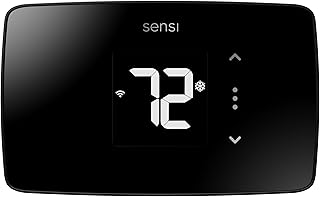
Best for: Buyers who want app-based scheduling, geofencing, and usage reports in a DIY-focused model.
The Sensi Lite ST25 features a built-in level and step-by-step installation instructions. Its smart functions include flexible scheduling, geofencing, remote access, and usage reports. The product information says a C-wire is not required on most systems, but it is required for heat-pump and heat/cool-only systems.
Because an oil boiler may be configured for heating only, check the exact wiring requirements rather than treating the general C-wire statement as proof of compatibility. Confirm the boiler type and terminal connections against the manufacturer’s compatibility information before installation.
- Why it was selected: It offers several practical scheduling and remote-management features.
- Choose this if: You want geofencing and usage reports, and your system’s wiring is confirmed compatible.
- Limitation: C-wire requirements depend on system type, and the listed product details do not guarantee compatibility with all oil boilers.
Google Nest Thermostat

Best for: Buyers who want a smart thermostat that may operate without a C-wire in some homes and are willing to check compatibility carefully.
The Nest Thermostat is ENERGY STAR certified and uses Wi-Fi. Its listed features say it is designed to work without a C-wire in most homes and can turn itself down when residents leave. However, the product notes identify heating-only systems among the setups that may need a C-wire or another compatible power accessory. They also recommend checking system compatibility before purchase.
That heating-only warning is important for many oil-heated homes. Do not rely on the general “most homes” statement without checking the exact boiler and wiring configuration. The product information also says the thermostat does not have a lock feature.
- Why it was selected: It offers an energy-management feature and possible C-wire-free operation in some installations.
- Choose this if: You want to check whether your specific system can use it without a common wire.
- Limitation: Heating-only systems may need a C-wire or compatible power accessory; system compatibility must be verified.
Buying Guide: How To Choose A Smart Thermostat For Oil Heat
Will a smart thermostat work with an oil boiler?
It may, but the fuel type alone does not determine compatibility. The thermostat must support the boiler’s control method and wiring. Oil-heated homes can have different setups, so check the thermostat manufacturer’s compatibility information and compare it with the boiler’s wiring diagram. If the setup is unclear, ask a qualified heating technician before replacing the existing thermostat.
What should I check before buying?
- Control voltage and system type: Identify whether the existing thermostat controls a compatible low-voltage boiler circuit or another type of system. Do not assume compatibility from the word “oil.”
- Wiring terminals: Photograph the existing wiring and note each terminal label before disconnecting anything. Compare those details with the thermostat’s installation guide.
- C-wire requirements: The Honeywell and Amazon models listed here require a C-wire. Sensi says the ST55 does not need one in most applications; the ST25 has system-specific requirements; Nest says some heating-only systems need a C-wire or power accessory.
- Heating-only operation: Check that the thermostat supports the relevant heating configuration. A product that works with many HVAC systems may still require special wiring or power for a boiler.
- Existing accessories: If your home has zone controls or additional equipment, verify how those components affect compatibility before choosing a thermostat.
Which features matter most for an oil-heated home?
Start with basic compatibility, then compare features that match how you use heat. Flexible scheduling is useful when household routines are predictable. Remote access can help when you want to adjust settings away from home. Geofencing or presence-based adjustments can suit households with changing schedules, while usage reports can help track thermostat patterns. A touchscreen, voice-assistant integration, and utility programs are secondary considerations rather than substitutes for wiring compatibility.
Is a C-wire always necessary?
No. Requirements vary by thermostat and heating system. Some models can work without a C-wire in certain applications, while others require one or may need a compatible power accessory. Heating-only systems can have different power needs from conventional heating-and-cooling setups. Verify the exact model’s instructions and your boiler’s wiring before installation; do not infer compatibility from a general product statement.
Can I install one myself?
DIY installation may be appropriate when the thermostat manufacturer confirms compatibility and the wiring is clearly identified. Follow the model’s instructions and shut off power as directed before working with wiring. If terminal labels are missing, the boiler uses an unfamiliar control arrangement, or the system includes zone controls, have a qualified professional assess it. Incorrect wiring can prevent proper operation or damage equipment.
Frequently Asked Questions
What is the safest first step when choosing a thermostat for an oil boiler?
Identify the existing thermostat wiring and boiler control type, then confirm those details with the thermostat manufacturer’s compatibility information. Do this before removing the current thermostat.
Which option listed here does not require a C-wire in most applications?
Sensi says the ST55 does not require a C-wire in most applications. That statement does not guarantee that it will work with every oil boiler, so verify the specific system.
Which listed thermostats require a C-wire?
The Honeywell Home RTH9585WF and Amazon Smart Thermostat list a C-wire requirement. The Sensi Lite ST25 and Google Nest Thermostat have system-dependent power requirements, so check their details for your setup.
Can I use a thermostat designed for heating and cooling with an oil-only system?
Possibly, but the model must support the boiler’s heating-only configuration and wiring. A heating-and-cooling feature set does not by itself establish compatibility with an oil boiler.
Do smart thermostat energy-saving claims guarantee lower bills?
No. Scheduling and remote controls may help manage heating use, but actual energy consumption and costs depend on the home, equipment, weather, settings, and household habits. Product savings claims are not a guarantee of a particular result.