Answering the hunt for reliable off-grid hot water, these portable solar water heaters are designed for camping, emergencies, and outdoor living. Each pick targets different user needs—from solo hikers to family campers—so you can choose based on capacity, power source, and portability. This guide highlights five top options, with clear reasons who they’re best for and practical cautions to consider before you buy.
Quick comparison of the selected products:
| Product | Best For | Why Picked |
|---|---|---|
| 4Patriots Sun Kettle | Light backpackers and survival prepping | Boils water via solar heat in ~45 minutes; compact 16.9 oz capacity; durable construction. |
| Camping Shower with Heater Kit | Extended outdoor showers; groups | All-in-one solution with 5-gallon jug and 1500W heater; convenient temp gauge. |
| Portable Water Heater for Buckets & Tubs | Backyard use and RVs | 2000W smart shut-off; protective guard; fast warm-water capability. |
| MIZUDO Tankless Gas Heater | Busy homes needing multiple outlets | High flow (10.3 GPM); precise temp control; app/WiFi features. |
| Rockcub Solar Kettle | Bug-out bags and hikers | Solar-powered, BPA-free, lightweight; reliable solar heating. |
Sun Kettle Portable Solar Water Heater

Best for: Solo campers or emergency preppers who need boiling capability without fuel. The Sun Kettle uses solar power to concentrate heat and can bring water to a boil in about 45 minutes under favorable sun.
Why selected: It provides a compact, boil-ready option in a rugged ABS shell with tempered-glass internal components. Its 16.9-ounce capacity supports quick mugs of hot water, coffee, or small meals in a no-burn zone.
Limitation: Weather dependence means slower heating on cloudy days or low sun exposure. Capacity is small for multiple servings at once.
Camping Shower With Heater Kit
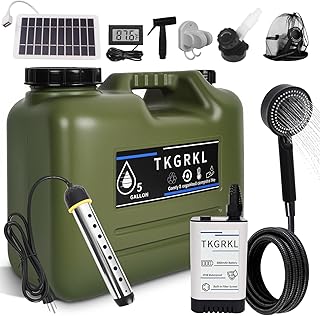
Best for: Outdoor enthusiasts who want reliable hot water for showers, even when camping with family or friends. The kit includes a 5-gallon jug and multiple components for a complete rinse setup.
Why selected: The integrated 1500W auto-shutoff immersion heater with a temperature display provides safety and control. It’s designed for on-site water heating and easy water access in remote areas.
Limitation: Requires a power source for the immersion heater (not included) and setup space for the components.
Portable Water Heater for Buckets & Tubs

Best for: Home use in driveways, backyards, or RV setups where quick warm water in buckets or tubs is needed.
Why selected: A 2000W portable heater with an automatic shut-off at peak temperature and a stainless-steel guard offers practical safety and fast warming for outdoor tubs and inflatable pools.
Limitation: Primarily for warm water use; not a solar-powered option, so it relies on electricity.
MIZUDO Gas Tankless Water Heater

Best for: Busy households that need continuous hot water across multiple fixtures with minimal storage.
Why selected: High flow capacity (up to 10.3 GPM) and precise temperature control (±1°F) make it suitable for simultaneous hot water needs in two to three bathrooms or kitchens.
Limitation: As a gas-powered unit, it requires proper venting and gas supply; installation considerations apply.
Rockcub Solar Kettle

Best for: Hikers and bug-out bag enthusiasts who want a lightweight, solar-powered kettle for hot water on sunny days.
Why selected: Solar-powered heating without electricity or fuel makes it a practical emergency and outdoor companion. BPA-free materials and heat-resistant glass ensure safety and durability.
Limitation: Solar heating depends on sunlight; performance varies with cloud cover and location.
Buying Guide
How to choose the right portable solar water heater
- Capacity needs: Decide between personal use (like the Sun Kettle or Rockcub) and family or group use (like the 5-gallon kits).
- Power source and reliability: Opt for pure solar where sun exposure is consistent, or a kit with auxiliary heating for variable conditions.
- Portability and weight: Consider the weight and packability for backpacking versus home use in an RV or camp setup.
- Safety features: Look for auto-shutoff, temperature controls, and protective guards to minimize risk when heating water.
- Durability and materials: BPA-free, tempered glass, and impact-resistant plastics increase longevity in outdoor environments.
- Ease of use and maintenance: Simple operation, clear temperature indicators, and straightforward cleaning improve long-term satisfaction.
Common questions buyers ask
- Can these devices boil water without electricity? – Yes, several models rely solely on solar heat or fuel to boil or heat water.
- What is the typical heating time? – Times vary by model and sun exposure; for example, solar kettles may reach boiling in 30–60 minutes under good sun.
- Are these safe for drinking water? – Materials like BPA-free plastics and tempered glass are designed for safe contact with water intended for consumption.
- Do I need a power source for all models? – Some units are solar-only, while others require electricity or gas for faster heating or higher flow.
Setup and maintenance tips
- Place solar heaters in direct sunlight for best results; angle toward the sun when possible.
- Inspect seals and connectors regularly for leaks or wear after outdoor use.
- Clean glass or surfaces periodically to prevent heat loss due to residue or dirt.
- Store components in a dry place to reduce corrosion and material degradation.
Quick comparison by use case
- Best for solo adventures: Sun Kettle or Rockcub Solar Kettle.
- Better for showers or multi-person use: Camping Shower Kit.
- Choose this if you need high hot-water capacity: MIZUDO Tankless or 5-Gallon Kit.
- Avoid this if you require guaranteed performance in low-sun areas: solar options on cloudy days.
FAQ
- What is the typical boiling point reached by solar kettles? – They can reach about 212°F (boiling) under sufficient sunlight.
- Do these devices require assembly? – Some kits come pre-assembled; others require basic setup before first use.
- Is the water safe to drink after heating with these devices? – Generally yes if using clean water and food-grade materials.
- How durable are these products in rugged outdoor conditions? – Most are designed for outdoor use, but evaluate weight, material, and protective features for your environment.