Answering your search for an effective descaler, this guide highlights five top tankless water heater descalers. These products are best for homeowners or small business operators who need to restore flow, improve heating efficiency, and reduce mineral buildup. The top picks are chosen for safe formulations, clear usage steps, and practical results across common tankless systems. Use this overview to compare which descaler fits your unit, maintenance routine, and safety preferences.
| Product | Typical Use | Best For | Notes |
|---|---|---|---|
| QwikDescaler + Concentrated Descaler Solution (Gallon) | Tankless heaters and heat exchangers | Homes with regular mineral buildup; safe, VOC-free | Visual cue when to add more (red → yellow) |
| J.C. Whitlam FLOW32 Descaler (32 oz) | Residential and small commercial appliances | Non-toxic, biodegradable option | NSF/ANSI 60 certified for potable water use |
| Chromex Descaling Solution (1 quart / 32 fl oz) | Tankless systems with mineral deposits | High effectiveness; NSF certified | Broadly compatible with plumbing surfaces |
| QwikDescaler + Concentrated Descaler (1 Quart) | Tankless heaters and similar heat exchangers | Same safe, VOC-free formula; cost-friendly option | Color cue to indicate refresh needs |
| Prystene Tankless Descaler Liquid (32 oz) | Standard tankless heaters | Citric/Lactic acid formulation; safe, biodegradable | One-bottle, 45–60 minute circulation |
QwikDescaler Plus Gallon – Tankless Descaler
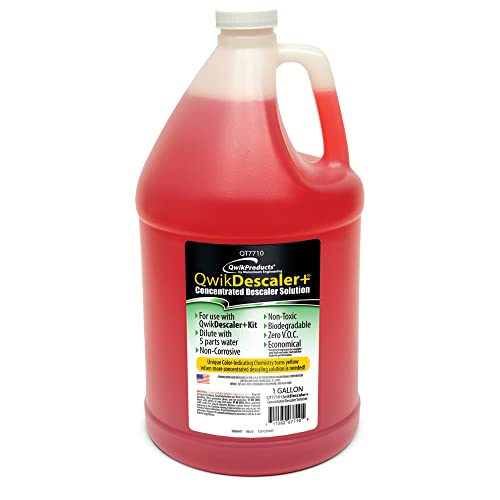
- Features: Quickly flushes flow passages; removes scale, lime, tarnish, and mineral deposits. Safe to handle with ZERO VOCs.
- Best For: Homeowners with recurring mineral buildup who prefer a VOC-free, easy-to-handle solution.
- Why Selected: Strong flushing action combined with a visual indicator when more solution is needed.
- Caution: Do not mix with incompatible cleaners; use as directed in flush kits.
J.C. Whitlam FLOW32 Descaler – 32 Oz
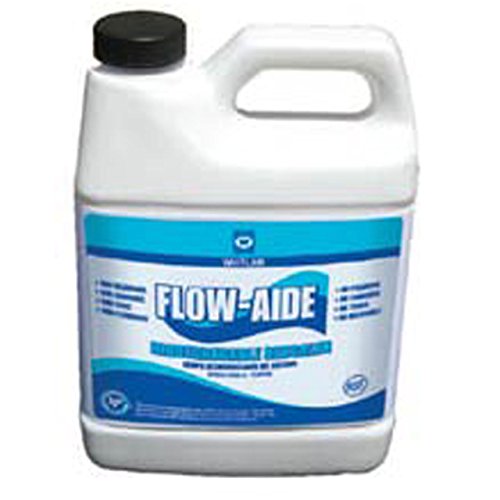
- Features: Non-corrosive, non-toxic, fully biodegradable with zero VOC; quickly dissolves water scale and deposits.
- Best For: Users seeking a safe, biodegradable option suitable for most household appliances.
- Why Selected: NSF/ANSI 60 certification supports safe use in potable water systems.
- Caution: Verify compatibility with your unit’s materials before use.
Chromex NSF Descaling Solution – 1 Gallon

- Features: Dissolves inorganic mineral deposits; compatible with most PVC, rubber, ABS, and metal surfaces; biodegradable and non-volatile.
- Best For: Users needing a versatile descaler with broad material compatibility and NSF 60 certification.
- Why Selected: Specifically designed to restore water circulation by removing buildup in many tankless systems.
- Caution: Avoid use with magnesium and aluminum components where recommended by manufacturer.
QwikDescaler Plus Quart – Descaler for Heat Exchangers

- Features: Same safe formula as the gallon option; effective for flushing mineral deposits and restoring flow.
- Best For: Budget-conscious users who want the same safety and performance in a smaller package.
- Why Selected: Clear color cue helps you know when to add more descaling solution.
- Caution: One bottle treats most standard systems; follow flush kit instructions for best results.
Prystene Tankless Descaler Liquid – 32 Oz

- Features: Food-grade citric and lactic acid; biodegradable and safe for copper, stainless steel, and internal plumbing.
- Best For: Homeowners who prefer a natural acid-based descaler with simple one-bottle usage.
- Why Selected: Restores hot water pressure and heating efficiency with a straightforward 45–60 minute circulation.
- Caution: Ensure compatibility with your flush kit and follow your unit’s maintenance schedule.
Buying Guide
What should I consider before buying a tankless descaler?
Look for a formulation that is safe for your system materials (copper, stainless steel, PVC, ABS). NSF/ANSI 60 certification indicates suitability for potable water applications. Consider whether you want a VOC-free formula and a product that provides a visible indicator for reloading or refreshing the solution.
Which descaler is best for different buyers?
- Best for safety-conscious homes: VOC-free and non-toxic formulations with clear usage cues.
- Better for broad compatibility: Descalers labeled as compatible with PVC, rubber, ABS, and metal surfaces.
- Choose this if you want an easy process: A one-bottle, 45–60 minute circulation fits most standard flush kits.
- Avoid this if you have specialized metals: Check manufacturer guidance on specific materials like magnesium or aluminum.
How do I use a tankless descaler effectively?
Prepare your flush setup according to your unit’s requirements. Circulate the descaler through the heat exchanger for the recommended time. Rinse with clean water until the system runs clear. Recheck flow and hot water temperature after the flush to confirm restoration of efficiency.
What outcomes indicate good results?
Increased water flow, improved hot water recovery time, and steadier water temperature indicate successful descaling. If mineral buildup reappears quickly, consider a more frequent maintenance schedule or a stronger descaler formulation compatible with your system.
Maintenance planning tips
- Schedule annual or semiannual descaling based on water hardness in your area.
- Keep a log of flush dates and outcomes for future reference.
- Always follow the flush kit instructions and the heater manufacturer’s recommendations.
Frequently asked questions
- What is tankless water heater descaling used for?
It removes mineral deposits that reduce flow and heating efficiency in tankless systems.
- Is descaler safe for all tankless heaters?
Most descalers are designed to be safe for common materials, but always verify compatibility with your heater’s materials.
- Do NSF certifications matter?
NSF/ANSI 60 certification indicates the product is approved for use with drinking water systems, supporting safer handling and disposal.
- Can I use vinegar instead of a commercial descaler?
Vinegar is generally less effective and can be corrosive to some components; commercial descalers are formulated for compatibility and performance.
- How often should I descale a tankless heater?
Frequency depends on water hardness and usage, but many homeowners descale annually or when flow slows noticeably.
- What signs indicate a descaling is needed?
Slower hot water delivery, reduced water pressure, and fluctuating water temperatures are common indicators.