Looking for a compact, on‑demand hot water solution to power your dishwasher? The right tankless water heater can deliver instant hot water, save space, and reduce energy waste. This guide highlights five top options that fit under sinks or small spaces, with a focus on efficiency, safety, and ease of installation. Ideal buyers include apartment renters, tiny‑home residents, homeowners upgrading a dedicated dishwashing station, and anyone needing precise temperature control for dish care.
Below is a quick reference table for the selected products, showing where each shines and who should consider it.
| Product | ||
|---|---|---|
| Electric Tankless 3000W (B0FTCMVRY3) | Small kitchens, apartments, under-sink installs | Fast heating with LCD display and high efficiency |
| ThermoMate 4.5kW | Under/sink use, 1‑2 fixtures | Self‑modulating power, compact build, durable materials |
| Jflapil 3000W Under Sink | Compact spaces, single point use | Precise temp control, high efficiency |
| APUS Propane Tankless (Whole Home) | Whole home, high demand | Strong flow, instant hot water, smart features |
| Orbek 14kW 3.38 GPM | Multiple fixtures, higher flow | Very high GPM, efficient operation |
Electric Tankless 3000W Under Sink Heater
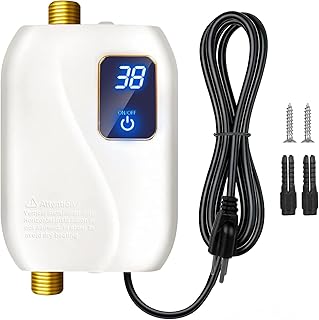
This 110V electric unit uses stainless steel and ABS with an LED display. It provides rapid on‑demand hot water by raising temperature quickly and supports Fahrenheit or Celsius readings by a long press. With 3000W, it can raise water temperature enough to support small kitchens and bathrooms without preheating. It targets consumers who want a compact, wall‑mounted solution and value digital temperature visibility.
Best for: those fitting a tight under‑sink space, apartments, or RVs where a simple, direct install matters. Choose this if you want quick temperature feedback and a space‑saving design. A potential limitation is that performance depends on water flow and inlet temperature; avoid if you need very high flow at multiple points simultaneously.
ThermoMate 4.5kW Tankless Under Sink Heater

The ThermoMate unit offers 4.5kW at 110–120V with self‑modulating power. It’s designed for point‑of‑use, delivering 0.26–1.0 GPM and a temperature range from 85°F to 131°F. Its cast aluminum heating element and SUS304 stainless steel water tube help reduce mineral buildup and corrosion. It requires a 40A circuit and proper wiring for safe operation.
Best for: users who want a dedicated, reliable hot water stream at a single sink or small prep area. Better for environments with consistent cold water temperatures. Consider that it needs a robust electrical circuit and dedicated wiring, which may affect installation in older homes.
Jflapil 110V 3000W Under Sink Heater

This 110V unit emphasizes instant heating with precise temperature control. It supports a temperature range from 82°F to 131°F and features a built‑in LED display for real‑time monitoring. The design prioritizes compact wall mounting and energy efficiency, with safety protections like dry‑burn and overheating safeguards. It’s ETL certified and designed for easy integration under kitchen or bathroom sinks.
Best for: buyers seeking a compact, easy install with clear temperature readouts. Choose this if you want fast hot water at a single fixture; avoid if you need higher flow at multiple outlets concurrently or require a unit rated for heavy simultaneous use.
APUS Propane Tankless Water Heater

This propane‑powered tankless system is designed for whole‑home use with up to 6.8 GPM. It features a 140,000 BTU burner and an oxygen‑free copper heat exchanger, plus a built‑in booster pump to increase flow. It supports smart features via a Wi‑Fi app and provides temperature control from 95–140°F. The unit emphasizes rapid hot water delivery and the ability to service multiple fixtures with minimal temperature fluctuation.
Best for: homes needing higher flow across several fixtures, such as two showers and two sinks. Better for households ready for a propane setup and app connectivity. Limitation: propane systems require proper venting, gas line routing, and professional installation; this unit needs gas supply considerations.
Orbek 14kW Electric Tankless Heater

The Orbek 14kW model delivers up to 3.38 GPM of on‑demand hot water. It notes the need for a robust electrical setup: 240V/60A two‑pole breaker, 6 AWG wiring, and 1/2″ NPT water connections. The unit highlights high efficiency (about 98%) and rapid heating, making it suitable for multiple points of use in a home kitchen and bathroom. It emphasizes modern technology to minimize scale and extend life.
Best for: households with higher hot water demand and access to a strong electrical panel. Choose this if you need more simultaneous outlets with consistent temperatures. Avoid if your electrical service cannot accommodate a 60A 240V circuit or if space is too tight for a 14kW unit.
Buying Guide
What size should you choose?
Determine the maximum GPM you expect from your dishwasher and any other nearby fixtures. Most dishwashers require modest flow, but the unit should support at least 0.3–0.5 GPM for reliable performance. In small spaces, a 3–4 kW unit is often sufficient; for multiple fixtures, a higher kW rating or a gas solution may be necessary.
What fuel type fits your home?
Electric models are easier to install in apartments and require no venting, but they pull more watts from your electrical panel. Propane units offer higher flow for whole‑home needs but require venting, gas lines, and professional installation. Consider future expansion when choosing fuel type.
How important is temperature control?
Look for units with precise temperature display and easy switching between Celsius and Fahrenheit. Self‑modulating power helps conserve energy by adjusting heat output to demand, reducing wasted energy and keeping temperatures stable during use.
What safety features matter?
Key protections include IPX4 waterproofing, dry‑burn protection, overheating cutoffs, electrical isolation from water, and automatic shutoff after inactivity. ETL or other certification can indicate adherence to safety standards. Alignment with your local electrical code matters for installation.
Installation considerations
Under‑sink or wall‑mounted designs save space. Ensure electrical supply is adequate and that you have proper water connections. Gas models require venting and professional piping. Plan for access to maintenance and service in the future.
Maintenance and lifespan
Regular descaling helps prevent mineral buildup, especially in hard water areas. Favor units with corrosion‑resistant copper or stainless components. Consider warranty coverage and availability of replacement parts when evaluating durability.
Frequently Asked Questions
- Can a tankless water heater run a dishwasher? Yes, many under‑sink tankless heaters provide on demand hot water suitable for a dishwasher, especially when the unit meets the flow and temperature needs.
- Do I need professional installation? For electric models, basic wiring may be feasible in some homes, but many jurisdictions require professional installation to comply with electrical codes. Gas models typically require licensed plumbers and venting.
- What’s the best option for apartments? Compact electric tankless heaters designed for under‑sink use are often best, as they avoid venting and can fit tight spaces with straightforward connections.
- Will these devices heat water instantly? Yes, tankless units heat water on demand, delivering hot water nearly instantly when water flow is detected and the temperature setpoint is reached.
- Are these safe around a kitchen area? Most units include multiple safety features, but ensure proper installation and adequate clearance to prevent heat exposure to cabinets and flammable materials.
- How do I choose between electric and propane? Electric units are easier to install indoors and avoid fuel storage, while propane units offer higher flow and are suitable for whole‑home or high‑demand setups with proper venting.