Answering the typical buyer: these temperature sensors are best for monitoring boiler temperatures in residential and small commercial setups. The top picks below cover stainless steel probes, wireless options, and replacements for common boiler models. Each product is chosen for reliability, ease of installation, and clear performance benefits. This guide helps homeowners, technicians, and DIY enthusiasts choose sensors that suit their boiler type and monitoring needs. A quick summary table follows the introduction.
| Product | Brand | Best For |
|---|---|---|
| DROK 10K Temperature Sensor Probe (3 pcs) | DROK | Remote temperature monitoring in water/steam environments |
| YoLink Weatherproof Temperature Sensor with Probe | YoLink | Wireless, hub-based monitoring with alerts |
| MacMaxe NTC Temperature Sensor for Breville Steam Boiler | MacMaxe | Breville BES9XX series steam boiler monitoring |
| MacMaxe NTC Sensor and Wires for Breville BES900/920/980/990 | MacMaxe | Direct replacement for multiple Breville boiler sensors |
| Gulfmew AP19299 Water Heater Chamber Sensor | Gulfmew | Tankless water heater/boilers replacement with direct fit |
DROK 10K Temperature Sensor Probe Set
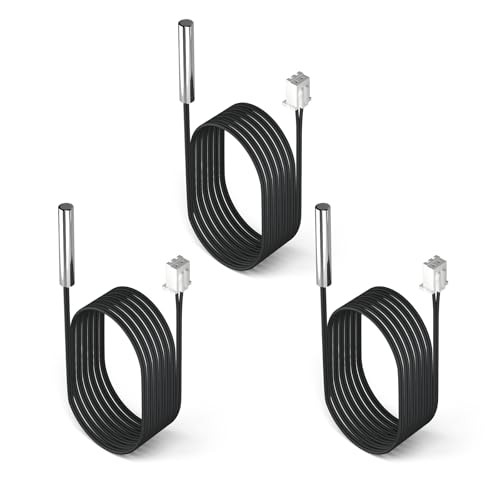
The DROK kit uses a sensitive NTC thermistor with 1 meter lead length, enabling remote temperature measurement and control. It features a wide measuring range from -25°C to 125°C (-13°F to 257°F) and a 5×25 mm stainless steel probe housing that is waterproof and corrosion resistant. Best for: projects requiring reliable, inline temperature sensing in boiler or HVAC piping where remote sensing is useful. Caution: ensure the PVC lead is kept away from extreme heat or direct flame exposure to maintain longevity.
YoLink Weatherproof Sensor With Probe

YoLink offers a versatile, hub-required temperature sensor with a long-range transmission ability up to 1/4 mile. It supports multiple applications beyond boilers, including pools, steam pipes, and HVAC systems. Best for: homeowners seeking wireless monitoring with immediate off-normal alerts via SMS, push notifications, or emails. Caution: the system relies on the YoLink hub; no subscriptions are required, but a hub is essential for notifications.
MacMaxe NTC Temperature Sensor for Breville BES9XX

Designed as a replacement for several Breville BES9XX steam boiler sensors, this NTC thermistor probe comes with a pre-wired harness for direct connection. Best for: Breville BES900/920/980/990 users replacing faulty sensors or updating to a ready-to-install thermistor. Caution: verify exact Breville model compatibility before purchasing to avoid mismatches in connector style.
MacMaxe NTC Sensor and Wires for Breville BES900/920/980/990

This NTC sensor kit provides compatible replacement for SP0020044, SP00016213, and SP0001623 sensors used in Breville BES9XX line. Best for: users who need an exact-match replacement with an easy plug-and-play installation. Caution: confirm the exact model year and connector type to ensure compatibility.
Gulfmew AP19299 Water Heater Chamber Sensor

Gulfmew’s chamber sensor is compatible with AP19299 Ultra Low Nox tankless systems, featuring robust brass components and heat-resistant housing for durability in hot, moist environments. Best for: direct replacement in Rheem or similar tankless water heaters where precise combustion chamber temperature data is needed. Caution: ensure the length matches the installation path (the 11.8-inch length helps with many fits but verify clearance first).
Buying Guide
What kind of boiler setup are you monitoring?
Boilers vary from residential steam boilers to tankless water heaters. Steel probes with stainless housings suit piping and high-moisture environments, while wireless sensors are convenient for hard-to-reach pipes or retrofit projects.
Should you choose wired or wireless?
Wired sensors, such as the DROK and MacMaxe options, provide constant readings and are simple to install where wiring is available. Wireless sensors, like YoLink, reduce installation time and offer smart alerts without rewiring.
What accuracy and range matter?
Look for a broad range to cover extreme boiler conditions. An NTC thermistor or K-type thermocouple should match your monitoring needs; note the stated measurement increments and any potential ambient influences.
How easy is installation and replacement?
Direct plug-and-play sensor replacements reduce downtime in boilers. Ensure compatibility with your model and the connector type. Some kits include pre-wired harnesses for faster setup.
What about durability and environmental exposure?
Boiler environments can be hot, humid, and prone to corrosion. Choose sensors with stainless steel housings, brass probes where applicable, and moisture-resistant construction to extend service life.
Alerts, data access, and maintenance
Wireless systems often provide notification methods (SMS, email, push). Check if you need a hub or an app, and consider data retention or alert customization for ongoing monitoring.
Replacement and compatibility considerations
For Breville and Rheem systems, verify part numbers and model compatibility. When in doubt, match the sensor type (NTC vs K-type) and connector style to the original part.
FAQ
- What is the main difference between NTC thermistors and K-type thermocouples?
- Do I need a hub for wireless boiler sensors?
- Can I replace a boiler sensor myself?
- Are there sensors suitable for high-moisture boiler environments?
- How should I choose sensor length?
- Is a direct replacement better than an aftermarket sensor?
NTC thermistors provide resistance-based temperature readings, often with high accuracy in a narrow range. K-type thermocouples cover wider ranges and are common in industrial sensors.
Most wireless sensors require a hub or base station to communicate with apps and alert systems. Some models offer direct smartphone connectivity after setup.
Yes, if you have basic electrical knowledge and follow the manufacturer’s wiring diagrams. Use compatible parts and disconnect power before replacement.
Yes, sensors with stainless steel housings and waterproof/moisture-proof ratings are designed for boiler and pipe environments.
Length should match the physical location of the sensor point. Longer probes reach deeper inside tanks or pipes; shorter probes fit compact boiler compartments.
Direct replacements ensure compatibility with the original system, reducing wiring or calibration issues. However, high-quality aftermarket options can offer similar performance when matched correctly.