The best thermostat for ceiling heat depends on the heater’s voltage, wiring, and control requirements. For many electric ceiling-heating systems, a line-voltage thermostat is the relevant type; a standard smart thermostat may not be suitable. The DR. Infrared Heater and Cadet models offer line-voltage control, while the Honeywell is described for electric baseboard heaters and convectors. The two Nest products are included as cautious options: their supplied listings do not establish compatibility with ceiling heat, so verify before buying.
| Product | Best suited for | Key check |
|---|---|---|
| DR. Infrared Heater DR-001 | Higher-capacity line-voltage setups within its ratings | Voltage, load, and wiring |
| Honeywell Digital Non-Programmable | Electric heat systems specifically supported by its listing | Whether ceiling heat is supported |
| Cadet Double Pole | Specified 120-, 208-, or 240-volt electric heaters | Maximum wattage and circuit |
| Google Nest Thermostat | Buyers considering a smart thermostat | Confirm heat-system compatibility |
| Google Nest Learning Thermostat | Buyers considering a learning thermostat | Confirm heat-system compatibility |
DR. Infrared Heater DR-001 Wall Thermostat
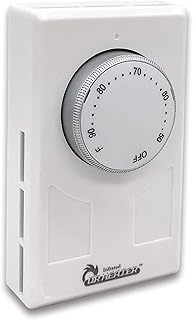
The DR-001 is a line-voltage wall thermostat with a stated 28-amp rating and capacity figures that vary by voltage: 3,360 watts at 120 volts, 5,824 watts at 208 volts, 6,720 watts at 240 volts, and 7,756 watts at 277 volts. Its listing describes four-wire, single- or double-pole operation and a flush wall-mount design.
Best for: Buyers whose electric ceiling-heating system uses a supported voltage and whose heater load falls within the thermostat’s stated rating. The included Celsius and Fahrenheit control dials provide a choice of temperature scale, with listed ranges of 5–32°C or 41–90°F.
Why it was selected: Its listed voltage and wattage capacities make it a relevant option to compare for line-voltage electric heat.
Limitation: Do not assume it suits a particular ceiling heater based on wattage alone. Confirm the heater’s wiring, voltage, load, and required pole configuration before purchase or installation.
Honeywell Digital Non-Programmable Thermostat
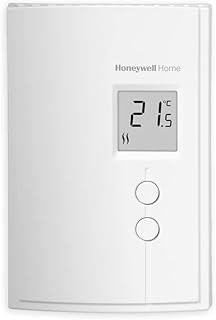
This Honeywell model is listed for electric baseboard heaters and convectors, with a two-wire configuration. Its product information describes TRIAC switching for silent operation and temperature control accuracy of ±0.27°F with baseboards and convectors. It is non-programmable, so it is designed around straightforward temperature setting rather than a schedule.
Best for: A buyer replacing or controlling an electric baseboard or convector system that the thermostat is specified to support. Its quiet switching may appeal to people who want to avoid the clicking associated with some thermostats.
Why it was selected: Ceiling heat is also electric in many homes, and this product provides a useful comparison for buyers checking thermostats for electric heat. However, its listing names baseboards and convectors, not ceiling heaters.
Limitation: Do not treat “electric heat” as universal compatibility. Confirm directly that the model supports the specific ceiling-heating system, voltage, and wiring before choosing it.
Cadet Double Pole Line Voltage Thermostat

Cadet lists this double-pole, four-wire thermostat for 120-, 208-, and 240-volt electric baseboard, fan-forced wall, and convector heaters. The stated maximum capacity is 2,640 watts at 120 volts or 5,280 watts at 240 volts. It has a twist dial with a 40–80°F range, a positive off position, color-coded wires, and a stated 3–6 degree comfort range.
Best for: Buyers with a compatible line-voltage electric heater whose circuit and load fit the stated limits. A double-pole design switches both legs of the circuit, and the positive off setting gives the user a direct way to shut off the heater.
Why it was selected: Its voltage range, defined capacity limits, and simple dial make it a practical comparison against higher-capacity or digital options.
Limitation: The listing specifically names baseboard, fan-forced wall, and convector heaters. Confirm that the ceiling-heating manufacturer permits this thermostat and that the heater’s load is within the limit.
Google Nest Thermostat

The listing identifies this as a programmable Wi-Fi smart thermostat, but the supplied product information does not specify its supported wiring, voltage, or ceiling-heater compatibility. Those details matter because electric ceiling heat may require a line-voltage control rather than a thermostat intended for a different type of heating system.
Best for: Buyers who want to investigate a smart thermostat and can verify that their exact heater and wiring are supported. The product name identifies Wi-Fi and programmable functions, but the information provided here does not establish further system capabilities.
Why it was selected: It represents the smart-thermostat option in this comparison, allowing buyers to consider connected control alongside basic line-voltage thermostats.
Limitation: Do not purchase it for ceiling heat unless the manufacturer’s compatibility information confirms the specific system. A smart feature set does not by itself establish compatibility with electric ceiling heating.
Google Nest Learning Thermostat

The product name describes a Nest Learning Thermostat with a temperature sensor and smart-home compatibility. However, the supplied data does not provide electrical ratings or confirm support for ceiling heat. Treat it as a possible smart-control candidate only after checking the current manufacturer compatibility details for the exact model and heating equipment.
Best for: Buyers who specifically want to compare a learning thermostat and sensor-based product with simpler dial or digital controls, provided their heating system is confirmed as compatible.
Why it was selected: Its listed temperature sensor and smart-home positioning make it relevant to buyers exploring more than basic manual temperature control.
Limitation: The product name alone cannot establish that it can switch a ceiling-heating circuit. Verify voltage, wiring, equipment type, and required interface before purchase.
Buying Guide: How To Choose A Thermostat For Ceiling Heat
Is your ceiling heat line voltage or low voltage?
Start by identifying the heater and existing thermostat system. Electric radiant ceiling systems may use line voltage, while other heating equipment can use a different control arrangement. A thermostat designed for one type should not be assumed to work with another. Check the heater label, installation documentation, and existing thermostat wiring, or ask a qualified electrician to identify the system.
Do not rely on the word “electric” alone. The Honeywell listing, for example, names baseboard heaters and convectors, while the Cadet listing names baseboard, fan-forced wall, and convector heaters. Those descriptions do not automatically confirm ceiling-heater support.
How do voltage and wattage affect the choice?
Match the thermostat’s permitted voltage to the heating circuit. Then compare the heater’s total connected wattage with the thermostat’s maximum rating at that voltage. A thermostat’s maximum capacity can differ across 120-, 208-, 240-, and 277-volt systems, so use the exact rating for the installation rather than a general maximum figure.
For multiple heaters controlled by one thermostat, determine their combined load. Do not exceed the thermostat’s stated capacity or assume that a higher voltage rating means it can control any load. If the circuit details are unclear, have an electrician check them.
Should you choose single-pole or double-pole?
Follow the heater manufacturer’s instructions and the circuit requirements. The DR-001 listing describes single- or double-pole use, while the Cadet model is a double-pole thermostat that switches both circuit legs. These designs are not interchangeable in every installation. Confirm the required configuration before ordering.
Do you want a simple dial, digital control, or smart features?
- Manual dial: A straightforward option for buyers who want basic adjustment. The Cadet has a 40–80°F dial range and a positive off position.
- Digital control: The Honeywell model offers digital, non-programmable control and silent TRIAC switching, but its listed applications should be checked against ceiling heat.
- Smart control: Nest models may appeal to buyers seeking connected or learning features. The supplied listing details do not confirm ceiling-heat compatibility, so verify the exact model’s support before purchasing.
What should you check before installation?
Confirm the thermostat’s voltage, maximum load, pole configuration, wire count, and approved heating applications. Also verify that the thermostat is intended for the way the heater is controlled. Follow the product instructions and local electrical requirements. Line-voltage wiring can present a shock or fire hazard; use a qualified electrician if you cannot safely identify or work with the circuit.
Frequently Asked Questions
Can I use any thermostat with electric ceiling heat?
No. The thermostat must match the heater’s voltage, load, wiring, and control type. A thermostat listed for baseboards or convectors is not automatically confirmed for ceiling heat.
Can a Nest thermostat control ceiling heat?
The product information provided here does not establish that either Nest model supports electric ceiling heat. Check the exact model’s manufacturer compatibility information and your heater requirements before buying.
How do I know what voltage my ceiling heater uses?
Check the heater label, electrical documentation, or existing installation records. If those do not clearly identify the voltage and circuit, ask a qualified electrician rather than guessing.
How much wattage can a thermostat handle?
It depends on the model and voltage. For example, the Cadet listing states up to 2,640 watts at 120 volts and 5,280 watts at 240 volts. Compare your heater’s total load with the thermostat’s rating at the actual circuit voltage.
Is a double-pole thermostat always better?
No. Choose the pole configuration required by the heater and circuit. A double-pole model switches both circuit legs, but it is not automatically the correct replacement for every installation.
Can I install a line-voltage thermostat myself?
Installation depends on the wiring, circuit, and local requirements. If you cannot confidently identify the circuit and follow the manufacturer’s instructions, have a qualified electrician perform the work.