Looking for the best thermostat for floor heating? This guide highlights five reliable options that balance ease of use, safety features, and energy savings for homes with radiant or underfloor heating systems. Each product is evaluated for who it’s best for, plus practical considerations like sensor placement, dual-voltage support, and smart features. Ideal buyers include DIY installers, homeowners upgrading from aging controls, and those seeking app-based remote control. The quick comparison table below helps you decide at a glance.
| Product | Best For | Key Feature | Voltage Support | Smart/Remote |
|---|---|---|---|---|
| BOWSEN Programmable Thermostat | Safe, standard underfloor heating installs | Dual sensing (air & floor), built-in GFCI | 120V/240V | Yes |
| SunTouch SunStat CommandPlus | Modern homes seeking remote access | 4.3″ touchscreen, floor & air sensing | 120V/240V | Yes (Wi-Fi) |
| OJ Microline UDG4 | Premium control with learning features | Dual sensing, color touchscreen, adaptive function | 120V/240V | No built-in Wi-Fi |
| Installers needing integration with Ditra systems | Built-in GFCI, energy tracking | 120V/240V | No Wi-Fi | |
| YeloDeer 1 PC Dual Voltage WiFi Thermostat | Smart homes prioritizing app control | Wi-Fi, works with Alexa/Google Assistant | 120V/240V | Yes |
BOWSEN Programmable Thermostat for Underfloor Heating
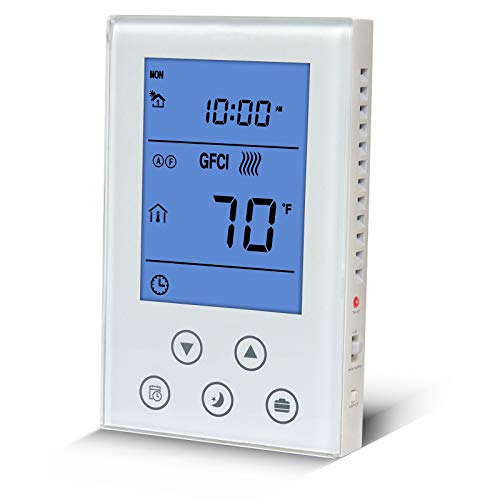
The BOWSEN thermostat supports both 120VAC and 240VAC, with a maximum 15A current and up to 3600W at 240V. It includes a floor sensor and an air sensor, plus a built-in GFCI for electrical safety. This model is best for safety-focused buyers who want a straightforward, dual-voltage option for standard underfloor heating setups. A potential limitation is reliance on side-access GFCI toggles and menu navigation for safety testing, which may require careful setup and periodic checks.
SunTouch SunStat CommandPlus Touchscreen Thermostat

The SunStat CommandPlus offers a 4.3″ touchscreen, remote access, and floor plus air sensing control. With a 7-day programmable schedule, energy monitoring, and weather integration, it’s well-suited for tech-forward homes seeking convenient control from anywhere. Choose this if you want strong app-based functionality and proactive energy use insights. A consideration is that features and reliability rely on Wi-Fi stability; without connectivity, some smart features won’t function optimally.
Honeywell TH115-AF-GA/U Radiant Floor Thermostat

Honeywell’s TH115-AF-GA/U is a 7-day programmable line-voltage thermostat with a floor sensor and GFCI. It’s a solid pick for traditional installations, offering reliable performance and straightforward scheduling. Best for buyers who want a trusted brand with a proven interface and no need for wireless features. Limitation: lacks built-in Wi-Fi or mobile app control, making remote access impossible without additional hubs.
MAXKOSKO WiFi Smart Radiant Thermostat

MAXKOSKO’s WiFi thermostat combines remote control via a smartphone app with Alexa and Google Assistant compatibility. It emphasizes programmable settings to optimize comfort and energy savings. Best for households seeking voice control and remote management. A potential caveat is that app performance depends on network reliability and cloud services; local-only operation may be limited without internet access.
OJ Microline UDG4 Touchscreen Programmable Thermostat

The OJ Microline UDG4 offers a 3.5″ color touchscreen, dual sensing (air and floor), and adaptive energy-saving functions. It supports both 120V and 240V, making it compatible with a wide range of floor heating systems. Best for buyers who want an intuitive interface and a self-learning operating system. Limitation: does not provide built-in Wi-Fi, so remote monitoring requires a separate hub or local network integration.
Schluter Ditra-Heat-E-RT Thermostat

Schluter’s Ditra-Heat-E-RT thermostat includes a built-in GFCI and energy tracking, designed to work with Ditra-Heat-E-HK heating cables. It’s a practical choice for Ditra systems and energy-conscious buyers who want a reliable, easy-to-use control with clear usage data. Best for installations where Ditra compatibility is a priority. Limitation: may have fewer smart features and Wi-Fi options than consumer smart thermostats.
YeloDeer 1 PC Dual Voltage WiFi Thermostat

YeloDeer provides dual voltage support with Wi-Fi control via Smart Life app and compatibility with Alexa and Google Assistant. It supports personalized 7-day or multi-period programming, offering tailored schedules for seasonal comfort and energy savings. Best for tech-savvy households seeking robust app control and voice integration. Limitation: app setup may require time to perfect schedules and ensure reliable connectivity.
Buying Guide: Key Considerations For Your Floor Heating Thermostat
- Voltage compatibility: Ensure the thermostat supports 120V and/or 240V based on your wiring. Dual-voltage models simplify upgrades in older homes.
- Sensor type and placement: Floor sensors improve comfort by matching heat to floor temperature. Air sensors adjust room air temperature. Dual sensing provides balanced control but may require careful placement.
- Safety features: Built-in GFCI is essential in wet areas or exposed installations. Confirm test procedures and troubleshooting guidance from the manufacturer.
- Smart features: Decide if you want Wi-Fi control, remote access, app scheduling, and voice assistant integration. Consider Wi-Fi stability and privacy implications.
- Programming and learning: Seven-day or multi-period programming can optimize comfort and energy use. Adaptive or self-learning modes adjust to your patterns automatically.
- Compatibility with existing systems: Some thermostats are best paired with specific floor heating cables or mats. Check if your system is compatible with Ditra, mats, or cables.
- Display and usability: A clear touchscreen or intuitive app improves daily use and reduces setup errors. Consider display size and readability in your space.
- Installation and maintenance: Look for straightforward wiring diagrams, included sensors, and accessible test functions to maintain safety over time.
Frequently Asked Questions
- What voltage should I look for in a floor heating thermostat?
– Most residential systems use 120V or 240V; dual-voltage models support both, making them versatile for renovations. - Do I need a Wi-Fi thermostat for floor heating?
– Not required, but can add remote access and scheduling. If you have unstable internet, a non-Wi-Fi model may be more reliable. - Is a GFCI required for floor heating thermostats?
– In many jurisdictions, GFCI protection enhances safety. Look for models with built-in GFCI and clear testing instructions. - Can floor heating thermostats control both floor and air temperature?
– Yes, many offer dual sensing to manage floor heat and room air for balanced comfort. - What should I consider when integrating with existing floor heating cables?
– Check voltage compatibility, sensor compatibility, and any brand-specific requirements for optimal performance. - Are programmable thermostats more energy-efficient than non-programmable ones?
– Yes, schedules and learning features tailor heating to your routine, reducing unnecessary runtime.