Looking for a thermostat with floor sensing to manage radiant heating more precisely? This guide spotlights five select thermostats that pair a built-in or floor sensor with easy programming or smart features. Each option fits common underfloor heating setups and helps prevent overheating or cold spots. Best for new installations, retrofit projects, or homes prioritizing comfort and energy efficiency.
Quick buying table (summary):
- Product: BOWSEN Programmable Thermostat for House Radiant Underfloor Heating
- Best for: Homes needing dual air/floor sensing with built-in GFCI safety
- Key benefit: Dual sensing for accurate floor temperature control
- Limitations: More complex setup due to dual sensors
- Product: Honeywell TH6100AF2004 T6 Pro-1 Heat Slab Sensor Thermostat
- Best for: Traditional radiant slab heating with dedicated slab sensor
- Key benefit: Reliable brand with known floor slab compatibility
- Limitations: Fewer smart features than newer lines
- Product: Honeywell TH115-AF-GA/U Radiant Heating 120/240V Programmable Thermostat with Floor Sensor and GFCI
- Best for: 24/7 programmable control with GFCI protection
- Key benefit: Integrated floor sensor and GFCI
- Limitations: Interface is utilitarian, not touchscreen
- Product: SunTouch CommandPLUS Floor Heating Thermostat SunStat
- Best for: Wireless-friendly setups with floor sensor included
- Key benefit: 15 ft floor sensor included; broad compatibility
- Limitations: Some users report setup complexity with older systems
- Product: OJ Microline UTN4 Radiant Floor Heat Thermostat
- Best for: Simple, non-programmable operation with dual sensing
- Key benefit: Built-in Class A GFCI and easy plug-and-play
- Limitations: Not a full program scheduler
BOWSEN Programmable Thermostat for Underfloor Heating
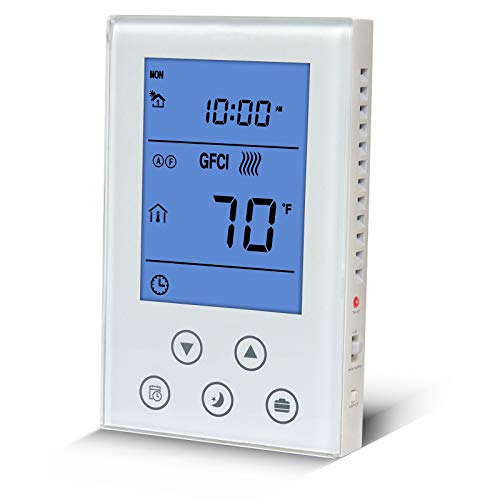
Best for: Homeowners who want dual sensing (air and floor) with built-in GFCI protection. The unit supports 120V or 240V circuits and up to 3600W on 240V. It includes both floor and air sensors to adjust the heating more accurately and to test GFCI functionality for safety. Suitable for radiant floor mats, electric underfloor systems, and compatible probes. Use this when you need strong safety features and dual sensing in one thermostat. It is designed to meet GFCI requirements and can help reduce electrical shock risk and fire severity in case of leakage.
Why chosen: The dual-sensing architecture paired with a built-in GFCI makes it a strong option for safer underfloor installations, especially in spaces with moisture risk or where precise floor temperature is critical. The 120/240V compatibility covers most residential radiant heating setups. A potential limitation is setup complexity due to dual sensors and safety tests; follow the included safety guidance to ensure proper operation.
Honeywell TH6100AF2004 T6 Pro-1 Heat Slab Sensor Thermostat

Best for: Traditional radiant slab heating with an integrated slab sensor. This model emphasizes solid, established performance and reliable compatibility with common radiant floor systems. It is suitable for installations where a slab or in-floor sensor is the primary temperature control input. Choose this if you prefer a well-known brand with straightforward programming and strong compatibility with older radiant layouts.
Why chosen: The TH6100AF line is known for dependable operation in slab heating environments. A limitation is that it may lack some modern smart features found in newer models, and the user interface is more utilitarian. For those prioritizing proven reliability, this is a solid pick.
Honeywell TH115-AF-GA/U Radiant Heating Thermostat

Best for: Homes needing a 7-day programmable line-voltage thermostat with a floor sensor and GFCI safety. The TH115-AF-GA/U offers structured weekly programming, making it suitable for households with predictable occupancy patterns. It fits 120/240V systems and integrates floor sensing to maintain even warmth across rooms.
Why chosen: It balances practical programmability with essential safety (GFCI) and floor sensing, which helps prevent overheated floors. Limitation: The control interface is functional rather than feature-rich on the app or smart home fronts, so it may be less suitable for users seeking advanced automation.
SunTouch CommandPLUS Floor Heating Thermostat SunStat
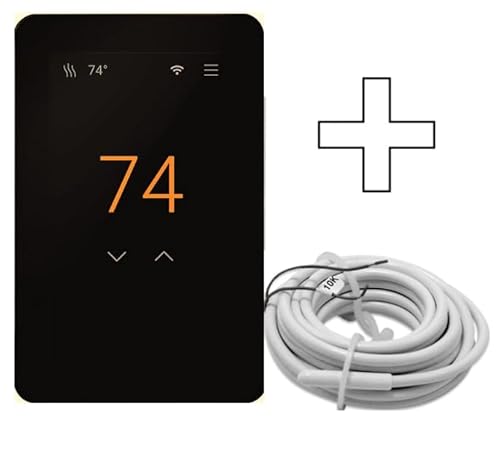
Best for: Modern floor heating systems requiring a universal programmable thermostat with a floor sensor included. It is designed to work as a direct replacement for older SunTouch and WarmYourFloor thermostats, and it supports multiple brands and installations. The included floor sensor (15 ft) helps ensure precise floor temperature control across various room sizes.
Why chosen: The SunStat line emphasizes broad compatibility and user-friendly scheduling with clear menus and app support. A potential limitation is setup complexity when integrating with some older or non-standard electric floor heating configurations, so verify compatibility before installation.
OJ Microline UTN4 Radiant Floor Heat Thermostat

Best for: Quick, simple operation with built-in Class A GFCI and dual sensing. This non-programmable option is suited for users who want reliable floor heating control without programming complexity. It fits 120/240V circuits and supports a range of floor types through its dual-sensing approach.
Why chosen: The UTN4’s built-in GFCI adds safety, and its straightforward operation makes it ideal for quick installs or renters who want warmth without the need to program schedules. Limitation: Lack of full programming features may not meet households seeking energy-saving automation.
Buying Guide
- What is floor-sensing and why does it matter? Floor sensors measure actual floor temperature to prevent overheating and ensure even heat distribution. If your space has thin flooring or sensitive materials, a floor sensor improves comfort and efficiency.
- Program vs. non-programmable models: Programmable thermostats save energy by adjusting heat according to a schedule, while non-programmable models offer quick, simple operation—choose based on how you use rooms and your energy goals.
- Voltage compatibility: Most radiant floor thermostats support 120V or 240V. Confirm your system voltage before purchase to avoid mismatches and ensure safe operation.
- Safety features to prioritize: Built-in GFCI protection reduces electric shock risk and can limit fire hazards due to leakage. For homes with moisture exposure or wet environments, GFCI-enabled units are prudent.
- Sensor placement considerations: The floor sensor’s placement dramatically affects readings. Install following manufacturer guidance to ensure accurate temperature measurements and efficient heating.
- Compatibility with existing systems: Some thermostats replace older SunTouch or Warm Your Floor models; others work across multiple brands. Check compatibility with your floor type (tile, stone, laminate) and underlayment for best results.
- Ease of installation: Non-programmable models are generally easier for DIY installs, while programmable or touchscreen models may require more planning or professional installation.
Frequently Asked Questions
- Do I need a GFCI on a floor heating thermostat? GFCI provides protection against electric shock and is recommended for underfloor heating, particularly in moisture-prone areas.
- Can I mix floor sensors with air sensors? Some models support dual sensing (air and floor) for better accuracy; verify dual-sensing support before buying.
- What is the advantage of a programmable thermostat? It allows scheduling, energy savings, and consistent comfort by adjusting temperature automatically.
- Will these work with existing radiant floor systems? Most listed units are designed for common radiant floor setups, but always confirm voltage, sensor type, and compatibility with your floor type.
- How should I place the floor sensor? Follow manufacturer instructions; generally, sensors go within the heated area but away from heat sources like vents to avoid skewed readings.
- Do I need professional installation? For high-voltage installations or when wiring GFCI components, professional installation is advisable to ensure safety and code compliance.