Electric radiant heating can warm a concrete floor when the heating cable or mat is installed in a suitable layer of thinset, mortar, or self-leveling underlayment and covered with an approved floor finish. The VEVOR 200-square-foot cable kit is best for larger areas; the LuxHeat 25-square-foot kit suits smaller spaces and includes an uncoupling membrane. Check the product instructions, floor construction, electrical requirements, and finish-floor compatibility before buying.
| Product | Best For | Area And Voltage |
|---|---|---|
| VEVOR cable kit | Large installations | 200 sq. ft., 240V |
| LuxHeat cable kit with membrane | Small tiled rooms needing an underlayment system | 25 sq. ft., 120V |
| VEVOR cable kit | Small, flexible layouts | 50 sq. ft., 120V |
| LuxHeat cable kit | Custom layouts under tile or laminate | 50 sq. ft., 120V |
| VEVOR heating mat | Compact, regular-shaped areas | 20 sq. ft., voltage not specified in listing |
VEVOR 50-Square-Foot Cable Kit

Best for: A small or medium concrete-floor area where a loose cable layout offers more flexibility than a fixed mat. This 120-volt kit covers 50 square feet and includes a programmable thermostat and alarm.
The thermostat has GFCI protection, dual air-and-floor sensing, a 7-day schedule, and four events per day. The cable is listed at 12 watts per square foot and has an aluminum shield and grounding wire. Its free-form layout is described as suitable for tile, natural stone, laminate, and wood flooring.
Choose this option if the heated area has an irregular shape and the planned installation can accommodate cable embedded in a suitable setting layer. The listing does not specify a concrete-specific installation assembly, so confirm the required substrate preparation and covering material with the instructions before installation. Do not assume the cable can be shortened or placed directly on bare concrete.
LuxHeat 25-Square-Foot Kit With Membrane
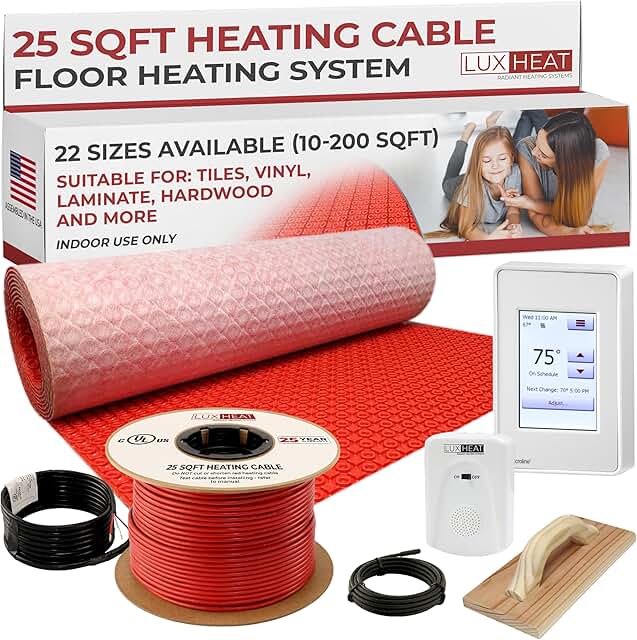
Best for: A smaller tiled room where a membrane is part of the planned floor assembly. The kit includes 25 square feet of 120-volt heating cable and a 35-square-foot Prova Flex-Heat uncoupling membrane.
The package also includes a programmable touchscreen thermostat with GFCI, a floor sensor, an alarm, and a wood float for membrane installation. The listing describes the membrane as an underlayment intended to provide decoupling, waterproofing, and load support. Thermostat features include dual sensing, power logging, child lock, and a 7-day, four-event schedule.
This is a useful choice when the membrane and tile assembly match the project requirements. The heating wires must be covered with self-leveler or thinset, and the manufacturer says not to cut or shorten them. Confirm that the membrane system is appropriate for the existing concrete and selected finish; the product listing does not replace substrate or moisture assessment.
VEVOR 200-Square-Foot Cable Kit
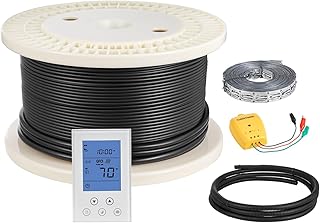
Best for: A larger project with up to 200 square feet of planned heated coverage and an electrical design suited to a 240-volt system. The kit includes a smart thermostat and alarm.
The 15-amp thermostat includes GFCI protection, dual air-and-floor sensors, a 41°F–98.6°F temperature range, screen lock, and a 7-day schedule with four events per day. The free-form cable layout is listed for tile, natural stone, laminate, and wood floors. VEVOR also lists a 12-watt-per-square-foot design, an aluminum shield, and a grounding wire.
Choose this kit over a smaller system when the heated area is genuinely large and the circuit and thermostat requirements have been checked. Its coverage is not a reason to heat every part of a room: cabinets, fixed fixtures, and other excluded areas may affect the usable layout. Confirm the exact installation instructions for concrete, including the required embedding material. The listing does not state that the cable may be cut.
LuxHeat 50-Square-Foot Cable Kit

Best for: A medium-size area requiring a flexible cable layout under tile or laminate. This 120-volt kit includes 50 square feet of heating cable, a programmable touchscreen thermostat, a floor sensor, an alarm, and cable guides.
The loose-lay cable format can be arranged to suit the covered area, unlike a fixed mat layout. The thermostat includes GFCI protection, while the alarm is intended to provide a warning during installation. The listing says the cable can be installed under tile, laminate, and other flooring, provided the required installation method is followed.
The heating wire must be embedded in self-leveling underlayment, thinset, or mortar. The manufacturer specifically says not to cut or shorten the wire. This makes the kit a better fit for a planned layout that can use the full cable length, not a project where the cable must be trimmed to fit. Confirm concrete compatibility, flooring requirements, and applicable electrical specifications before purchase.
VEVOR 20-Square-Foot Heating Mat

Best for: A compact, relatively regular floor area where a pre-spaced mat may be easier to position than loose cable. The kit includes a 20-square-foot mat, digital thermostat, floor sensor, and installation monitor.
The mat is listed as 1/8 inch thick with two-inch cable spacing and double-sided adhesive. The listing says the mat can be cut, rotated, and flipped to shape its layout, but the heating cable itself must not be cut. The thermostat offers dual air-and-floor sensing, power logging, child lock, four control modes, scheduling, and built-in GFCI protection.
Choose this option when the area fits the mat’s coverage and layout. The heating wires must be embedded in self-leveling underlayment, thinset mortar, or cement. The listing does not specify the system voltage, so verify the electrical requirements before ordering. A mat’s adhesive backing does not remove the need to prepare the concrete and follow the installation instructions.
Buying Guide: Choosing Underfloor Heating For Concrete
How much floor area needs heating?
Measure the portion of the floor that can actually receive heating cable or mat, rather than using the room’s total square footage. Fixed cabinets, built-in fixtures, and other areas excluded by the product instructions may reduce the usable heated area. Compare the product’s stated coverage with your layout and leave room for any required spacing or edge clearances.
The 20- and 25-square-foot products are aimed at small zones. The 50-square-foot kits provide more coverage for a bathroom, kitchen section, or similar area. The 200-square-foot kit is the largest option here. These are product coverage figures, not promises that every room of that size can be heated with the system.
Should you choose cable or a mat?
Loose cable is generally the more adaptable format when the heated zone has an unusual shape. The VEVOR and LuxHeat cable kits provide cable guides or a free-form layout, but the cable must be arranged according to its instructions. Do not cut a heating wire unless the manufacturer explicitly permits it; the listed LuxHeat products specifically prohibit cutting or shortening the wire.
A mat can simplify placement in a suitable, regular area because its cable spacing is already set. The VEVOR mat listing allows the mat to be cut, rotated, and flipped, while clearly warning not to cut the cable. Check whether the mat can be shaped around the actual room obstructions without violating its installation requirements.
What does a concrete floor need before installation?
Concrete must be assessed and prepared according to the heating system, underlayment, and flooring instructions. Check that the substrate is sound, clean, and suitable for the chosen setting materials. Moisture conditions and surface irregularities can affect the floor assembly, so follow the flooring and underlayment manufacturers’ requirements rather than assuming that any concrete slab is ready.
These products are electric heating components, not complete concrete-floor specifications. The listings call for heating wires to be embedded in thinset, mortar, self-leveling underlayment, or cement, depending on the product. They do not establish that a cable or mat can be installed directly on bare concrete. Confirm the complete layer sequence, including any insulation or membrane, before work begins.
Which thermostat and electrical details matter?
Check the required voltage, circuit capacity, thermostat rating, GFCI protection, and local electrical rules before buying. The VEVOR 50-square-foot kit and both LuxHeat cable kits are listed as 120-volt systems. The VEVOR 200-square-foot kit is listed as 240 volts. The VEVOR mat listing does not state its voltage, so verify it with the manufacturer or product documentation.
Thermostats in several kits offer floor sensing, scheduling, and GFCI protection, but features differ. A floor sensor helps the thermostat monitor floor temperature; it does not remove the need to follow the system’s limits or electrical instructions. Use a qualified electrician when required by local code or when the circuit design is uncertain.
How should the finish floor affect your choice?
Choose the heating system and floor finish as one compatible assembly. Product listings name options such as tile, stone, laminate, and wood, but each material and installation method has its own requirements. Confirm that the selected flooring can be used over the heating system and that the proposed thinset, mortar, or leveling material is allowed by the relevant manufacturers.
The LuxHeat 25-square-foot kit includes an uncoupling membrane, which may be useful when a tile project calls for that type of underlayment. Do not assume that the membrane is necessary or suitable for every concrete floor. Follow the membrane instructions and verify how it works with the slab, heating wire, and tile installation.
What installation limits should buyers check?
Read the full installation manual before purchasing, especially for cable spacing, sensor placement, wire routing, embedding depth, testing steps, and prohibited locations. Confirm that the product’s coverage and electrical requirements match the planned area. Keep any installation alarms and monitors available during the stages specified by the manufacturer.
Do not rely on a product title alone to establish compatibility with a concrete slab. Product descriptions can summarize features, but the full instructions determine the permitted floor assembly. If the proposed build-up differs from the documented installation, ask the manufacturer or a qualified flooring professional before proceeding.
Frequently Asked Questions
Can electric underfloor heating be installed over concrete?
It can be part of a concrete-floor assembly when the specific system instructions permit the substrate and the heating element is installed in the required embedding material. These listed products require covering materials such as thinset, mortar, self-leveling underlayment, or cement. Check the manual before installation.
Can I install heating cable directly on bare concrete?
Do not assume that direct installation on bare concrete is allowed. The product listings specify embedding the heating wires in a suitable layer. Follow the complete system instructions for substrate preparation and all floor layers.
Can underfloor heating cable be cut to fit a room?
The LuxHeat cable listings say not to cut or shorten the heating wire, and the VEVOR mat listing warns not to cut its cable. A mat may be shaped only as its instructions allow; cutting the mat is not the same as cutting its heating wire.
Which kit is best for a large concrete floor?
The VEVOR 200-square-foot kit is the largest listed option and uses 240 volts. It is a candidate for a larger heated zone if its coverage, electrical requirements, and concrete-floor installation instructions match the project.
Do these products include thermostats?
All five listed products include a thermostat or digital floor-sensing thermostat. Features vary, so compare voltage, GFCI protection, floor sensing, scheduling, and the product’s installation requirements before choosing.
Is a heating mat easier to install than loose cable?
A mat can be simpler to position in a regular area because its cables are pre-spaced. Loose cable offers more flexibility for custom layouts. The easier choice depends on the room shape, coverage, and the manufacturer’s installation rules.