Direct answer: Vacuum tube water heaters are a strong choice for high-efficiency solar hot-water systems, especially in sunny climates. The top options below emphasize strong heat retention, durable materials, and solid flow rates. This guide helps buyers choose models best for residential solar setups, pool heating, or combined hot-water needs. The selections prioritize ease of installation, reliable materials, and SRCC certification where listed.
Buyer profiles:
– Homeowners seeking reliable residential solar hot water: look for vacuum tubes with robust heat pipes, good insulation, and a compatible tank.
– Pool or spa setups: favor systems with corrosion-resistant manifolds and higher flow paths.
– Grid-stable systems with passive storage: consider integrated tanks and winter-ready designs.
| Product | Key Feature |
|---|---|
| Duda Solar 30 Tube Water Heater Collector | High tube count, good heat retention, SRCC certified |
| Duda Solar 15 Tube Water Heater Collector | Mid-range tube count, strong heat retention |
| MISOL Solar Collector with 10 Evacuated Tubes | Aluminum shell, rock wool insulation |
| MISOL 10 Vacuum Tubes for Solar Water Heater | Durable borosilicate glass, inner coating for energy absorption |
| Duda Solar 30 Tube Pool Collector | Stainless components for pool water, vacuum tubes |
| 300 Liter SUS304 Passive Duda Solar Water Heater | Attached pressurized tank, winter resistant |
Duda Solar 30 Tube Water Heater Collector

Best for high-volume solar hot-water systems and residential setups needing robust tube arrays. The model uses 58mm x 1800mm evacuated tubes and 14mm TU1 copper heat pipes for efficient heat transfer. Its 45mm manifold insulation with rock-wool helps minimize heat loss, while the SRCC certification signals baseline industry standards. Suited for homes that require strong performance across cool to moderate climates.
Best-use rationale: Choose this if you want a high-tube-count collector that balances heat retention with a proven piping layout. This is advantageous for families with steady hot-water needs or for new installations where capacity matters. A potential limitation is higher upfront cost relative to smaller collectors.
Duda Solar 15 Tube Water Heater Collector
Best for mid-sized solar hot-water projects or homes upgrading from smaller collectors. This model shares the same core design as the 30-tube variant, including 14mm copper heat pipes and strong insulation, but with a lower tube count. It remains SRCC certified and oriented toward reliable heat capture with efficient tube-to-tank integration.
Best-use rationale: Choose this if you want a balanced option that fits tighter roof space or moderate hot-water demand without sacrificing heat retention. Sensible for smaller households or retrofits where space is a consideration.
MISOL Solar Collector with 10 Evacuated Tubes

Best for compact solar hot-water projects or starter installations. The MISOL unit includes 10 evacuated tubes with a 58mm diameter and 500mm length, plus an outer aluminum shell and rock-wool insulation, helping minimize heat loss. It is a practical choice for apartments or small homes where roof space is limited but improved solar performance is desired.
Best-use rationale: Choose this when you need a space-efficient system that still employs evacuated tubes. A caution is that a smaller collector may yield lower daily hot-water production in high-demand households.
MISOL 10 Units of Vacuum Tubes for Solar Water Heater

Best for upgrading an existing solar water heater or building a custom tube array. Each tube features tough borosilicate glass and an inner coating designed to maximize solar absorption while minimizing heat loss through vacuum technology. This product emphasizes durability and efficient energy capture for reusable tube replacements.
Best-use rationale: Choose this if you need replacement or expansion tubes, or if you are configuring a DIY solar fluid heating system. Limitation: compatibility with specific manifolds or tanks should be verified in advance.
Duda Solar 30 Tube Water Heater Pool Collector
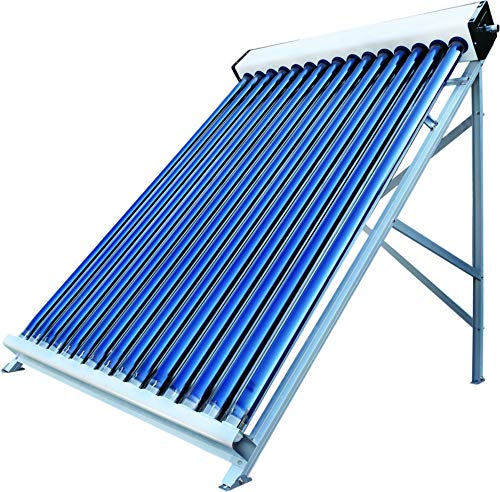
Best for pool water heating where chlorine exposure is a consideration. This unit uses 58mm x 1800mm evacuated tubes with a stainless inner manifold to resist high-chlorine environments. It continues the same high-efficiency TB approach and uses a design tailored to pool heating scenarios rather than household domestic hot water.
Caution: Pool water systems may require additional corrosion-resistant components and circulating pumps suitable for higher flow and chlorine-rich water. Confirm system compatibility with existing pool equipment.
300 Liter SUS304 Passive Duda Solar Water Heater

Best for larger households or domestic hot-water systems requiring a pressurized tank. The unit uses a 304 stainless steel outer shell with a winter-resistant design and a TK-7Y controller. It features 58mm x 1800mm tubes and a robust 100 psi maximum operating pressure, suited for steady, higher-volume hot-water needs in colder climates.
Best-use rationale: Choose this when you need a high-capacity, all-in-one storage and heating solution with reliable stainless steel construction. Limitation: The system may require more roof space and heavier mounting hardware due to its larger tank and solar array.
Buying Guide: Key Purchase Considerations
- System capacity: Match tube count and tank size to your hot-water demand. Higher tube counts generally deliver more heat but require more roof space and mounting effort.
- Climate suitability: In cooler or intermittently sunny areas, prioritize insulation quality and vacuum-tube efficiency to maximize heat retention.
- Materials and corrosion resistance: For pool heating or chlorinated water, look for stainless steel components and corrosion-resistant manifolds.
- Certifications and standards: SRCC or equivalent certifications provide assurance of tested performance and safety.
- Installation considerations: Check roof space, mounting hardware compatibility, and compatibility with existing tanks or controllers.
- Maintenance and durability: Prefer borosilicate glass tubes with robust seals and proven heat-pipe designs for long-term reliability.
- Expansion and replacement: Consider availability of replacement tubes and how easy it is to expand a system if hot-water demand grows.
Frequently Asked Questions
- What is a vacuum tube water heater?
A vacuum tube water heater uses evacuated glass tubes to collect solar energy and transfer it to a fluid that heats water in a tank or loop system. - Do SRCC certifications matter?
SRCC certification indicates tested performance and ensures components meet safety and efficiency standards for solar water heating. - Can vacuum tubes work in winter?
Yes, many designs are winter-resistant, but performance depends on climate and storage capacity. Insulation and tank design help. - What should I consider when choosing a tube count?
Higher tube counts increase potential heat capture, but require more space, mounting hardware, and can raise upfront cost. - Are these systems suitable for pool heating?
Some models are tailored for pool heating or heavy-duty use; verify corrosion resistance and pump compatibility for pool water. - How do I maintain vacuum tubes?
Regular inspection of seals and cleanliness helps maintain performance; replacements are available for worn tubes or damaged manifolds.