Answering common questions from homeowners and technicians, this guide highlights reliable tools that help verify water heater element integrity and perform basic electrical checks. The top picks include a continuity tester for quick element checks, a socket wrench for replacing elements, a compact multimeter for live readings, a neon voltage tester for safety, and a versatile meter for measuring related water system parameters. Best for do-it-yourself homeowners, professionals working on residential systems, and handy renters who want faster troubleshooting without calling a plumber.
Summary of selected products
| Product | Key Use | Why It’s Good |
|---|---|---|
| Camco 10023 Water Heater Continuity Tester | Continuity testing | Simple quick check to see if a heating element is continuous |
| 1-1/2 Inch Water Heater Element Socket Wrench (Qtcial) | Removing/replacing elements | Precise fit, corrosion resistant, broad compatibility |
| NSi TES-111 Twin Probe Voltage Tester | Voltage presence testing | Quick safety check before work |
| AstroAI Digital Multimeter Tester | Voltage, current, resistance, continuity | Versatile diagnostic tool for electrical systems |
| Instant 4-in-1 TDS Meter Digital Water Tester (VARIFY) | Water quality context | Helpful alongside element work when water quality matters |
Camco 10023 Water Heater Continuity Tester

Features: Continuity Tester, Batteries Included (E/F/S) (CLAM). The listed features emphasize readiness and portability for quick checks on exposed heater wiring and terminals. Best for homeowners and contractors who need a fast yes/no on element circuits. A limitation is that it primarily confirms continuity, not exact resistance values or element health beyond a basic circuit check.
1-1/2 Inch Water Heater Element Socket Wrench

Features: 1-1/2 Inch 6-point design, fits standard 1/2-inch drives, compatible with Camco, GE, Rheem, A.O. Smith, Whirlpool and more. Best for replacing residential screw-in water heater elements. Provides a secure grip to avoid rounding corners. Caution: ensure the power is off and water is drained before removing an element to prevent scalding or electrical shock.
NSi TES-111 Twin Probe Voltage Tester

Features: Neon Light Indicates Presence Of AC Voltage From 80-250 VAC, Double Insulated Housing and Test Leads, Pocket Clip. Best for quick safety checks before touching any wires. Better for ensuring live circuits are de-energized. Limitation: does not provide precise voltage readings or amperage; for detailed electrical measurements, pair with a multimeter.
AstroAI Digital Multimeter Tester
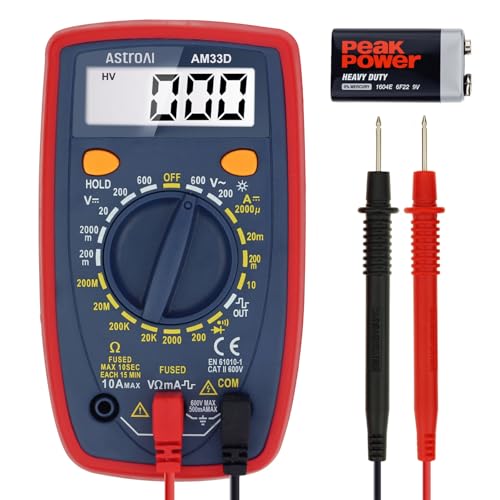
Features: Measures AC/DC voltage, current, resistance, continuity and diode testing. The product text notes troubleshooting guidance, a backlit display, and a 1999-count range. Best for households performing more complex electrical checks and troubleshooting around water heater circuits. Limitation: some measurement ranges may not cover very high currents; verify your element’s expected values before use.
Instant 4-in-1 TDS Meter Digital Water Tester (VARIFY)
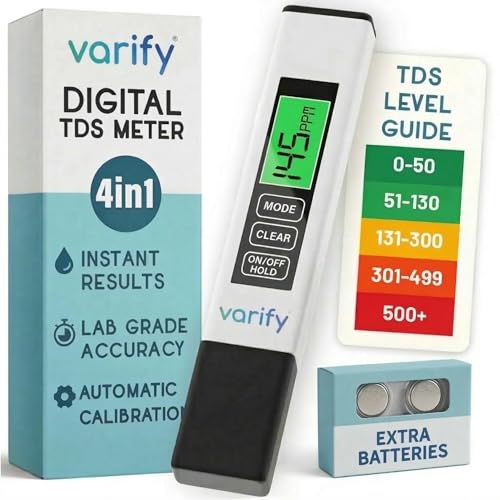
Features: 4-in-1 meter measuring TDS, EC, and temperature in °C/°F. Best for checking water quality in RO systems, aquariums, or pre/post heater water. Caution: not a direct indicator of heating element condition; use in conjunction with electrical tests for a full diagnosis.
Craft911 Water Tester for Drinking Water – TDS Meter

Features: Accurate TDS meter with titanium alloy probe, intelligent chip, backlit LCD display, auto-lock function. Best for verifying water quality around drinking water scenarios or when assessing the impact of a heater’s water on downstream appliances. Caution: TDS readings do not directly indicate heating element condition; use for context alongside electrical testing.
Buying Guide: Key Considerations For Choosing Water Heater Element Testing Tools
- What type of tests do you need? If you primarily need quick continuity checks, a dedicated water heater continuity tester is enough. For more detailed electrical analysis, a digital multimeter is preferable.
- Safety first. Always disconnect power and depressurize the system before inspecting or removing elements. A neon voltage tester can provide a rapid live-check before any interaction.
- Compatibility. When replacing elements, ensure the socket wrench matches your element size (commonly 1-1/2 inches for residential units) and is compatible with your heater brand.
- Combined tools. A multimeter paired with a continuity tester offers broad diagnostic coverage, from simple open-circuit confirmation to resistance and diode checks.
- Water quality context. While not a direct element test, TDS/EC meters help assess water quality that may affect mineral buildup around elements and thermostats.
- Portability and ease of use. Select tools with clear displays, auto-off features, and durable construction for use in tight spaces or cramped water heater closets.
Frequently Asked Questions
- What is the main sign a water heater element is bad?
A failed element usually presents as no heat, a flickering thermostat, or an open circuit detected by a continuity tester.
- Do I need a multimeter if I have a continuity tester?
A continuity tester confirms circuit continuity, but a multimeter provides resistance, voltage, and diode checks for a more complete diagnosis.
- Can I test a water heater element without draining the tank?
Often no. To safely test and replace elements, you typically must drain the tank and isolate power per manufacturer guidelines.
- Is a neon voltage tester sufficient for safety checks?
Yes for a quick presence check, but it does not measure exact voltage or current; use a multimeter for precise readings.
- Should I replace elements if a TDS meter shows poor water quality?
Not by itself. A TDS meter indicates water quality; element replacement depends on electrical tests and heater performance.
- Are these tools suitable for all water heater brands?
Socket wrenches must fit your element type; many tools are broadly compatible with common residential units, but check your model’s specifications.