Answering the question for RV owners: these models deliver reliable hot water on the road, with options for propane, electric, or dual-fuel systems. The best picks serve families, full-timers, or casual campers who need steady showers, dishwashing, and handwashing water without frequent re-heating. Below is a quick buyer’s table and a deep look at five standout options based on installation space, fuel source, altitude readiness, and ease of use.
| Product | Type | BTU / Capacity | Power Source | Best For |
|---|---|---|---|---|
| ORBEK RV Tankless Water Heater | Tankless | 60,000 BTU | Propane | RVers needing continuous hot water and altitude readiness |
| Suburban SW6D 6-Gallon RV Water Heater | Tank | 6 gal | DSI (electric optional) | Weekend travelers who want flexible power |
| APUS RV Tankless Water Heater | Tankless | 68,000 BTU | Propane, 12V | Family RVing with high hot-water demand |
| FOGATTI InstaShower 8 Plus | Tankless | 55,000 BTU | Propane | High-altitude and retrofit-friendly installations |
| VEVOR RV Tankless Water Heater | Tankless | 65,000 BTU | Propane | All-season hot water for multi-use RVs |
ORBEK RV Tankless Water Heater
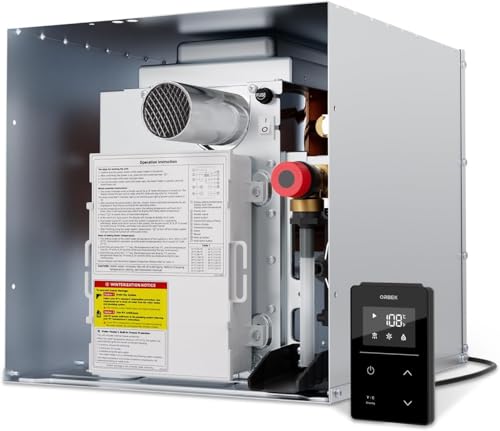
The ORBEK unit uses continuous on-demand hot water with a 60,000 BTU propane burner, supplying showers, dishwashing, and handwashing as needed. It only runs the burner when hot water is requested, reducing propane use. It’s designed for standard 15″ × 15″, 15″ × 18″, and 18″ × 18″ openings, helping simplify replacement. High-altitude suitability is supported by oxygen-free copper heat exchangers and brushless DC fans to adapt to up-hill RV travel. Best for: RV families or travelers who want unlimited hot water without a storage tank. Caution: confirm existing cutout size before purchase to ensure compatibility with your setup.
Suburban SW6D 6-Gallon RV Water Heater
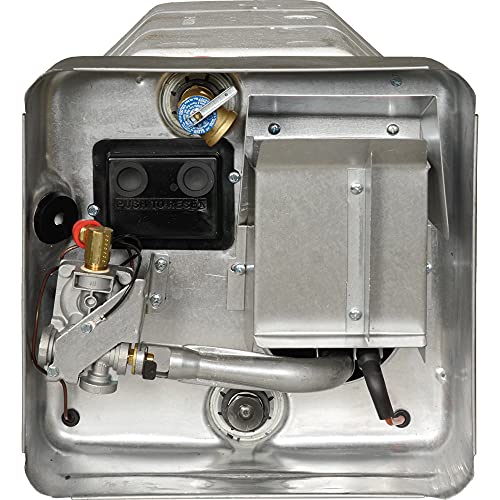
This 6-gallon tank water heater features a porcelain-lined steel tank for durability and a replaceable anode rod for corrosion protection. The anode rod doubles as a drain, simplifying maintenance and extending unit life. An optional electric element adds flexibility for campsite or generator power. Best for: RVers who value a traditional tank design with easy maintenance and electric backup. Limitation: still a tank model, so standby energy use is higher than tankless options in some setups.
APUS RV Tankless Water Heater

The APUS unit provides 68,000 BTU and 3.9 GPM, delivering instant hot water on demand. It’s compact, with installation dimensions designed to fit common RV spaces and a 12V DC power connection for easy electrical setup. It’s altitude-ready for up to 9,800 feet and includes a remote control for convenient operation. Best for: RV families needing strong, on-demand hot water with straightforward installation. Caution: ensure your RV’s parameters match the door and opening sizes for retrofit compatibility.
FOGATTI InstaShower 8 Plus RV Tankless

The InstaShower 8 Plus offers high-altitude readiness with a 55,000 BTU input and 2.9 GPM capacity, designed to last over 40 minutes of hot water in typical use. It supports multiple door size options and is designed for easy retrofit, replacing several common tank-type and several other brands. Best for: RVers needing a long-running hot water supply in mountain driving or retrofits. Limitation: some installations may require compatible door openings; verify your cabinet size before buying.
VEVOR RV Tankless Water Heater

The VEVOR unit delivers up to 65,000 BTU for fast hot water and uses a clear LED display with touch controls for easy operation. It features seasonal adjustments through segmented combustion to maintain comfortable water temperatures year-round and aims to optimize energy use during varying outdoor conditions. Best for: RVers who want robust, all-season hot water with simple control. Caution: verify compatibility with your RV’s ducting and installation space before purchase.
Buying Guide
What should you consider when choosing an RV water heater?
- Fuel source: Propane-only, electric-only, or dual-fuel options affect installation and running costs. Tankless models usually rely on propane, with some offering 12V DC controls for RV use.
- Hot water demand: A family or frequent guests may need higher BTU or GPM (gallons per minute) to maintain steady showers without cold spots.
- Altitude readiness: If you travel at high elevations, choose models advertised as high-altitude ready with staged combustion or optimized heat exchangers.
- Installation space: Tankless units are compact but require proper venting and cutouts; tanks need cabinet space and sometimes more complex installation.
- Maintenance: Tank models with anode rods require periodic inspection; tankless units benefit from clean gas lines and venting checks to avoid efficiency loss.
- Durability and materials: Look for corrosion protection, heat exchangers made from copper or stainless steel, and robust door panels for retrofit compatibility.
Frequently Asked Questions
- What’s the difference between tankless and tank water heaters for RVs? Tankless heaters provide on-demand hot water without storing heated water, saving space and propane; tank heaters store hot water and may offer electric back-up, but require cabinet space and more energy when idle.
- Can RV water heaters work at high elevations? Yes, if the model is labeled high-altitude ready or designed for mountain use with appropriate combustion adjustments.
- Do I need electrical power for a tankless RV heater? Many require 12V DC power for control panels or ignition; some models are propane-only with optional electric elements for backup.
- How do I choose the right BTU for my RV? Higher BTU means faster hot water; choose based on your family size, typical shower duration, and whether you’ll run multiple fixtures simultaneously.
- Are retrofit installations difficult? Some units are designed for standard RV cutouts, but check door openings, mounting space, and venting requirements before buying.
- Is continuous hot water safer at high altitudes? High-altitude optimized units help maintain consistent temperatures and reduce cold spots when driving in hilly or mountainous regions.