Answering the need for reliable pipe freezing protection, these water line heat wraps and cables are designed to keep water flowing in cold weather. They’re best for homeowners in climates with sub-freezing temperatures, for individuals who want minimal maintenance, and for those who need quick, install-and-forget protection. The top picks below cover metal and plastic pipes, roof and gutter applications, and long runs along exposed lines. Use the buying guide to compare features like length, power, and installation style to match your setup.
Summary of selected products:
| Product | Best For | Key Feature |
|---|---|---|
| Frost King HC6A Automatic Electric Heat Kit | Short runs on metal or plastic pipes | 6 ft, 120V, 7W/ft |
| 50FT Pipe Heating Cable (5W/ft) | Medium-length runs, versatile metal/plastic pipes | UL-certified entire cable, -40°F protection |
| 3FT-200FT Heat Tape (50FT shown) | Flexible lengths for various pipes | 5W/ft, -40°F |
| 100FT Roof And Gutters Heat Tape | Roof, gutters, downspouts | 8W/ft, self-regulating, LED plug |
| MAXKOSKO 6ft Self-Regulating Tape | Small to mid-length pipe runs | 5W/ft, -40°F, thermostat |
Frost King HC6A Automatic Electric Heat Kit Heating Cables

Best for quick protection on short pipe runs, especially metal or plastic lines that run indoors or in protected outdoor areas. The Frost King HC6A provides 6 feet of heat cable at 7 watts per foot, designed to keep water flowing down to -40°F. The compact length makes it ideal for preventing burst pipes along kitchen and bathroom supply lines. Caution: not suited for long exterior runs or exposed gutter lines beyond its 6-foot range.
50FT Pipe Heating Cable for Pipe Freeze Protection
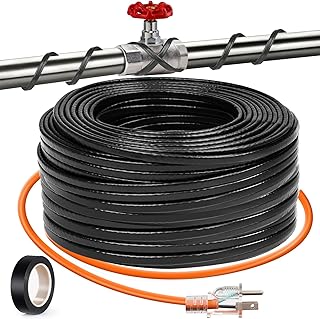
Best for medium-length runs on metal or plastic pipes, with a comprehensive protection profile. This cable is certified across the entire unit, includes a 5-foot grounded plug with indicator light, and claims -40°F freeze protection. Its multi-layer construction (copper core, shield, and TPE jacket) targets reliability in harsh environments. Best for outdoor utility lines and areas exposed to sun, wind, and salt air. Caution: avoid use on fuel lines or gutters where water flow is not present, to prevent overheating.
3FT-200FT Heat Tape For Water Pipes

Best for flexible installation along pipes of varying lengths, with a wide range of compatibility. This option is designed to handle metal and plastic pipes, with a focus on -40°F protection. It includes a flexible length and a 5W/ft rating for efficient energy use. Caution: follow installation patterns to ensure uniform coverage and prevent overheating in tight bends.
100FT Roof And Gutters Heat Tape

Best for roof edges, gutters, and downspouts, this 100-foot tape covers wider areas to prevent ice dams and ensure water drains properly. It features an 8W/ft rating and self-regulating behavior with a power cord length of about 9.8 feet. The kit includes mounting clips and spacers for secure installation. Caution: designed for roof and gutter configurations; pipe coverage should be assessed to avoid over-wrapping on non-pipe surfaces.
MAXKOSKO 6ft Self Regulating Heat Tape
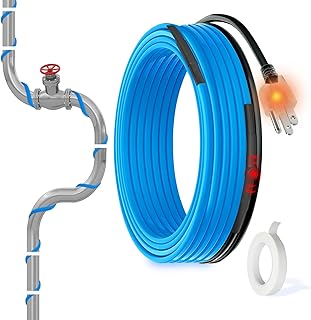
Best for short to mid-length pipe runs in mixed environments, the MAXKOSKO tape uses self-regulating technology to prevent overheating. It maintains flow down to -40°F and includes a thermostat function and a 3-foot power cord. This makes it a solid option for indoor and sheltered outdoor pipes. Caution: the included power cord length may require an outlet near the pipe for convenient setup.
Buying Guide: Practical Considerations For Water Line Heat Wraps
What length do you need? Measure the total run length of the pipes you want to protect and choose a cable that covers more than the measured distance to avoid gaps in coverage.
Is the pipe material metal or plastic? Some cables perform equally well on metal and plastic pipes, while others advise specific compatibility. Confirm that the product supports both types if your system uses mixed materials.
How cold are your winters? For extremely cold climates, prioritize cables rated for -40°F or lower and check whether the system uses self-regulating heat to reduce energy usage during milder spells.
Where will the installation occur? Indoor versus outdoor exposure affects jacket material. UV, moisture, and chemical resistance are important for outdoor or garage installations.
What about installation complexity? Shorter cables with simple on/off or auto-regulating functionality reduce complexity. Longer runs may require careful routing and securing to prevent damage or tangling.
FAQ
- What is the typical operating temperature range for these heat tapes? Most products advertise protection down to -40°F, with self-regulating features to prevent overheating.
- Can I install heat tape on gutters and roofs? Yes, some models are designed for roofs and gutters to prevent ice dams and ensure proper drainage.
- Do these cables require a dedicated outlet? Many kits include a plug with a cord, but longer runs may need a nearby outlet or a weatherproof receptacle.
- Are there safety warnings I should follow? Avoid using on fuel lines or gutters without water exposure, and ensure proper clearance from flammable materials.
- Can I mix different brands for a single project? Mixing is generally not recommended due to potential differences in regulation, wattage, and insulation properties.
- What maintenance is required after installation? Periodic inspection for wear, damage to the jacket, and secure mounting is advised, especially in exposed outdoor areas.