The best wireless home heating control depends on your heating equipment: the Sensi ST55 suits many homes seeking app-based HVAC control, while the meross Matter thermostat is designed for high-voltage electric heaters. The DIGITEN is a simpler plug-in controller, and the YoLink is intended for heat-pump use with its hub. Check system compatibility and wiring requirements before choosing; wireless features do not make different thermostat types interchangeable.
| Product | Best For | Key Consideration |
|---|---|---|
| Sensi Smart Thermostat ST55 | Many conventional home HVAC systems | C-wire is not required in most applications |
| Sensi Lite ST25 | App control and scheduling | C-wire required for heat pumps and heat/cool-only systems |
| DIGITEN WTC100 Pro | Simple temperature control for heating or cooling devices | Nonprogrammable design |
| YoLink YS4003 | Heat pumps within the YoLink setup | Requires a YoLink Hub and internet connection |
| meross Matter Thermostat | High-voltage electric heaters | Not compatible with 24V HVAC systems |
Sensi Smart Thermostat ST55

The Sensi ST55 is a Wi-Fi smart thermostat for buyers who want remote HVAC control, flexible schedules, and energy-use reports. Its listed features include Alexa support, ENERGY STAR certification, and DIY installation guided by the Sensi app. A built-in level is included to help with installation.
Best for: Homeowners with compatible HVAC equipment who want app-based control and scheduling. The manufacturer says it works with HVAC equipment found in most homes, and that a common wire is not required in most applications.
Why it was selected: It combines remote access, flexible scheduling, usage reports, and a stated energy-saving potential of about 23% on HVAC energy. That figure is the manufacturer’s claim, not a guaranteed result for every household. Sensi also states that it will not sell users’ personal information to third parties.
Keep in mind: “Most homes” does not mean every system. Confirm the thermostat’s compatibility with your specific HVAC equipment and wiring before purchase.
Sensi Lite Smart Thermostat ST25
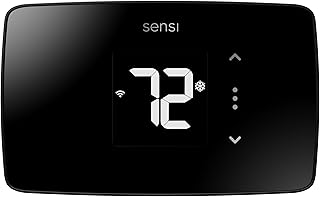
The Sensi Lite ST25 adds Wi-Fi control and Alexa support to a DIY thermostat with flexible scheduling, geofencing, remote access, and usage reports. It is ENERGY STAR certified. The listed setup features include a built-in level and step-by-step installation instructions.
Best for: Buyers who want an app-controlled thermostat with scheduling and geofencing, and whose system meets the model’s wiring and equipment requirements. The manufacturer says it works with HVAC equipment found in most homes.
Why it was selected: Its remote-access and scheduling features can help buyers manage temperatures when they are away or following a routine. Sensi lists an energy-saving potential of about 23% on HVAC energy; actual results depend on use and household conditions.
Keep in mind: The C-wire is required for heat-pump and heat/cool-only systems, according to the supplied product information. It is not required on most other systems. Check the wiring before choosing this model.
DIGITEN Wireless Thermostat WTC100 Pro

The DIGITEN WTC100 Pro is a wireless temperature controller with a remote control and built-in temperature sensor. Its three-button operation is described as simple, and users can switch between Celsius and Fahrenheit. It is a plug-and-play, nonprogrammable design.
Best for: Buyers seeking straightforward temperature control for a compatible heating or cooling device rather than a programmable whole-home thermostat. The controller detects the current temperature and switches the connected device on or off in response to the target temperature.
Why it was selected: It offers a different approach to wireless heating controls: temperature sensing and device control through a thermostat plug, instead of app-based HVAC scheduling. The product information also lists heating and cooling modes, which can help maintain a set room temperature when used with a compatible device.
Keep in mind: The controller is explicitly nonprogrammable, so it is not the right choice for buyers who want an automated weekly schedule. Verify the connected device is appropriate for this controller before use; the supplied details do not specify every supported device type.
YoLink Smart Thermostat YS4003

The YoLink YS4003 is listed as a smart thermostat for heat pumps. With the YoLink app, users can check and change the temperature and operating mode remotely. Its ECO feature can automatically adjust set temperatures for savings when occupants are away.
Best for: Heat-pump owners who want app-based temperature and mode adjustments and are prepared to use the YoLink hub system. It is a more specific choice than a general-purpose thermostat because the product is identified for heat pumps.
Why it was selected: Remote adjustment and an away-oriented ECO feature make it relevant to buyers looking to manage heating settings without being at home. It also provides a clear control path through the YoLink app.
Keep in mind: The product requires a YoLink Hub with an internet connection. The listed options for the hub’s connection are wired Ethernet or 2.4GHz Wi-Fi. Account for that additional system requirement when comparing it with standalone controls.
meross Matter Thermostat For Electric Heaters

The meross Matter thermostat is designed for high-line-voltage electric heating systems rated at 120–240 VAC. Listed examples include baseboard, convector, and fan-forced heaters. It supports Matter and is described as working with Alexa, Apple Home, Google Home, SmartThings, and the Meross app.
Best for: Buyers with a compatible high-voltage electric heater who want app control, voice commands, or a visual 24/7 schedule. Its stated Matter support may suit households that want to manage the thermostat through more than one listed smart-home platform.
Why it was selected: It addresses a category that standard low-voltage HVAC thermostats may not serve: high-voltage electric heating. Scheduling can automate temperature settings for times when household members are asleep or away.
Keep in mind: Compatibility is limited to the specified high-line-voltage heating systems. The manufacturer says it is not compatible with 24V HVAC systems, including heat pumps and conventional air-conditioning systems. Verify voltage and heater type before purchase.
Buying Guide: How To Choose Wireless Home Heating Controls
Wireless heating controls vary in what they control and how they connect. Some are smart thermostats for HVAC equipment, some are specifically intended for heat pumps or high-voltage electric heaters, and others control a compatible device through a plug-in receiver. Start by identifying the heating system, then compare the control features that matter in daily use.
What type of heating system do you have?
Check the heater or HVAC documentation and identify whether the system is a conventional HVAC setup, a heat pump, or a high-voltage electric heater. Do not choose a thermostat based only on the fact that it offers Wi-Fi or app control. The meross model is specified for 120–240 VAC electric heating, while the Sensi models address HVAC equipment and the YoLink model is listed for heat pumps.
If the system type or voltage is uncertain, confirm it before buying. The supplied product information does not establish compatibility with every installation, and a thermostat intended for one electrical category should not be assumed to work with another.
Do you need a C-wire?
Wiring requirements can determine whether a thermostat is suitable. The Sensi ST55 does not require a common wire in most applications, according to its product details. The Sensi Lite ST25 requires a C-wire for heat pumps and heat/cool-only systems, but not for most other systems.
Check the existing thermostat wiring and the specific system requirements before ordering. If the listed wiring information does not clearly match your installation, ask a qualified HVAC professional to verify the setup rather than guessing.
Do you want schedules, remote access, or basic temperature control?
For planned temperature changes, compare the Sensi models’ flexible scheduling and the meross 24/7 visual schedule. Remote access is listed for both Sensi thermostats, and the YoLink app can be used to check and change temperature and mode. These features are useful when settings need to change outside the home or follow a daily routine.
The DIGITEN WTC100 Pro is nonprogrammable. Choose it if simple temperature-based switching is more important than a weekly schedule or app-based automation. Avoid it if scheduled temperature changes are a required feature.
Will the control need a hub or a smart-home platform?
The YoLink thermostat requires a YoLink Hub and an internet connection, using wired Ethernet or 2.4GHz Wi-Fi for the hub. Include that hub requirement in your setup plans. The meross model lists Matter support and compatibility with Alexa, Apple Home, Google Home, SmartThings, and the Meross app.
Do not assume every wireless thermostat works with every smart-home platform. Check that the product’s stated platform support matches the system you intend to use. For buyers who do not need smart-home integration, a simpler controller may be more appropriate.
How should energy-saving claims be compared?
Scheduling and remote access can give users more ways to manage heating settings, but results depend on the home, equipment, weather, and how controls are used. The Sensi product details state that the ST55 and ST25 can help save about 23% on HVAC energy. Treat this as a manufacturer-provided potential, not a guaranteed reduction for every buyer.
The YoLink ECO feature is described as automatically adjusting set temperatures for savings when users are away. The meross schedule can automate settings for sleep and away periods. Compare these functions according to your routine, and avoid treating energy claims as a substitute for verifying system compatibility.
What should renters and DIY buyers consider?
The two Sensi thermostats list DIY installation instructions, and both include a built-in level. That information may appeal to buyers who want a guided installation, but it does not prove that every home has compatible equipment or wiring. Check requirements before starting work.
For renters, confirm whether changing the existing thermostat or installing a control device is allowed. Also consider whether the selected control can be removed or whether it changes existing wiring. The supplied product information does not describe landlord policies or installation conditions for a particular home.
Frequently Asked Questions
Are all wireless thermostats compatible with every heating system?
No. Wireless describes a control or connection feature, not universal equipment compatibility. Match the thermostat to the system type, voltage, and wiring. For example, the meross model is for specified high-voltage electric heaters and is not compatible with 24V HVAC systems.
Which listed thermostat is designed for electric baseboard heaters?
The meross Matter thermostat is designed for high-line-voltage electric heating systems rated at 120–240 VAC, including baseboard heaters. Confirm the heater’s voltage and type before selecting it.
Does the Sensi Lite ST25 require a C-wire?
It requires a C-wire for heat-pump and heat/cool-only systems. The supplied product details say a C-wire is not required on most other systems. Check the wiring for your specific installation.
Which option requires a separate hub?
The YoLink YS4003 requires a YoLink Hub with an internet connection. The hub can connect through wired Ethernet or 2.4GHz Wi-Fi, according to the product information.
Which product is best for a buyer who does not need schedules?
The DIGITEN WTC100 Pro is a nonprogrammable controller with three-button operation and a temperature sensor. It is a better fit for straightforward temperature-based control than for automated weekly schedules.
Can a smart thermostat guarantee lower heating bills?
No. Scheduling, remote access, and ECO features can help users manage settings, but savings are not guaranteed. Results depend on the equipment, home, and use. Manufacturer energy-saving claims should be treated as potential outcomes rather than promises.