If you’re searching for reliable wood-burning heating and cooking options, these five stoves are strong contenders for indoor, tent, and cabin use. They balance heat output, durability, and versatility to match different spaces and budgets. This guide highlights who each stove is best for and why it’s a solid pick, with practical cautions where relevant. For quick reference, a summary of the top five products is below.
| Product | Best For | Key Benefit |
|---|---|---|
| Indoor Wood-Burning Heating Stove (L) | Cabins and workshops | Complete kit with long chimney |
| Comfort Glow Cast Iron Wood Stove | Smaller living spaces | EPA certified, large logs |
| Canyon Lodge Medium Wood Stove | Medium to large spaces | Brick-lined firebox, viewing window |
| Upgraded Wood Stove For Outdoor Camping | Tent camping | Thickened steel, high airtightness |
| Hot Tent Stove – AVOFOREST | Ice fishing and hunting camps | 7-section chimney, glass window |
Indoor Wood-Burning Heating Stove With Chimney

Product by ZAWAYINE Store offers a heavy‑duty carbon steel construction with a thickened combustion chamber for tight sealing and fire-retardant performance. This stove is designed for cabins, tents, or workshops where stable heat is essential. The included 19.7 feet of chimney with two elbows and heat-retardant mesh increases safety by venting smoke outdoors and reducing accidental burns. It supports cooking with three pot opening sizes via removable rings, enabling you to boil, simmer, or warm meals while you heat the space.
Who this is best for: buyers needing a versatile, all-in-one wood stove that doubles as a cooking surface and ships with a ready-to-assemble chimney kit. The design prioritizes durability and long-term use in rugged settings. The main caveat is the capacity to manage heavy smoke in tighter spaces; ensure adequate venting and clearance per setup instructions.
Comfort Glow Cast Iron Wood Stove

This stove emphasizes reliability with heavy‑duty cast iron construction and EPA certification. It heats up to about 900 square feet and accommodates large logs for longer burn times. Its compact design helps fit in smaller living areas while still delivering strong warmth. The robust cast iron core supports sustained heat retention, which improves overall efficiency in low-energy environments.
Who this is best for: buyers seeking a compact, high‑efficiency wood stove for small to medium spaces without sacrificing substantial heat. A potential limitation is that the compact footprint can limit startup flexibility if you need very large air spaces or unusually large fuel loads.
Canyon Lodge Medium Wood Stove

This model targets larger spaces with its capacity to heat up to 2,500 square feet. A brick-lined firebox and a cast iron door with a viewing window offer both durability and a clear view of the flames. The combination of brick lining and cast iron helps manage heat distribution for steadier warmth over time in living areas and open floor plans.
Who this is best for: buyers needing strong performance in sizeable rooms or open areas. Choose this if you want a longer burn and a visible flame to monitor fuel levels. A limitation to consider is that higher output requires more floor space and proper clearances for safe operation.
Upgraded Wood Stove For Outdoor Camping

This tent stove features a 1.6mm thickened steel body designed for high heat and durability in outdoor settings. It emphasizes airtight construction to prevent smoke leakage and improve combustion efficiency, which is crucial for cold camping nights. The large interior firebox supports longer burn times between reloads, helping to sustain outdoor activities in cooler environments.
Who this is best for: campers and backpackers needing a dependable stove that travels well and maintains flame control in tents or shelters. A notable caution is that portability is optimized for moderate setups; extremely windy or stormy conditions may require additional wind protection or a sturdier base arrangement.
Hot Tent Stove – AVOFOREST
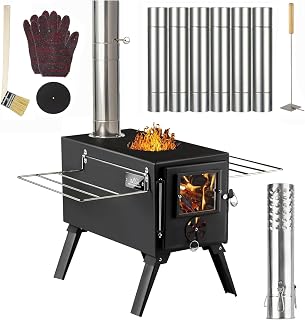
This wood-burning stove is designed for outdoor heating and cooking with a detachable seven-section chimney. It includes a glass viewing window, allowing users to monitor the fire from the outside. The combination of heavy‑duty iron and removable stainless steel chimney sections improves portability and maintenance. A built‑in damper helps regulate flame size and burn rate for efficient performance in tents or remote campsites.
Who this is best for: outdoor enthusiasts who need a modular, portable setup for ice fishing, hunting, or remote camping. A potential limitation is partial reliance on chimney stability; ensure the sections are fully connected and protected from wind to prevent smoke backflow.
Buying Guide: Wood And Coal Stove Essentials
- Heat area vs. stove size: Match the stove’s heat capacity with your space. Larger rooms require higher BTU output or bigger fireboxes, while small cabins benefit from compact designs with efficient insulation.
- Chimney and venting: Look for models that include complete venting kits or compatible fittings. Proper venting reduces smoke buildup indoors and improves safety.
- Fuel flexibility: Some stoves support wood, coal, or wood chips. Confirm supported fuels to align with availability and local regulations.
- Durability and materials: Thick steel, cast iron, and brick‑lined interiors improve heat retention and longevity. Heavy construction resists warping and deformation over time.
- Airflow and combustion: Airtight or high‑airflow designs influence burn efficiency. Consider dampers to fine‑tune flame size and fuel consumption.
- Ease of maintenance: Removable burn grates, accessible ash pans, and simple cleaning paths reduce long‑term upkeep.
- Portability vs. permanence: Tent or camping stoves prioritize portability and modular chimneys, while cabin stoves emphasize stability and bulk heat.
- Safety features: Look for heat shields, spark arresters, and certified construction for indoor use to minimize fire risk.
Frequently Asked Questions
- What makes a wood stove suitable for indoor use? This depends on stove construction, certified venting, and safe clearance from combustibles. Indoor use requires proper chimney assembly and smoke management.
- How do I choose between a cast iron and steel stove? Cast iron retains heat longer and offers durability, while steel heats up quickly and can be lighter. Choose based on burn time needs and space constraints.
- Can I burn coal in these stoves? Some models support coal, but verify fuel compatibility in the product specs to avoid damage or unsafe setups.
- What maintenance is required for a camping stove? Regularly remove ash, inspect the chimney connections, and check seals. Clean dampers and hinges to maintain proper airflow.
- Is a viewing window a practical feature? A window helps monitor fuel without opening the stove, but it can become dirty from smoke; plan for periodic cleaning.
- Are these stoves compliant with safety standards? Look for certification or compliance statements in product descriptions and ensure proper installation per local codes.