A wood stove boiler add-on is typically a water-heating component connected to a wood-burning appliance, but the products listed here are maintenance and repair supplies rather than complete add-on heat exchangers. The ChemWorld inhibitor is best for basic water treatment, while the AHS kit adds nitrite testing. The gasket rope is for eligible door-seal replacements; Rutland cement is for small repairs, and the ceramic blanket is for insulation applications specified by the stove or boiler manufacturer.
| Product | Best suited for | What it does |
|---|---|---|
| ChemWorld Boiler Rust Inhibitor | Routine water treatment | Helps protect boiler water systems from corrosion |
| AHS Water Treatment Kit | Treatment and nitrite checks | Includes treatment products and a test kit |
| TOSRWGLL Gasket Rope | Eligible door-seal replacement | Provides 10 feet of 1-inch fiberglass rope |
| Rutland Furnace Cement | Small sealing and bonding repairs | Ready-to-use cement for listed joint and repair tasks |
| Cedolio Ceramic Fiber Blanket | Specified high-temperature insulation needs | Flexible blanket rated to 2400°F |
ChemWorld Boiler Rust Inhibitor

Best for: Owners of outdoor wood boilers who need a liquid treatment for boiler water and have confirmed that the product suits their system. This is a water-treatment chemical, not a wood stove boiler add-on component or a substitute for a heat exchanger.
The product information describes it as a boiler rust inhibitor for use in most outdoor wood boilers. It states that it is compatible with propylene and ethylene glycol and is intended to help stop boiler corrosion. The listing gives different treatment-volume claims: the product name says one gallon treats 250 to 500 gallons of fresh water, while the features state 500 to 720 gallons. Follow the current label and manufacturer directions rather than relying on either figure without verification.
Why it was selected: Water chemistry is a core maintenance consideration for a hydronic wood boiler. A corrosion inhibitor is relevant to owners looking for boiler-care supplies, although treatment requirements depend on the boiler and system water.
Caution: Confirm the correct dose and compatibility with the boiler manufacturer. Do not assume this chemical is appropriate for every system just because the listing says it works in most outdoor boilers.
AHS Boiler Treatment and Test Kit
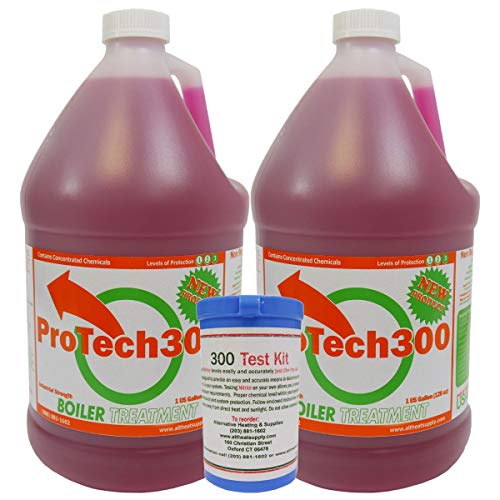
Best for: Outdoor wood boiler owners who want treatment supplies and a way to check nitrite levels. Compared with a treatment-only product, this kit is more suitable when the buyer also needs to monitor a water-treatment measure.
The listing says the kit includes two ProTech 300 products and a test kit. It is designed to help protect an outdoor wood boiler from rust, corrosion, and scale. The manufacturer description also says it meets or exceeds boiler-manufacturer nitrite warranty requirements and that the test kit allows nitrite levels to be checked.
Why it was selected: A wood-fired hydronic system depends on both the heating appliance and the water circuit. This kit addresses treatment and testing, so it is a relevant maintenance option for buyers researching a boiler add-on or an existing outdoor boiler system.
Caution: The listing’s claim about nitrite requirements does not establish that the kit meets the requirements of every boiler model. Check the specific boiler manual for approved chemicals, target levels, and testing intervals.
TOSRWGLL Wood Stove Door Gasket

Best for: Owners whose boiler or furnace calls for a round, 1-inch door gasket and who have confirmed the dimensions against the existing seal and appliance instructions.
This product is described as 10 feet of round fiberglass rope with a 1-inch diameter. The listing names Wood Doctor, Shaver, Wood Master, Central Boiler, Mahoning, Empyre, Heat Master, and Royal wood furnaces as examples of intended fit. It also describes the rope as heat-resistant and corrosion-resistant.
Why it was selected: A properly sized door seal is a relevant repair supply for some wood boilers and furnaces. Choose this option if the required diameter and rope style match your appliance; the named brands offer a useful starting point for checking fit.
Caution: Brand names do not guarantee compatibility with every model. Confirm the groove size, rope shape, length, and installation method in the appliance documentation before ordering.
Rutland High-Temperature Furnace Cement

Best for: Small sealing or bonding jobs on metal, cast iron, steel, or metal-to-masonry joints, when the appliance manufacturer permits cement for that repair.
The product is pre-mixed and described as ready to use. Its listed applications include repairing stove cracks and seals, resetting firebrick, attaching a stove collar, and filling ceramic logs. The listing says it bonds metal to metal and metal to masonry.
Why it was selected: Furnace cement can be useful for specific repairs around a wood-burning appliance, making it more relevant to boiler maintenance than general-purpose household adhesive. It is not a boiler add-on or a replacement for a damaged structural component.
Caution: Use it only for repairs appropriate to the product and appliance instructions. Do not treat a serious crack, failed pressure boundary, or unsafe flue connection as a simple cement repair.
Cedolio Ceramic Fiber Blanket

Best for: Buyers who need a flexible, cuttable insulation blanket for an application specifically approved by the appliance manufacturer.
The listed blanket measures 24 by 12 inches and is 1 inch thick. Its product information describes it as flexible and easy to cut, with a temperature rating of 2400°F. It is presented for high-temperature insulation rather than as a complete boiler, heat exchanger, or stove part.
Why it was selected: Insulation can be relevant to certain wood-burning appliance repairs or installations, but only when the material and placement are suitable for the equipment. The stated temperature rating and cuttable format make it a distinct option from gasket rope and furnace cement.
Caution: The listing also refers to rockwool acoustic mineral wool, while identifying the product as a ceramic fiber blanket. Verify the material and intended use with the seller and appliance manufacturer before placing it near a firebox or hot surface.
Buying Guide: Choosing Wood Stove Boiler Add-On Supplies
Are you looking for an add-on heat exchanger or maintenance supplies?
A wood stove boiler add-on commonly refers to equipment that transfers heat from a wood-burning appliance into water for a hydronic heating system. None of the five products above is a complete add-on heat exchanger, boiler, or circulation system. They are treatment and repair supplies. If you need the actual heating component, identify the appliance type and consult its manufacturer or a qualified installer about approved system designs.
What should you check before buying boiler water treatment?
Start with the boiler manual. Check which treatment chemicals are permitted, what water-quality targets apply, and how much water the system holds. Confirm the required inhibitor and test method rather than assuming all outdoor wood boilers use the same chemistry. If the boiler uses glycol, verify the product’s suitability and follow the chemical manufacturer’s dosing instructions.
When is a gasket rope the right choice?
Measure the existing gasket and its channel, then compare the required diameter, shape, and total length with the listing. A rope described as 1 inch wide will not necessarily fit a different-size groove. A worn seal can be a maintenance concern, but the correct replacement depends on the specific appliance. Follow the manufacturer’s replacement and installation procedure.
How do cement and insulation differ?
Furnace cement is intended for particular bonding and sealing tasks. A fiber blanket is insulation material, not a sealant. They are not interchangeable. Use neither product to conceal a significant defect or to modify an appliance without checking its instructions. Confirm the product material and placement requirements, especially in high-temperature areas.
Which option is most useful for an existing outdoor boiler?
For water treatment alone, compare the ChemWorld inhibitor with the boiler maker’s approved treatment instructions. For treatment plus nitrite checks, the AHS kit is the more directly matched option based on its listed contents. For a door-seal repair, compare the gasket dimensions with the existing seal. These choices address different maintenance needs rather than competing as complete boiler systems.
Frequently Asked Questions
What is a wood stove boiler add-on?
It usually means equipment that transfers heat from a wood stove or furnace into water for a hydronic heating system. The exact meaning varies by system, so confirm whether you need a heat exchanger, a boiler, or a repair supply.
Do these products include a wood boiler add-on unit?
No. The products covered here are water-treatment chemicals, a test kit, gasket rope, furnace cement, and insulation. None is a complete add-on boiler or heat exchanger.
Can I use any rust inhibitor in an outdoor wood boiler?
No. Use a treatment only if it is compatible with the boiler, water, and any glycol in the system. Check the appliance manual and follow the product’s dosing directions.
How do I know whether a 1-inch gasket rope will fit?
Check the existing rope diameter and the door channel dimensions, then compare them with the appliance manual. Do not rely only on a list of compatible brand names.
Can furnace cement replace a damaged boiler part?
Not necessarily. It is listed for certain sealing and bonding repairs, but it should not be used as a substitute for a damaged structural or pressure-bearing component. Consult the appliance manufacturer or a qualified technician for serious damage.