Answering the search for reliable wood stove pipe kits through the wall, this guide highlights five top options. These kits are ideal for homeowners, cabin owners, or anyone installing a wood or pellet stove that needs a safe, through-the-wall vent. The best choice depends on chimney type, length requirements, and wall clearance. The following selections prioritize compatibility, ease of installation, and safety features. A quick summary table helps you compare essential specs at a glance.
| Product | Brand | Key Length/Bracket Notes | Through-Wall Type |
|---|---|---|---|
| Duravent 6″ DuraPlus Through the Wall Kit | DuraVent | Supports up to 40 ft total height | Through-the-wall kit for 6″ DuraPlus |
| Supervent 6″ Through the Wall Stainless Steel Chimney Support Kit | Supervent | Twist-lock system; safety listed | Thru-the-wall support kit |
| AllFuel HST Through The Wall Kit with Spark Guard Cap (24″) | AllFuel HST | 24″ pipe length; adjustable wall bracket | Class-A double-wall through-the-wall kit |
| AllFuel HST Through The Wall Kit with Spark Guard Cap (18″) | AllFuel HST | 18″ pipe length; adjustable wall bracket | Class-A double-wall through-the-wall kit |
| SELKIRK INC Stove Wall KIT 6″ | Copperfield (Selkirk) | Universal 6″ stove pipe compatibility | Through-wall installation kit |
Duravent 6″ DuraPlus Through the Wall Kit

Best for long vertical runs. The DuraPlus through-the-wall kit is designed for 6″ DuraPlus chimney systems and features a secure twist-lock design for straightforward assembly. It supports up to 40 feet of vertical chimney, though the actual pipe length must be purchased separately. This kit is especially suitable for homeowners planning a tall vent run where a stable, leak-resistant connection through an exterior wall is essential. Avoid this if your project uses non-DuraPlus components or requires a shorter, simpler installation.
Supervent 6″ Through the Wall Stainless Steel Kit
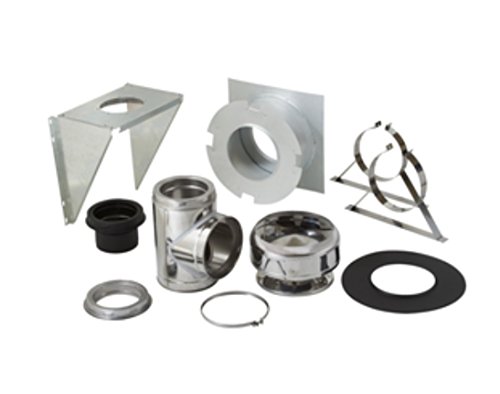
This kit offers a practical option with an easy twist-lock connection system for quick assembly. The SuperVent model is safety tested and listed to applicable UL/ULC standards, making it a solid choice for those prioritizing compliance and a straightforward install process. It’s best for standard wall penetrations and users who value a reputable, tested hardware bundle. Consider alternatives if you need longer vertical runs beyond the kit’s stated configuration.
AllFuel HST Through The Wall Kit with Spark Guard Cap (24″ Length)

Best for flexible through-wall projects with a 24″ pipe length. This AllFuel HST kit is compatible with AllFuel HST Class-A double-wall chimney pipe (lengths sold separately) and uses a spark guard cap for added protection at the termination. A wall bracket is required, with options for standard (2″ clearance) or adjustable (up to 7″). It’s a good pick when exterior exposure or weather considerations matter, but it cannot connect to other brands’ Class-A pipes.
AllFuel HST Through The Wall Kit with Spark Guard Cap (18″ Length)

Choose this 18″ version for tighter spaces where a shorter through-wall run is desired. Like the 24″ variant, it requires AllFuel HST Class-A double-wall pipe and a wall bracket (standard or adjustable). The extended clearances and bracket options help accommodate small exterior features such as gutters or overhangs. If your wall thickness exceeds what this length can pass, consider the longer 24″ option or an alternative kit with greater length capacity.
SELKIRK INC Stove Wall Kit 6″

Best for universal compatibility with 6″ stove pipe systems. The Selkirk Copperfield kit features a durable double-wall construction designed to enhance safety and heat retention around the vent, making it a strong option for flexible placements in homes or cabins. It is a practical choice when you want a broad compatibility footprint. A limitation is that the universal fit may require careful matching with your existing stove pipe to avoid gaps or mismatches in some installations.
Buying Guide: What to Consider When Choosing a Through-the-Wall Kit
- Pipe compatibility: Confirm that the kit matches your stove pipe size (common sizes include 6″ and 3″ for pellet systems). Some kits are brand-specific; others offer universal fits.
- Wall thickness and exterior clearance: Measure the wall thickness and plan for exterior exposure if the pipe will pass through an outdoor exterior. Use adjustable brackets when needed to maintain correct clearances.
- Length requirements: Determine the total vertical rise and horizontal run. Choose a kit with a bracket system that supports the needed length without compromising safety.
- Material and finish: Stainless steel components resist corrosion and weathering, which is important for exterior through-wall runs. Double-wall design improves safety and insulation.
- Installation ease: Look for twist-lock or snap-lock connections for quicker assembly and fewer leaks. Verify listed safety certifications or standards when possible.
- Limitations: Some kits cannot connect to brands outside their specified class-A chimney systems. Plan for the exact pipe type and length you will need.
Frequently Asked Questions
- What is a through-the-wall wood stove kit? A kit that allows venting a wood stove through an exterior wall, including the necessary pipe, brackets, and caps designed to maintain safe clearances and proper exhaust flow.
- Do I need a wall thimble with these kits? Yes, most installations require a fire-rated wall thimble or pass-through to maintain clearance and prevent heat transfer to framing materials.
- Can I mix brands of chimney pipe with these kits? Some kits are brand-specific. Always verify compatibility with the chimney pipe you own or plan to buy.
- What length should I choose? Choose a length that safely passes through the wall with appropriate exterior exposure, plus extra for brackets and clearances as recommended by the kit specs.
- Are these kits UL-listed or certified? Many kits are designed to meet applicable standards, but confirm the individual product listing for compliance details before installation.
- Is professional installation recommended? For safety, a professional installer is advised to ensure proper venting, clearance, and code compliance.