The best electric tankless water heater for a mobile home depends on the home’s electrical capacity, incoming water temperature, and how many fixtures need hot water at once. The 14kW models are best suited to buyers who can support a 240V, 60-amp circuit; the Rheem 8kW is a lower-output option; and the 3,000W, 110V model is intended for limited, low-flow use. The propane model below is included only as a fuel-type alternative, not as an electric pick.
| Product | Best suited for | Key consideration |
|---|---|---|
| ORBEK 14kW | Multiple points of use, if the electrical system supports it | Requires a 240V, 60-amp two-pole breaker |
| 14kW Gray Model | One or two simultaneous uses | Requires a 60-amp circuit |
| Rheem 8kW | Lower hot-water demand | Maximum listed flow is 1.95 GPM |
| 3,000W 110V Model | Low-flow, single-use applications | Listed temperature rise depends on flow rate |
| APUS Propane Model | Shoppers considering propane instead of electric | Does not meet an electric-only requirement |
ORBEK 14kW Electric Tankless Water Heater

The ORBEK 14kW is best for a mobile-home owner seeking an electric unit with a stated maximum flow of 3.38 gallons per minute. The listing says it can serve two to three points of use, including a bathroom and kitchen. Actual usable flow and temperature depend on the incoming water temperature and demand, so that figure should not be treated as a guarantee for simultaneous showers.
Its electrical requirements are substantial: 240 volts, a 60-amp two-pole breaker, one set of 6 AWG wires, and a household panel with at least 150 amps of total current capacity. It uses 1/2-inch NPT water connections. The compact on-demand design avoids storing a tank of heated water, and the listing describes water-electricity separation intended to reduce scale and corrosion.
Choose this if the home’s panel and wiring can support the specified circuit and the expected demand suits the unit’s output. Avoid it if the electrical capacity has not been verified; the listing specifically calls for a 150-amp total panel capacity.
14kW 240V Tankless Heater, Gray
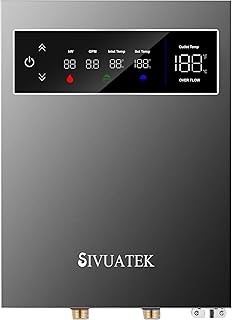
This 14kW model is best for buyers who want a compact electric heater for one or two simultaneous uses, such as a kitchen and bathroom. The listed maximum thermal efficiency is 99.8%, and the product description says it has no standby energy use. It measures 15.87 by 11.14 by 2.87 inches and can be installed under a sink or on a wall, subject to installation requirements.
The unit requires 240 volts and a 60-amp circuit breaker, and it has standard 1/2-inch NPT water connections. The listing says the housing does not need to be disassembled for wiring, which may make access more convenient, but electrical installation still needs to follow the manufacturer’s instructions and applicable local requirements.
Best for a mobile home with verified electrical capacity and modest simultaneous hot-water demand. Consider another option if the panel cannot support a 60-amp circuit or if the household expects several high-flow fixtures to run together.
Rheem 8kW Multi-Fixture Heater

The Rheem 8kW is best for a buyer whose hot-water needs are lower than those suited to the 14kW options. The listed maximum flow is up to 1.95 gallons per minute, and the product is described for multiple-fixture applications. That flow figure is useful for screening, but it does not establish that the heater can supply every fixture at a comfortable temperature simultaneously.
Rheem advises choosing the correct size and verifying electrical requirements before installation. The listing emphasizes that reliable on-demand performance depends on proper sizing and professional installation. It also notes the space-saving advantage of a tankless design, which may matter in a compact mobile-home utility area.
Choose this if the home has limited demand and a smaller-capacity unit better fits the planned use. It may not be suitable if several fixtures need hot water at once or the incoming water is especially cold; confirm expected temperature rise and flow before buying.
3,000W 110V Under-Sink Heater
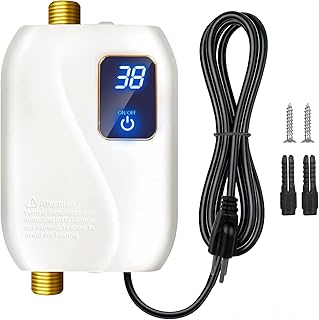
This 3,000W model is best for a low-flow, single-point application, such as supplemental hot water at a sink. It runs on 110 volts and has a compact wall-mounted design with an LED display. The listing states that it can raise water temperature by 82°F at 0.3 GPM and by 131°F at 0.5 GPM. These figures describe different flow conditions, so higher flow should not be assumed to provide the same temperature rise.
The product description lists protection features including leakage protection, dry-boil protection, overheating shutoff, and an IPX4 rating. It also describes water-electricity isolation and automatic shutoff during inactivity. These are manufacturer-listed features, not a substitute for checking the product documentation and local installation rules.
Best for shoppers who need a small 110V heater for a limited flow rate. Avoid it as a whole-home solution if the plan is to supply a shower or multiple fixtures; its 3,000W rating and stated flow-temperature figures indicate a narrower use case.
APUS Propane Tankless Heater Alternative

This APUS unit is not an electric water heater, so it is not a match for buyers who specifically need electric operation. It is included as a fuel-type comparison for mobile-home shoppers who are willing to consider propane and can meet the product’s installation requirements. The listing specifies 95,000 BTU, a maximum flow of 4.42 GPM, and a low-flow start of 0.66 GPM.
Its listed temperature-control range is 95°F to 140°F, and the manufacturer describes it for two to three fixtures. Other listed features include a 120V connection, an LED touchscreen, and anti-freeze protection. The product is described as an indoor propane heater; verify fuel, venting, installation, and mobile-home suitability with the manual and a qualified professional before considering it.
Consider this only if propane is an acceptable alternative and the home can accommodate the required installation. Skip it if the purchase requirement is an electric tankless heater.
Buying Guide: How to Choose a Mobile-Home Electric Tankless Heater
Will the home’s electrical system support the heater?
Check the voltage, breaker size, wiring, and available panel capacity before choosing a model. The two 14kW products listed here call for a 240V, 60-amp circuit. The ORBEK listing additionally specifies a 150-amp total panel capacity and 6 AWG wires. Do not assume that a mobile home’s existing panel has spare capacity simply because a water heater can physically fit.
Have a qualified electrician assess the service panel and circuit requirements before purchase or installation. A tankless heater can draw substantial power while operating. If the required circuit cannot be accommodated, a smaller-output model may be more practical, but it will also have more limited hot-water capacity.
How much hot water do you need at the same time?
List the fixtures likely to run together, such as a shower and kitchen sink. Compare their combined flow needs with the heater’s stated output, while remembering that a maximum GPM figure does not guarantee a particular temperature at every flow rate. The 14kW listings describe use for one to three points of use, while the Rheem 8kW lists up to 1.95 GPM and the 3,000W unit provides specific temperature-rise figures at low flows.
For a mobile home with one regular hot-water user, a lower-output model may be enough for the intended fixture. For simultaneous shower and sink use, check both the heater’s electrical requirements and its performance at the home’s expected water temperature.
How does incoming water temperature affect performance?
An electric tankless unit must raise incoming water to the desired output temperature as it flows through the heater. Colder incoming water requires a larger temperature rise. As a result, a heater’s usable flow can be lower in cold-weather conditions than a headline maximum suggests. Ask the manufacturer for sizing guidance based on the local groundwater temperature and desired outlet temperature.
Consider the household’s preferred shower temperature as well as the seasonally coldest incoming water. If the selected unit cannot provide adequate temperature at the flow you need, reducing flow may help, but it may not suit every household.
Where can the unit be installed?
Tankless models can save the floor space occupied by a storage tank, but installation location still matters. Check the unit’s dimensions, water connections, electrical access, clearances, and manufacturer instructions. The gray 14kW model lists under-sink or wall installation, while the 3,000W unit is described as wall-mounted. Confirm that the chosen location allows safe access for wiring, plumbing, and maintenance.
Mobile-home installations may have specific requirements. Verify local codes, the home’s construction and utility setup, and any manufacturer restrictions before installation. Product descriptions alone do not establish suitability for every mobile home.
Should you choose 110V or 240V?
A 110V unit can be easier to consider for a small, low-flow application, but the 3,000W example is not equivalent to a higher-output 240V whole-home unit. The listed temperature rise changes with flow, and its use case is more limited. A 240V model can offer greater heating power, but it demands a more substantial dedicated circuit.
Choose voltage based on the application and verified electrical capacity, not convenience alone. Do not use an undersized heater for a demand it cannot meet, and do not install a higher-powered model without confirming that the wiring and panel can support it.
What installation and maintenance details should you verify?
Review the manufacturer’s manual for required breakers, wire size, water connections, mounting, and maintenance. Have electrical work handled by a qualified professional, and confirm plumbing connections are compatible with the installation. Follow any instructions for flushing or scale management, especially where water hardness may contribute to mineral buildup.
Also confirm whether the unit’s listed features fit your priorities. For example, the 3,000W listing describes several safety protections, while the 14kW listings emphasize compact installation and on-demand heating. Compare documented specifications rather than assuming that all tankless products have identical controls or safeguards.
Frequently Asked Questions
Can an electric tankless water heater work in a mobile home?
It can, if the model is suitable for the home and the electrical, plumbing, and installation requirements are met. Confirm local rules and the heater’s instructions before purchase; not every model is appropriate for every mobile-home setup.
Is a 14kW heater enough for a mobile home?
It may suit some homes, but the answer depends on incoming water temperature, desired outlet temperature, simultaneous flow, and available electrical capacity. Check the product’s sizing information rather than relying on wattage alone.
Can a 3,000W 110V heater supply a shower?
The listed 3,000W model is described for low-flow use and provides temperature-rise figures at 0.3 and 0.5 GPM. Those specifications do not establish that it will meet a particular shower’s flow and temperature needs.
Does tankless mean unlimited hot water?
Tankless heaters do not store a limited tank of hot water, but their output is limited by heating capacity and flow. Running more water than the unit can heat may reduce outlet temperature.
Is the APUS model an electric water heater?
No. It is a propane tankless heater with a listed 120V connection for its electrical features. It is an alternative for buyers considering propane, not an electric-only choice.
Should a professional install an electric tankless heater?
Professional installation is advisable, particularly for models requiring a dedicated 240V, 60-amp circuit. Have an electrician verify panel capacity and follow the manufacturer’s installation instructions and applicable local requirements.