The best wood fireplace glass cleaner depends on how much buildup you need to remove and which tools you want included. Rutland is best for buyers who want a conditioning cleaner, Quick ’n Brite’s glass kit suits people who want a spray, sponge, and cloth, and Meeco’s Red Devil offers two ready-to-use bottles. The other Quick ’n Brite kit adds a scraper and multiple cleaning tools. A fifth product in the list is intended for masonry, not glass, so it is a better choice for cleaning brick or stone around the fireplace.
| Product | Best for | Key distinction |
|---|---|---|
| Rutland Fireplace Glass Cleaner | Conditioning glass after cleaning | Micro scrubbers and a silicone coating |
| Quick ’n Brite Glass Cleaner Kit | A straightforward spray-and-wipe routine | Includes a cloth and sponge |
| Meeco’s Red Devil 701 | Keeping a second bottle on hand | Two 16-ounce bottles |
| Quick ’n Brite Glass Cleaner Kit with Tools | Heavy buildup and tool variety | Scraper, sponges, and microfiber towel |
| Quick ’n Brite Fireplace Gel Cleaner | Brick, stone, tile, and similar surfaces | Masonry cleaner, not a glass cleaner |
Rutland Fireplace Glass Cleaner

Rutland’s cleaner is designed for ceramic glass on wood-burning and gas stoves, as well as cooktops. Its listed micro scrubbers are intended to loosen soot, creosote, and other buildup without scratching ceramic glass. That makes it a relevant option for cleaning fireplace glass while also serving other ceramic-glass cleaning needs.
Best for: Buyers who want a fireplace-glass cleaner that also conditions the surface. The product description says it leaves an invisible silicone coat that helps keep glass cleaner longer and can make later cleaning easier.
Why it was selected: It directly addresses soot and creosote on ceramic fireplace glass and offers a distinct conditioning feature compared with the spray-and-wipe products in this list.
Limitation: The supplied product details do not list included cloths or sponges. Plan to use suitable cleaning tools separately if needed, and follow the product label for application and surface instructions.
Quick ’n Brite Glass Cleaner Kit

This 16-ounce kit includes fireplace glass cleaner, a sponge, and a cloth. The listed uses include removing creosote, smoke residue, soot, ash, dust, and carbon deposits from glass. The manufacturer describes it as suitable for fireplace glass and other listed glass or ceramic-glass surfaces.
Best for: People who want the basic cleaning supplies in one kit rather than sourcing a sponge and wiping cloth separately. It is also a reasonable choice for routine cleaning when the main need is to remove smoke and soot residue.
Why it was selected: It is specifically formulated and marketed for fireplace glass, and its included sponge and cloth support the spray, scrub, and wipe process described in the product details.
Limitation: The instructions specify use on cool glass. For very dirty areas, the product information says to repeat the process if necessary, so one pass may not be enough for heavy deposits.
Meeco’s Red Devil 701 Two-Pack

Meeco’s Red Devil 701 is a ready-to-use trigger-spray cleaner for wood stove and fireplace glass. The two-pack contains two 16-ounce bottles. Its listed purpose is to remove baked-on creosote, smoke, soot, and dirt, with spray-and-wipe use for a clear, streak-free finish.
Best for: Buyers who clean regularly and prefer to keep an additional bottle available. It is also a fit for people looking for a product specifically described for wood, pellet, and coal stoves and fireplace inserts.
Why it was selected: The product targets several common types of stove-glass residue and comes in a two-bottle pack, setting it apart from the single-bottle options.
Limitation: The supplied features do not mention an included sponge, cloth, or scraper. You may need to provide your own cleaning tools, and the product instructions should guide use on the glass.
Quick ’n Brite Glass Kit with Scraper
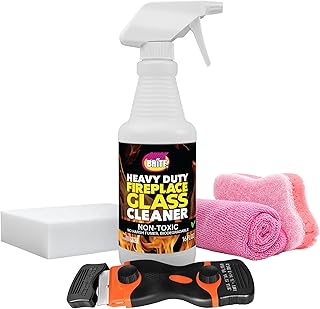
This kit combines a 16-ounce glass-cleaner spray with a scraper tool, melamine and scrubber sponges, and a microfiber towel. The product description says the cleaner targets creosote, smoke residue, soot, ash, dust, and carbon deposits. It also lists fireplace glass and ceramic-glass surfaces among its intended uses.
Best for: Buyers who want several tools for different stages of cleaning. The scraper and sponges provide more tool options than a basic spray-and-cloth kit, while the microfiber towel is intended for wiping the surface afterward.
Why it was selected: It is a dedicated fireplace-glass kit with a broad set of included cleaning tools, making it a useful comparison for buyers deciding whether a bundled kit suits their needs.
Limitation: The instructions specify cold surfaces only. Do not use the cleaner on hot fireplace glass; follow the product directions for the scraper and each included sponge.
Quick ’n Brite Fireplace Gel Cleaner

This product is a 16-ounce gel cleaner with a scrub brush, intended for fireplace surfaces such as brick, stone, rock, tile, and marble. Its listed purpose is to remove soot, creosote, ash, and grime from those materials. The instructions describe wetting the brush, applying the gel, then rinsing and wiping the surface.
Best for: Buyers cleaning masonry around a fireplace, including brick or stone. It may complement a separate glass cleaner when the fireplace needs attention beyond its doors.
Why it was selected: It is included among the provided products and addresses fireplace cleanup, but it is not positioned as a glass-cleaning formula. That distinction matters when choosing a cleaner for a wood stove window.
Limitation: The listed surfaces are masonry and related materials, not fireplace glass. Choose a dedicated glass cleaner for the viewing window and follow the gel’s surface directions.
Buying Guide: How to Choose Wood Fireplace Glass Cleaner
Wood fireplace glass collects residue from smoke and combustion. Creosote, soot, ash, and carbon deposits can make the viewing window cloudy. Choose a product whose listed uses match the material and residue you need to clean. A cleaner for fireplace glass is not automatically appropriate for brick, stone, or every surface nearby.
Which cleaner is best for soot and creosote?
Look for a product that explicitly lists fireplace or stove glass and names the residue you want to remove. The products above list targets including soot, smoke residue, creosote, ash, or carbon deposits, but their features and included tools differ. For instance, the Meeco product emphasizes baked-on residue and comes as a two-pack, while the Quick ’n Brite kits include cleaning tools.
Do you need a spray, a kit, or a conditioning formula?
- Choose a basic spray kit if you want cleaner plus a sponge and cloth for a simple spray-and-wipe routine.
- Choose a kit with a scraper and multiple sponges if you want more tool options for tackling residue. Follow the directions for each tool and use it only as instructed.
- Choose a conditioning cleaner if the product’s stated silicone coating is appealing and you want a formula that claims to help keep glass cleaner longer.
- Choose a two-bottle pack if having a second bottle available is more useful than getting tools in the package.
Why must fireplace glass be cool?
Some products in this list specifically instruct users to clean cold or cool glass. Follow the label’s directions and let the fireplace or stove cool before applying cleaner when required. Cleaning hot glass can conflict with the product instructions and may create a safety risk. Do not assume that one product’s directions apply to another brand.
What cleaning tools should you consider?
Check whether the package includes a sponge, cloth, scraper, or brush. A kit can reduce the need to source tools separately, but tool inclusion does not mean every tool is suitable for every glass surface or deposit. Use the cleaner and accessories according to their instructions, and avoid substituting an abrasive tool that could damage the glass.
Can fireplace glass cleaner be used on brick or stone?
Not necessarily. The glass cleaners listed here are described for glass or ceramic-glass surfaces, while Quick ’n Brite’s fireplace gel is listed for brick, stone, rock, tile, and marble. Match the cleaner to the surface. If you need to clean both the door and the surround, a separate glass cleaner and masonry cleaner may be more appropriate.
How should you compare included features?
Compare the target residue, surface directions, included accessories, and any special formula claims. A spray-and-wipe product may suit routine maintenance, while a kit with multiple tools may appeal to someone who wants options. A conditioning claim is a separate consideration from cleaning strength. Product descriptions do not establish that any cleaner will work equally well on every level of buildup.
Frequently Asked Questions
What is the best type of cleaner for wood fireplace glass?
Choose a cleaner specifically described for fireplace or wood-stove glass and for the residue you need to remove. The options here include formulas listing soot, creosote, smoke residue, ash, or carbon deposits.
Can I clean fireplace glass while the fire is burning?
No. Follow the cleaner’s label, and do not apply a product to hot glass when its directions require a cool surface. The Quick ’n Brite glass products listed here specify cold or cool surfaces.
Is the Quick ’n Brite fireplace gel suitable for the glass door?
The provided features list brick, stone, rock, tile, and marble as its surfaces. They do not describe it as a glass-door cleaner, so use a product specifically labeled for fireplace glass instead.
Which option includes the most cleaning tools?
The Quick ’n Brite kit with scraper lists a scraper tool, melamine and scrubber sponges, and a microfiber towel, along with a 16-ounce cleaner spray.
Does Rutland’s cleaner include a protective coating?
Its listed features say it leaves an invisible silicone coat intended to help keep the glass cleaner longer. Follow the product label for application instructions and any surface limitations.
Will one cleaning pass remove heavy buildup?
That depends on the residue and the product instructions. Quick ’n Brite’s glass-kit directions say to repeat the process for extremely dirty areas if necessary, so heavy deposits may require additional cleaning.