Whether upgrading or replacing a worn unit, choosing between a 30-gallon and a 40-gallon water heater depends on household size, peak hot-water demand, and installation constraints. This guide compares five well-matched options from GE, APUS, and VEVOR, highlighting who each model suits best and why. The top picks cover electric storage, plug-in versatility, and compact tankless designs to help you balance capacity, energy use, and space.
Summary of selected products:
| Product | Capacity | Type | Best For |
|---|---|---|---|
| GE Appliances 30 Gallon Electric Water Heater with Built-In Wifi & Digital Display | 30 gal | Electric Storage | Small to mid-sized homes with smart features |
| GE 40 Gallon Short 4500W Electric Water Heater | 40 gal | Electric Storage | Homes with higher daily hot-water use |
| GE Appliances 18 Gallon Versatile Plug and Play Electric Water Heater | 18 gal | Electric Storage (compact) | Small spaces or under-sink needs |
| APUS 4500W Electric Tankless Water Heater | Point of use | Tankless | Instant hot water near a sink or appliance |
| VEVOR Electric Water Heater, 18 Gal Tankless | 18 gal | Tankless | Compact, on-demand hot water in tight spaces |
GE 30 Gallon Electric Water Heater With Smart Display

This 30-gallon electric storage unit is designed for compact spaces while offering modern smart features. The built-in wifi and digital display help monitor energy use, water temperature, and service needs, making it a practical choice for households seeking convenience and efficiency. Best for buyers who want remote oversight and moderate hot-water demand in smaller homes or apartments.
Who it’s best for: small to medium homes with routine daily hot-water needs and interest in smart controls. Why selected: combines a moderate capacity with networked monitoring for easier maintenance and scheduling.
Caution: smart features rely on reliable wifi and compatible app ecosystems; offline operation may limit remote visibility.
GE 40 Gallon Short 4500W Electric Water Heater
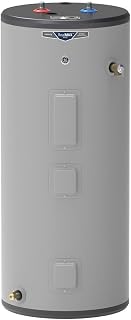
This 40-gallon short model offers higher capacity for households with elevated hot-water usage or multiple simultaneous taps. With a 4500W element, it balances quick recovery with energy efficiency for mid- to large-sized homes that require more hot water without expanding the footprint too much. Best for: families or homes where mornings require multiple showers or longer hot-water runs.
Who it’s best for: homes needing more storage hot water without exceeding space constraints. Why selected: larger capacity compared to 30-gallon models, improved recovery rate for busier households.
Caution: installation may require a dedicated circuit and attention to electrical specifications in older homes.
GE Appliances 18 Gallon Versatile Plug and Play Electric Water Heater

This compact 18-gallon model emphasizes flexibility with plug-and-play installation. It is ideal for under-sink hotspots or small apartments where installing a standard larger unit is impractical. Best for: space-constrained homes needing supplemental hot water or a secondary heater for a specific zone.
Who it’s best for: renters or homeowners with limited space who still want reliable hot water. Why selected: easy installation and compact footprint make it a versatile secondary option.
Caution: 18 gallons may not meet high simultaneous-hot-water demand in larger households.
APUS 4500W Electric Tankless Water Heater

The APUS tankless model provides on-demand hot water with a compact footprint and a user-friendly LED display. It is best for point-of-use scenarios where only a single faucet or appliance needs hot water quickly. Choose this if you want instant hot water at a sink or small bathroom without storing hot water in a tank, but note that output is limited by electrical capacity and distance from the heater.
Best for: near-sink hot water without a storage tank. Why selected: compact, self-modulating technology helps conserve energy for localized use.
Caution: not suitable for whole-house simultaneous demand; expect reduced flow at longer runs from the unit.
VEVOR 18 Gallon Tankless Electric Water Heater

VEVOR’s 18-gallon tankless option emphasizes on-demand hot water with a compact design suitable for smaller homes or apartments. Its tankless approach reduces standby energy loss and fits in tight spaces where a traditional storage tank won’t. Best for: homes needing a supplementary or localized hot-water source without expanding the plumbing footprint.
Who it’s best for: space-conscious buyers seeking on-demand hot water near a primary bathroom or kitchen. Why selected: compact tankless unit that lowers energy waste versus a standby tank in small setups.
Caution: rated for smaller flow; may not supply multiple hot-water outlets simultaneously in larger homes.
Buying Guide: How to Choose Between 30 vs 40 Gallon and Tankless Options
- Household Size and Usage — For families with several simultaneous showers, a 40-gallon model often reduces the risk of running out of hot water. A 30-gallon unit works well for apartments or smaller households with modest peak demand.
- Storage vs. Tankless — Storage water heaters provide a reserve of hot water; tankless units heat on demand but may have lower flow at longer distances or higher draw. Choose storage when you need a buffer; choose tankless when space, energy savings, and near-point-use hot water are priorities.
- Space and Installation — Short or compact homes benefit from smaller footprints (and under-sink tankless options). If space is limited, consider a compact 18-gallon model or a tankless solution for targeted use.
- Electrical Requirements — Higher-capacity electric heaters require appropriate amperage and dedicated circuits. Tankless units also demand sufficient electrical service and potential electrical panel upgrades.
- Smart Features and Monitoring — Some storage heaters offer digital displays and wifi connectivity for monitoring temperature and energy use. If smart monitoring matters, prioritize models with built-in digital displays and app compatibility.
- Reliability of Hot Water Recovery — A higher wattage element (e.g., 4500W) allows faster recovery after heavy use. If you have high daily hot-water demand, a larger storage unit can prevent prolonged cold-water exposure between uses.
Frequently Asked Questions
What is the main difference between 30-gallon and 40-gallon water heaters?
The 40-gallon unit stores more hot water, delivering longer runs between refills, which is useful for busier households. The 30-gallon model saves space and can be sufficient for smaller homes with moderate demand.
Do tankless water heaters provide enough hot water for a family?
Tankless heaters heat water on demand, so output depends on flow rate and electrical capacity. They save space and energy but may struggle with multiple outlets simultaneously if not sized correctly.
Are smart water heaters worth it for a residential home?
Smart features help with monitoring energy use and temperature. They are beneficial for tech-enabled homes and can simplify maintenance, but they do not affect core capacity or performance.
What installation considerations matter for 40-gallon units?
Ensure electrical service matches the heater’s requirements, confirm adequate space for venting and clearance, and verify circuit availability for optimal performance and safety.
When should I choose a compact 18-gallon model?
Use when space is extremely limited or you only need supplemental hot water for a single room or under-sink application. It is not ideal for whole-house emergency hot-water needs.
How can I decide between storage and tankless for a new home?
Consider space, upfront installation costs, long-term energy use, and typical hot-water demand. Storage is simpler for higher immediate demand; tankless offers space savings and efficiency for targeted use.