Finding the right heater for large spaces or demanding jobsites requires evaluating BTU output, fuel type, portability, and safety features. This guide highlights five high-output options that are practical for workshops, barns, garages, and construction sites. Each product is presented with clear strengths, best-use scenarios, and any notable limitations to help buyers compare efficiently.
Product comparison at a glance
| Product | BTU Range | Fuel Type | Best For |
|---|---|---|---|
| Reddy Heater 220,000 BTU Forced Air Kerosene Heater | 180,000–220,000 | Kerosene, Diesel, Other fuels | Very large spaces, outdoor work, durability |
| Mr. Heater 125,000 BTU Forced Air Unit Heater | 125,000 | Propane or Natural Gas | Medium to large spaces with flexible fuel |
| Dewalt F340710 65,000 BTU Forced Air Heater | 35,000–65,000 | Propane | Portable job sites, controlled spaces |
| Mr. Heater 60,000 BTU Quiet Burner Propane Heater | 30,000–60,000 | Propane | Quieter operation in residential or semi-commercial settings |
| Remington LP Forced Air Heater 60,000 BTU | 60,000 | Propane | Portable, flexible use across sites |
Reddy Heater 220,000 BTU Forced Air Kerosene Heater

BTU range: 180,000–220,000. Fuel flexibility includes kerosene, #1 and #2 fuel oil, diesel, and JP8 jet fuel. Dual heat technology supports longer run times and efficient operation. Best for large outdoor spaces or construction zones where fuel options vary and high heat output is essential. Limitation: higher fuel handling requirements and potential maintenance needs on job sites.
- Best for: Very large areas, outdoor work, and flexible fuel options.
- Why selected: It provides the highest BTU among listed options, suitable for open or semi-open spaces.
- Caution: Requires careful handling of kerosene or alternative fuels and adequate ventilation.
Mr. Heater 125,000 BTU Forced-Air Unit Heater
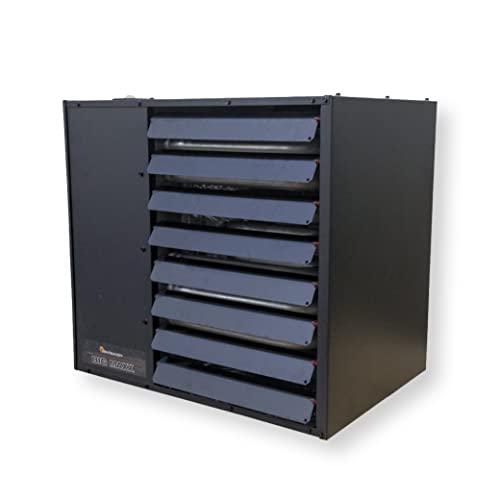
BTU rating: 125,000. Features electronic ignition, powered exhaust, and liquid propane conversion included. Best for large garages or workshops requiring robust heat with reliable ignition. Limitation: Requires a compatible fuel source and venting considerations for closed spaces.
- Best for: Larger indoor spaces with steady heat demand.
- Why selected: Highest fixed BTU among the Mr. Heater options in this listing with additional convenience features.
- Caution: Ensure proper venting and clearance around the unit.
Dewalt F340710 35,000-65,000 BTU Forced Air Propane Heater

BTU range: 35,000–65,000. Includes 20′ hose and regulator; CSA certified. Best for portable heating on job sites where compact, dependable heat is required. Limitation: Lower maximum BTU compared to higher-output units, so best for smaller large rooms or enclosure spaces.
- Best for: Portable job sites and controlled spaces needing adjustable BTU output.
- Why selected: Versatile fuel control and included components streamline setup on work sites.
- Caution: Use in well-ventilated areas and follow CSA guidelines for safe operation.
Mr. Heater 60,000 BTU Quiet Burner Propane Heater

BTU range: 30,000–60,000. Features QBT Technology delivering up to 50% quieter operation than standard propane heaters, and a 60,000 BTU setting for robust heating. Best for noise-conscious environments or semi-commercial spaces where quieter operation matters. Limitation: Not ideal for extremely large open spaces compared to higher-BTU units.
- Best for: Semi-commercial spaces and residential shops needing quieter heat.
- Why selected: Balances heat output with notably reduced noise levels.
- Caution: Expect lower performance in very large or open-area layouts.
Remington LP Forced Air Heater, 60,000 BTU

BTU: 60,000. Portable at about 11 pounds with steel construction. Best for on-the-go heating across construction sites, workshops, and barns where a balance of mobility and heat is needed. Limitation: 60,000 BTU may be insufficient for very large, open areas without supplementing with additional units.
- Best for: Portable, lightweight heating across multiple sites.
- Why selected: Combines portability with reliable heat output and rugged design.
- Caution: Use in well-ventilated spaces and follow safety guidelines for propane devices.
Buying Guide
Key purchase considerations help buyers choose the right high-BTU heater for their space and needs. Consider these factors:
- Space size and layout: Very large or open areas may require multiple high-BTU units or strategic placement to maximize heat distribution.
- Fuel availability and safety: Propane, kerosene, natural gas, and diesel have different fueling logistics and ventilation requirements. Ensure safe operation in your workspace.
- Portability vs. stationary needs: For frequent site changes, prioritize lighter units with handles or wheels; for permanent spaces, consider built-in or wall-mount options if available.
- Ventilation and safety features: Look for ignition reliability, flame-out protection, thermocouples, and tip-over switches to reduce risk in busy environments.
- Operating cost and efficiency: Higher BTU does not always translate to lower costs; evaluate fuel efficiency and run-time per tank or cartridge.
FAQ
- What size space can a 220,000 BTU heater handle?
- Is kerosene a safe fuel for job sites?
- Do these heaters require professional installation?
- Can I use a higher-BTU heater in a small space?
- What maintenance is typical for these heaters?
Heaters in the 180,000–220,000 BTU range are designed for very large, open, or partially enclosed spaces. Coverage depends on insulation, ventilation, and outside temperature; multiple units may be needed for expansive areas.
Kerosene offers high energy density but requires careful handling, proper storage, and adequate ventilation to ensure safe operation on worksites.
Most portable and unit heaters are designed for consumer use with simple setup. Some installations may require ventilation assessment or gas line connections by a professional, especially on large or permanent installations.
Using a high-BTU unit in a small space can lead to overheating and increased energy use. For confined spaces, select units with adjustable BTU and precise thermostatic control.
Regular inspections of fuel lines, ignition systems, and safety switches are advised. Follow the manufacturer’s maintenance guidelines and replace worn components promptly.