Answering the need for steady heat with minimal maintenance, these 40000 BTU pellet stoves are designed for mid-to-large spaces. Each option below targets different buyers—from tech-savvy smart-home enthusiasts to those who want a simple, non-electric feed. Read on to compare heat output, hopper capacity, ease of use, and best-use scenarios to find the right fit for your home.
Overview table of selected products
| Product | Best For | Heat Range (sq ft) | Hopper Capacity | Notes |
|---|---|---|---|---|
| US Stove GW1949 Wiseway Non-Electric Pellet Stove | Low-maintenance heating with gravity feed | up to 2,000 | — (standard pellet venting) | Non-electric, simple design |
| Cleveland Iron Works Bayfront Pellet Stove | Smart-home users seeking remote control | 1,800–2,500 | 66 lb | WiFi connectivity |
| Comfort Glow CGPS2200 | Large-space heating with long burn time | up to 2,800 | 120 lb | Digital controls |
| US Stove 3,000 Sq. Ft. Pellet Stove | Equipped for sizable living spaces | up to 3,000 | 170 lb | WiFi enabled |
| Castle Serenity Pellet Stove | Budget-friendly, easy-to-schedule heating | ~1,500 | 40 lb | Manual and eco modes |
US Stove GW1949 Wiseway Non-Electric Pellet Stove

The GW1949 is a non-electric pellet stove that relies on a natural gravity feed system. It delivers up to 40,000 BTUs, suitable for heating up to about 2,000 square feet. This model emphasizes low maintenance and uses standard 3-inch pellet venting. Best for buyers who want a straightforward, non-electrical heat source with reliable burn patterns in medium-to-large spaces.
Who this is best for: homeowners who prefer fewer moving parts, a traditional stovepipe setup, and consistent heat without reliance on electricity. Why selected: 40,000 BTUs and gravity feed offer robust heat with simpler operation. Caution: no electric ignition or modern smart controls means manual monitoring is required during operation.
Cleveland Iron Works Bayfront Pellet Stove
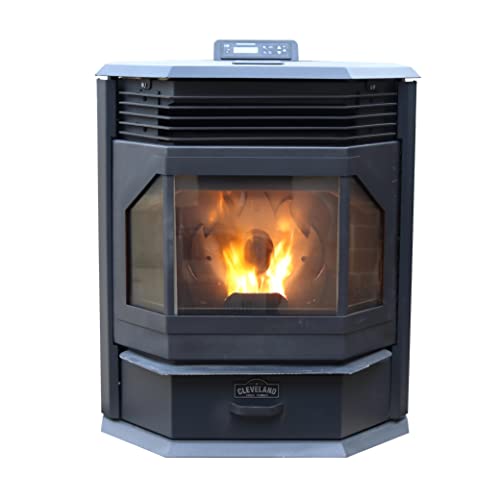
The Bayfront model includes built-in WiFi for smart-home integration and is designed to heat 1,800 to 2,500 square feet. It features a 66-pound hopper for extended burn times and can be a strong choice for larger living areas where convenience matters. Best for: buyers who want remote monitoring and control from a phone or smart device. Caution: WiFi connectivity depends on your home network stability; expect typical connectivity requirements for smart devices.
Comfort Glow CGPS2200 Pellet Stove

The CGPS2200 delivers high heat output suitable for spaces up to about 2,800 square feet. Its 120-pound hopper supports long burn times, and a digital control panel with thermostat enables precise temperature control. This model is ideal for larger homes or rooms requiring steady, extended warmth. Best for: those who need long, reliable burn duration with convenient digital controls. Caution: larger hopper means a bigger footprint and longer startup time for full heat, depending on setup.
US Stove 3,000 Sq. Ft. Pellet Stove

This model heats up to 3,000 square feet and offers a large 170-pound hopper with a burn time capable of delivering heat for up to about 80 hours. It provides up to 33,000 BTUs of clean heat and includes WiFi connectivity for remote monitoring. Best for: large living spaces where extended, controlled heating is needed. Limitation: higher initial cost and larger install footprint compared to smaller units.
Castle Serenity Pellet Stove
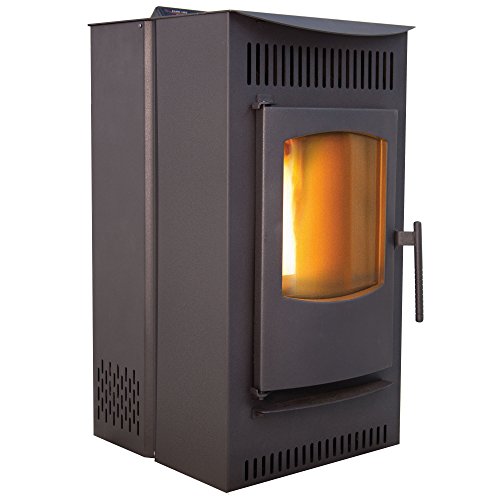
The Serenity offers up to 1,500 square feet of heating capability with a 40-pound hopper and several operating modes. It emphasizes easy cleanup and a smart controller that supports manual, weekly, thermostat, and Eco modes. Best for: smaller-to-mid-sized spaces where simple, programmable heating is desired. Caution: smaller hopper means more frequent reloads for continuous winter usage.
Buying Guide
- Heat area coverage: Match stove output to the size of the space you intend to heat. Larger areas benefit from higher BTU models and bigger hoppers for longer burn times.
- Fuel handling: Consider hopper capacity and fuel-feed design. Non-electric gravity-feed stoves minimize electrical reliance but may require more manual attention; WiFi-enabled models add convenience but depend on network reliability.
- Control and automation: Digital controls and thermostats improve comfort and consistency. Eco modes can reduce usage but may cycle heat, which is a consideration for immediate warmth needs.
- Installation footprint: Check the stove’s dimensions, venting requirements, and clearances. Some units require significant space for hopper and ash disposal.
- Maintenance: Evaluate ash management, ease of cleaning, and availability of replacement parts. Stainless or coated surfaces reduce maintenance but may affect price.
- Smart features: Smart-home compatibility adds remote operation and monitoring. Ensure compatible apps and stable WiFi in your home environment.
- Safety considerations: Verify proper venting, combustion air supply, and carbon monoxide safety practices. Use a professional for installation when needed.
FAQ
- What size pellet stove do I need for a 2,000 square foot home?
– A stove rated for about 1,800–2,500 square feet typically provides balanced heating, with flexibility for cooler rooms or variable insulation. - Is a WiFi pellet stove worth it for a small space?
- How long does a 120 lb hopper burn last?
- Can I install a pellet stove myself?
- Do pellet stoves require electricity?
– It can be beneficial for convenience, but non-wiFi models offer simpler operation and fewer potential connection issues.
– Burn time depends on heat setting and room temperature demands, but a 120 lb hopper is designed for extended periods between refills in typical use.
– Some installations are feasible with DIY venting and clearances, but many jurisdictions require a licensed installer for safety and code compliance.
– Some models are non-electric or gravity-fed, but most modern units use electricity for fans, feeds, and controls.