Answering, “Which tankless water heater is right for me?” this guide highlights five top options suited for different homes and hot-water needs. The selections cover both condensing and non-condensing models, with a focus on reliability, efficiency, and space considerations. Ideal buyers include large households needing endless hot water, small-to-medium homes seeking compact indoor-outdoor installation options, and those prioritizing energy savings or indoor versatility. Below, each product is presented with a quick-fit summary, best-use scenario, and a practical caveat. A concise Buying Guide follows to help compare features like efficiency, flow rates, venting, and installation requirements.
| Product | Best For | Key Benefit |
|---|---|---|
| Rheem RTG Series 7.0 GPM | Large homes, outdoor installs | High 160,000 BTU output with 7.0 GPM |
| Rinnai RX130iN | Indoor/Outdoor, compact spaces | Condensing, Smart Sense control, 7.1 GPM |
| Gas Tankless & Electric Tankless (General listing) | Hybrid households | Dual option in one listing |
| APUS Propane Tankless, 95,000 BTU | Budget-friendly, smaller homes | 4.42 GPM with precise control |
| Noritz NRC1111-DVNG | Condo or multi-use spaces | High efficiency with condensing tech |
Rheem RTG Series 7.0 GPM Liquid Propane Tankless Water Heater

Features: High performance liquid propane tankless water heater delivers endless hot water on demand for whole-house use. It provides 7.0 GPM at a 35°F rise, equating to about 160,000 BTU/hr for 2-3 simultaneous showers. It is an energy-efficient non-condensing model with a 0.82 UEF, which can reduce energy costs versus traditional 50-gallon electric tanks. Outdoor installation eliminates venting requirements. Best for large families and multi-bath homes that can accommodate outdoor installation.
Best for: Large homes with outdoor installation and high simultaneous hot-water needs. Why selected: High GPM and outdoor venting simplicity suit bigger families. Caution: Outdoor exposure requires weatherproofing and proper mounting by a qualified installer; not ideal for indoor spaces without venting compliance.
Rinnai RX130iN Condensing Tankless Water Heater

Features: This unit supports indoor or outdoor installation thanks to Versa Vent and can run on propane or natural gas via Smart Sense control. It delivers up to 7.1 GPM, enough for about 4 fixtures at once. It boasts a high energy efficiency factor (UEF) around .97 and a Quick Flush feature for maintenance. Control via a modem (Controlr) module enables WiFi control (not included).
Best for: Compact spaces needing flexible installation and high efficiency. Why selected: Condensing design and dual-fuel capability maximize efficiency for smaller homes or condos. Caution: Outdoor use requires specific venting (RX-OVC vent cap) and optional control module for WiFi features.
Gas Tankless Water Heater & Electric Tankless Water Heater

Features: A dual-listing concept featuring both gas tankless and electric tankless options within one product scope. This may address households looking to compare or switch between gas and electric supply based on availability and installation flexibility. Best for: Homes evaluating hybrid heat solutions or phased upgrades. Caution: Data focuses on listing breadth rather than a single model; verify exact specifications and compatibility before purchase.
APUS Propane Tankless Water Heater, 95,000 BTU

Features: 95,000 BTU with 4.42 GPM flow, indoor operation, and 120V power. Temperature control ranges from 95°F to 140°F and supports anti-freeze for colder climates. It uses oxygen-free copper heat exchangers and segmented combustion technology to reach up to 98% thermal efficiency with a UEF of 0.81, delivering a notable energy saving advantage. Best for: Smaller homes or apartments needing reliable hot water on a budget. Caution: Performance may vary with lower water flow or extreme temperature drops; ensure electrical access and proper venting where required.
Noritz NRC1111-DVNG Residential Condensing Tankless Water Heater
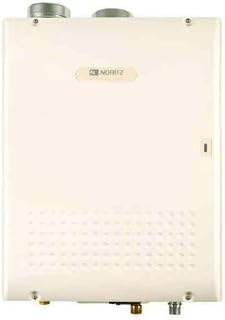
Features: Condensing technology supporting high efficiency (over 93%); compatible with combi-system setups for potable water heating and space heating. Includes safety features such as lockout for default max temperature of 120°F (adjustable per manual). Best for: Homes seeking high efficiency with potential space heating integration. Caution: Combi-system setup may require professional design; ensure compatible with your existing heating system.
Buying Guide
Key considerations help narrow the right choice among condensing and non-condensing tankless water heaters.
- Flow rate vs. demand: Match GPM rating to simultaneous fixtures. Higher GPM handles showers, sinks, and appliances together.
- Vent and installation: Outdoor units reduce venting but require weatherproofing. Indoor units may need dedicated venting or direct-vent systems.
- Fuel type: Natural gas vs. propane. Ensure available fuel source aligns with the unit’s design and local codes.
- Efficiency: Condensing units typically boast higher UEF; non-condensing units may be simpler and cheaper upfront but less efficient.
- Warranty and service: Consider local service availability and ease of obtaining parts for your model.
- Space and layout: Condensing models can be more compact, making them suitable for tight spaces in condos or basements.
FAQ
- What is the main difference between condensing and non-condensing tankless water heaters?
Condensing units extract more heat from exhaust gases, yielding higher efficiency; non-condensing units vent at lower efficiency and may be simpler or cheaper. - Which heater is best for outdoor installation?
Outdoor-rated models like some Rheem RTG variants are designed for weather exposure with venting convenience. - Do these units require a professional install?
Most installations involve gas lines, venting, electrical wiring, and code compliance; professional installation is strongly advised. - Can a single unit support an entire family’s hot water needs?
It depends on GPM ratings, water usage patterns, and simultaneous fixtures. Larger homes typically need higher flow rates or multiple units. - Are there smart or WiFi-enabled options?
Some models offer control interfaces or compatibility modules for remote monitoring and control; confirm compatibility before purchase. - What should I check before buying?
Verify fuel availability, venting requirements, climate considerations, and whether the unit supports your desired fixtures and heating system.